
What is Electric Vehicle Supply Equipment?
Electric Vehicle Supply Equipment is the equipment that safely delivers electrical power from a building or utility connection to an electric vehicle. EVSE includes charging equipment, control circuits, connectors, cables, communication functions, and protective devices. The equipment manages the charging connection but doesn't include the vehicle’s onboard battery charger.
Quick Facts About Electric Vehicle Supply Equipment
Category
Electric vehicle charging equipment
Used for
Supplying and controlling power for EV charging
Common confusion
EVSE is not the same as the vehicle’s onboard charger.
Also called
EVSE, EV charging equipment
Often discussed with
Electric Vehicle Charger Installation, CALGreen EV charging setup compliance installation.
Key Takeaways About Electric Vehicle Supply Equipment
- EVSE includes the charger connection, control equipment, cable, connector, and required electrical protection.
- Level 1, Level 2, and DC fast charging use different charging power arrangements.
- A vehicle’s onboard charger changes alternating current into battery energy during AC charging.
- Circuit capacity, conductor size, grounding, and overcurrent protection affect safe EVSE operation.
- EVSE installation may need permits, load calculations, and equipment listed for the intended use.
Understanding Electric Vehicle Supply Equipment
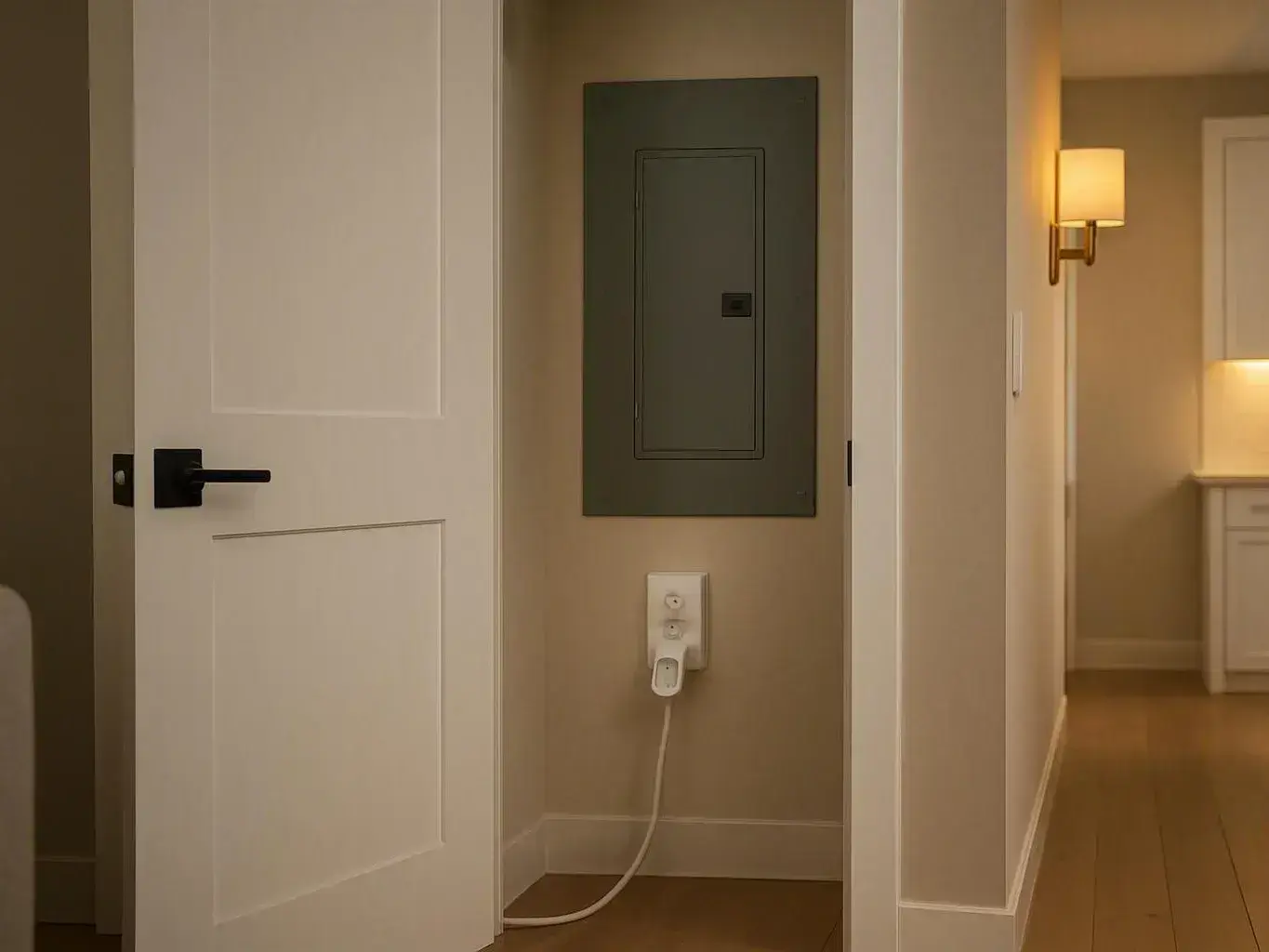
Electric Vehicle Supply Equipment, or EVSE, connects an electrical source and an electric vehicle. It controls power access. It confirms vehicle connection before current flows. A typical system includes a circuit connection, enclosure, cable, connector, control electronics, and safety features.
Related glossary terms: Alternating Current, Ampacity, Continuous Load.
Many people call a wall-mounted EVSE unit a charger. The terms describe different system parts. During alternating current charging, the vehicle’s onboard charger changes AC power into direct current for the battery. EVSE supplies and manages power. The battery system controls charging limits, temperature, and battery safety.
How Electric Vehicle Supply Equipment Works, Is Measured, or Is Used?
EVSE starts a charging session through vehicle and equipment signals. The connector signals that it's properly inserted. The control circuit identifies the available current. The vehicle then requests power within EVSE limits. It also follows branch circuit and vehicle system limits.
People describe charging equipment by charging level and output type. Level 1 generally uses a standard household receptacle. Level 2 uses a higher-voltage dedicated circuit. DC fast charging sends direct current through special equipment. This equipment converts power outside the vehicle. Charging speed depends on voltage, current, vehicle limits, battery temperature, and charge level.
- Voltage measures electrical pressure.
- Amperage measures current flow.
- Charging power usually equals voltage multiplied by amperage.
- A continuous charging load needs circuit capacity that follows electrical code.
Why Electric Vehicle Supply Equipment Matters?
EVSE affects safety, charging time, equipment life, and building capacity. A properly selected system matches the vehicle connector and available voltage. It also matches circuit rating, weather, and the charging schedule. An undersized circuit can trip safety devices. It can limit charging or create excess heat at connections.
EVSE also affects how a property manages electricity. A home may need a load check before adding a Level 2 circuit. This matters when the panel already supplies electric heating or air conditioning. Other large loads can also affect capacity. Commercial sites may need several charging circuits and network controls. They may also need utility coordination or load management. These tools prevent peak demand from exceeding site capacity.
When Electric Vehicle Supply Equipment Matters Most?
EVSE matters when you install a new home charger. It also matters when you convert a garage or parking area. It matters when you add charging spaces at a multifamily or commercial property. The installation may involve National Electrical Code rules, local permits, grounding, and weather protection. It may also involve equipment listing. Outdoor equipment needs an enclosure and proper installation. The setup must suit moisture, sunlight, impact, and temperature.
Before selecting equipment, check the vehicle’s connector and maximum charging rate. Compare those limits with the building’s electrical capacity. Review the circuit rating, conductor ampacity, and overcurrent protection. Also review disconnect needs and the available mounting location. A listed EVSE unit with clear instructions supports inspection. It also reduces unsafe changes and unwanted shutdowns.
How to Evaluate Electric Vehicle Supply Equipment?
- Verify the EVSE listing, connector type, voltage range, maximum current, and indoor or outdoor rating.
- Confirm that a load calculation supports the planned charging circuit and other major building loads.
- Check conductor ampacity, overcurrent protection, grounding, and termination ratings against the installation requirements.
- Ask whether the installation needs an electrical permit, inspection, disconnect, or utility approval.
- Compare the vehicle’s maximum AC or DC charging rate with the EVSE output before paying for higher capacity.
Related Concepts Compared
Electric Vehicle Supply Equipment vs. Electric Vehicle Charger
People often use charger as a general name for EVSE. In AC charging, the actual power conversion usually occurs in the vehicle’s onboard charger, while EVSE controls and supplies the connection.
Electric Vehicle Supply Equipment vs. Level 2 Charging
Level 2 describes a charging arrangement that uses higher-voltage AC power than Level 1. EVSE is the equipment that provides and manages the charging connection.
Electric Vehicle Supply Equipment vs. DC Fast Charger
A DC fast charger converts AC power to DC outside the vehicle and sends DC power to the battery system. It is one type of EV charging system that includes EVSE functions.
Electric Vehicle Supply Equipment vs. Electric Vehicle Charging Station
A charging station may refer to a complete public or private charging location. EVSE refers more specifically to the electrical supply equipment used at that location.
Expert Note
Do not size EVSE from the vehicle’s advertised charging speed alone. The building’s service, feeder, branch circuit, conductor terminations, installation environment, and local inspection requirements also control the final design.
Common Mistakes or Myths About Electric Vehicle Supply Equipment
- Assuming every Level 2 EVSE needs the same circuit size.
- Treating a portable charging cable as a substitute for proper circuit planning.
- Ignoring the building load calculation before adding a high-current charging circuit.
- Installing indoor-rated equipment outdoors without checking enclosure and environmental requirements.
- Confusing the EVSE output rating with the vehicle’s actual charging limit.
Electric Vehicle Supply Equipment in Practice: A Real-World Example
A homeowner buys a 40-amp Level 2 EVSE for a garage. An electrician checks the service load. The electrician confirms the vehicle can accept the planned charging rate. The vehicle then communicates with the EVSE before charging begins.
Sources & Further Reading on Electric Vehicle Supply Equipment
Related Terms
Alternating Current
Alternating Current is electric current that repeatedly changes direction and varies in magnitude over time. Most…
Ampacity
Ampacity is the maximum current, measured in amperes, that a conductor can carry continuously under stated…
Continuous Load
Continuous Load is an electrical load expected to operate at its maximum current for three hours…
Load Calculation
Load Calculation is the process of estimating the electrical demand that a building, panel, feeder, or…
Santa Ana Electrician
Have Questions About Electric Vehicle Supply Equipment?
Contact Santa Ana Electrician for practical guidance on Electric Vehicle Supply Equipment and related 24 hour electrician work in Santa Ana.