
What is Short Circuit?
Short Circuit is an unintended low-resistance path that allows excessive electrical current to flow between conductors at different voltages. The fault may occur between hot and neutral wires, between hot wires, or between a conductor and ground. Excess current can create heat, damage equipment, trip a breaker, or start an electrical fire.
Quick Facts About Short Circuit
Category
Electrical fault
Measured by
Fault current and circuit resistance
Used for
Describing an unintended high-current path
Common confusion
A short circuit is not the same as a normal overload
Also called
Electrical short, Short
Often discussed with
Emergency Electrical Troubleshooting, Circuit Breaker Repair
Key Takeaways About Short Circuit
- A short circuit sends current through an unintended path with unusually low resistance.
- Circuit breakers and fuses should interrupt fault current before wires overheat.
- Burning odors, sparks, buzzing, and repeated breaker trips can signal a short circuit.
- A ground fault is one specific type of short circuit involving a grounded surface or conductor.
- Never reset a tripped breaker repeatedly without finding and correcting the fault.
Understanding Short Circuit
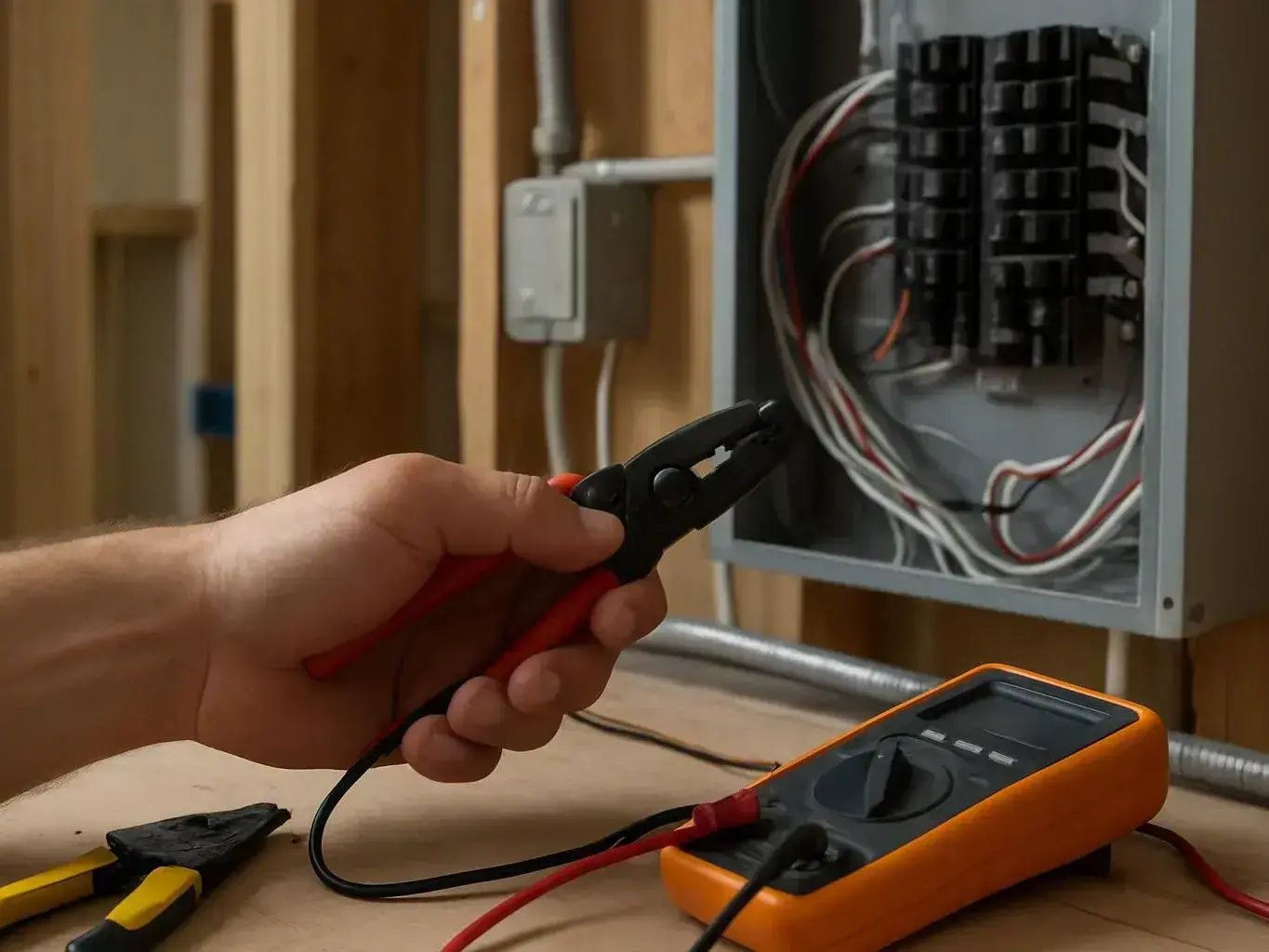
Short Circuit describes an unintended connection between points with different electrical voltages. The connection has less resistance than the normal load path. Current then rises sharply. For example, a damaged hot wire can touch a neutral wire. This contact can bypass a light fixture or appliance. It can also create a fault.
Related glossary terms: Overcurrent Protection, Ground-Fault Circuit Interrupter, Arc-Fault Circuit Interrupter.
Electrical resistancelimits current during normal operation. A short circuit removes much of that resistance. This change can create intense heat, arcing, melted insulation, or equipment damage.circuit breaker or fuse should open the circuit. The protection must have the correct rating. It must also be installed correctly.
How Short Circuit Works, Is Measured, or Is Used?
A Short Circuit begins when conductors contact each other. It can also start when a conductor touches grounded metal. Common causes include worn insulation, loose terminals, crushed cable, water intrusion, and failed components. The resulting fault current depends on source voltage and total path impedance.
Electricians locate a suspected fault by isolating loads and inspecting wiring. They also test with approved instruments. A multimeter may show continuity where no connection should exist. An insulation resistance tester can reveal leakage through damaged insulation. Power must be disconnected before resistance or continuity testing. These functions aren't meant for energized circuits.
The basic relationship follows Ohm's law. It's written as I = V divided by Z when impedance matters. In this formula, I means current. V means voltage. Z means impedance. A 120-volt circuit with 1 ohm of fault impedance would produce 120 amperes. Actual wiring and source limits can change this result.
Why Short Circuit Matters?
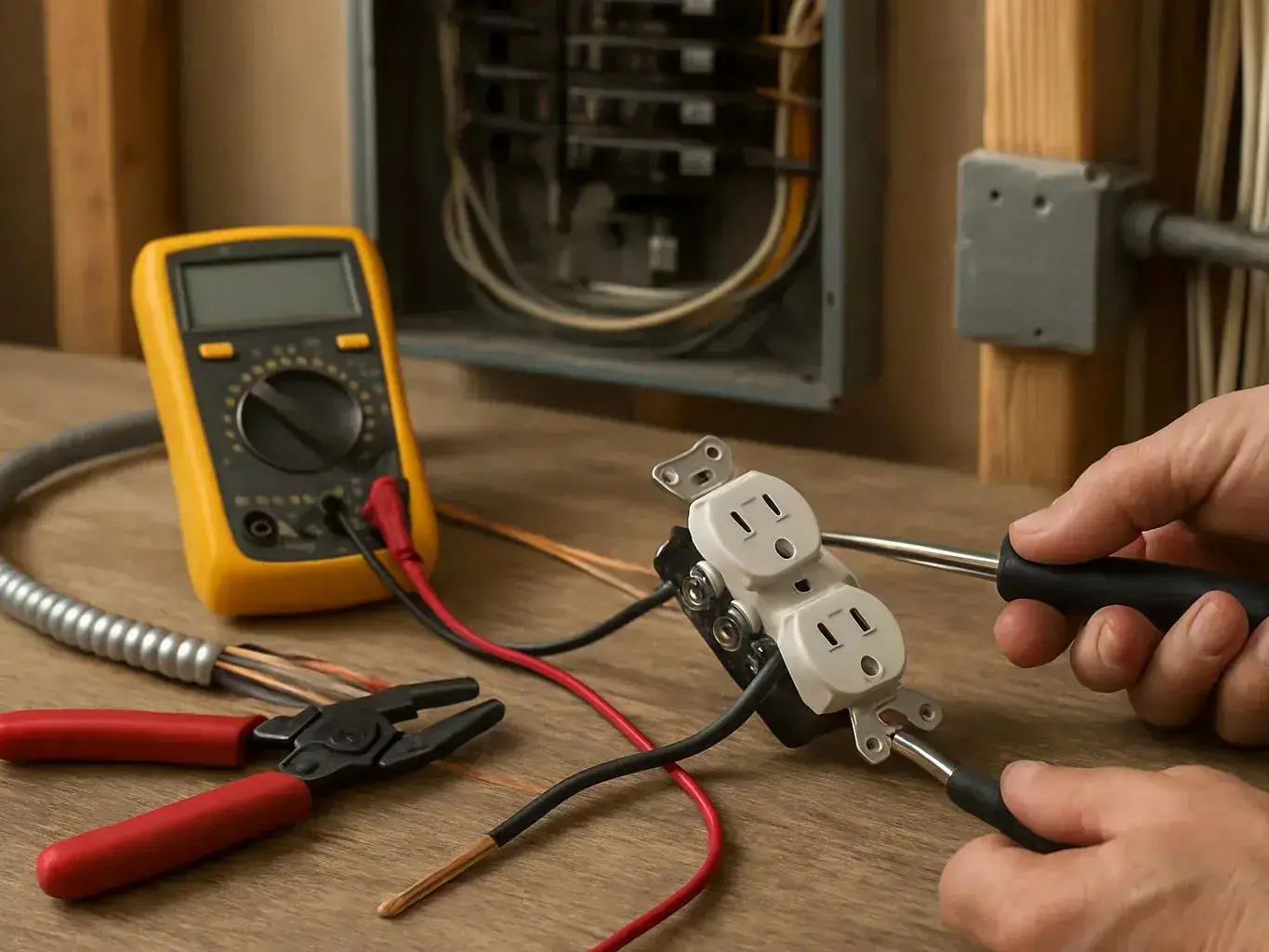
A Short Circuit can release more heat than normal circuit operation allows. The heat may damage wire insulation, terminals, receptacles, and electronic parts. This damage can happen before a protective device opens. An arc fault can also create intense local heat. This happens especially with a loose or damaged connection.
Overcurrent protection reduces this hazard by stopping abnormal current. Protection doesn't repair the damaged wire or appliance. Replacing a breaker with a larger size can increase danger. The replacement device must match the conductor ampacity, panel design, and electrical rules.
When Short Circuit Matters Most?
A Short Circuit needs quick attention after a breaker trips repeatedly. It also needs attention when an outlet becomes hot. Smoke or sparks require quick action too. Turn off the affected circuit if you can do so safely. Unplug equipment only when there's no visible damage. Keep clear of water or exposed conductors. Smoke or fire requires emergency help instead of electrical testing.
Older wiring, recent remodeling, outdoor receptacles, and wet areas need careful inspection. A fault may be inside a wall, appliance, junction box, or panel. The visible symptom may not show the source. In Santa Ana, CA, emergency electrical troubleshooting often separates fixed wiring from connected appliances. Technicians do this before restoring power.
How to Evaluate Short Circuit?
- Check whether the breaker trips immediately, only under load, or after the circuit warms.
- Inspect for scorched insulation, melted receptacles, loose terminals, moisture, or burning odors.
- Confirm the breaker rating matches the circuit conductors and equipment requirements.
- Test disconnected wiring for unwanted continuity between hot, neutral, and ground.
- Ask whether the fault remains after appliances and plug-in loads are disconnected.
Related Concepts Compared
Short Circuit vs. Electrical Overload
An overload occurs when a circuit carries more current than its normal rating, often because too many loads operate together. A short circuit usually creates a very low-resistance path and causes a much faster current rise.
Short Circuit vs. Ground Fault
A ground fault is a short circuit between an energized conductor and ground or a grounded metal part. The term short circuit is broader and also includes hot-to-neutral and hot-to-hot faults.
Short Circuit vs. Arc Fault
An arc fault involves electrical current jumping across a gap or damaged connection. A short circuit may create an arc, but not every short circuit produces a sustained arc.
Short Circuit vs. Open Circuit
An open circuit has a broken or incomplete path, so little or no current flows. A short circuit has an unintended path with very low resistance and excessive current potential.
Expert Note
A breaker trip identifies abnormal current, not the exact fault location. The cause may be a connected appliance, a damaged cable, a loose terminal, or moisture. Repeated resets can hide worsening damage and should not replace fault isolation.
Common Mistakes or Myths About Short Circuit
- Resetting a tripped breaker repeatedly without identifying the cause.
- Installing a larger breaker to stop nuisance trips on existing wiring.
- Assuming a short circuit always occurs inside the electrical panel.
- Testing resistance on an energized circuit.
- Treating a burning odor or warm receptacle as a minor issue.
Short Circuit in Practice: A Real-World Example
A kitchen receptacle trips its breaker whenever a toaster is plugged in. The toaster may have an internal fault, or the receptacle wiring may be damaged. An electrician disconnects the appliance, tests the circuit, and replaces the defective component before restoring power.
Sources & Further Reading on Short Circuit
Related Terms
Overcurrent Protection
Overcurrent Protection is a safety function that stops or limits electrical current when it exceeds a…
Ground-Fault Circuit Interrupter
Ground-Fault Circuit Interrupter is a protective device that monitors current flowing through a circuit and disconnects…
Arc-Fault Circuit Interrupter
Arc-Fault Circuit Interrupter is a protective device that detects dangerous electrical arcing in a circuit and…
Current
Current is the movement of electric charge through a conductor, device, or circuit. Current is measured…
Santa Ana Electrician
Have Questions About Short Circuit?
Contact Santa Ana Electrician for practical guidance on Short Circuit and related 24 hour electrician work in Santa Ana.