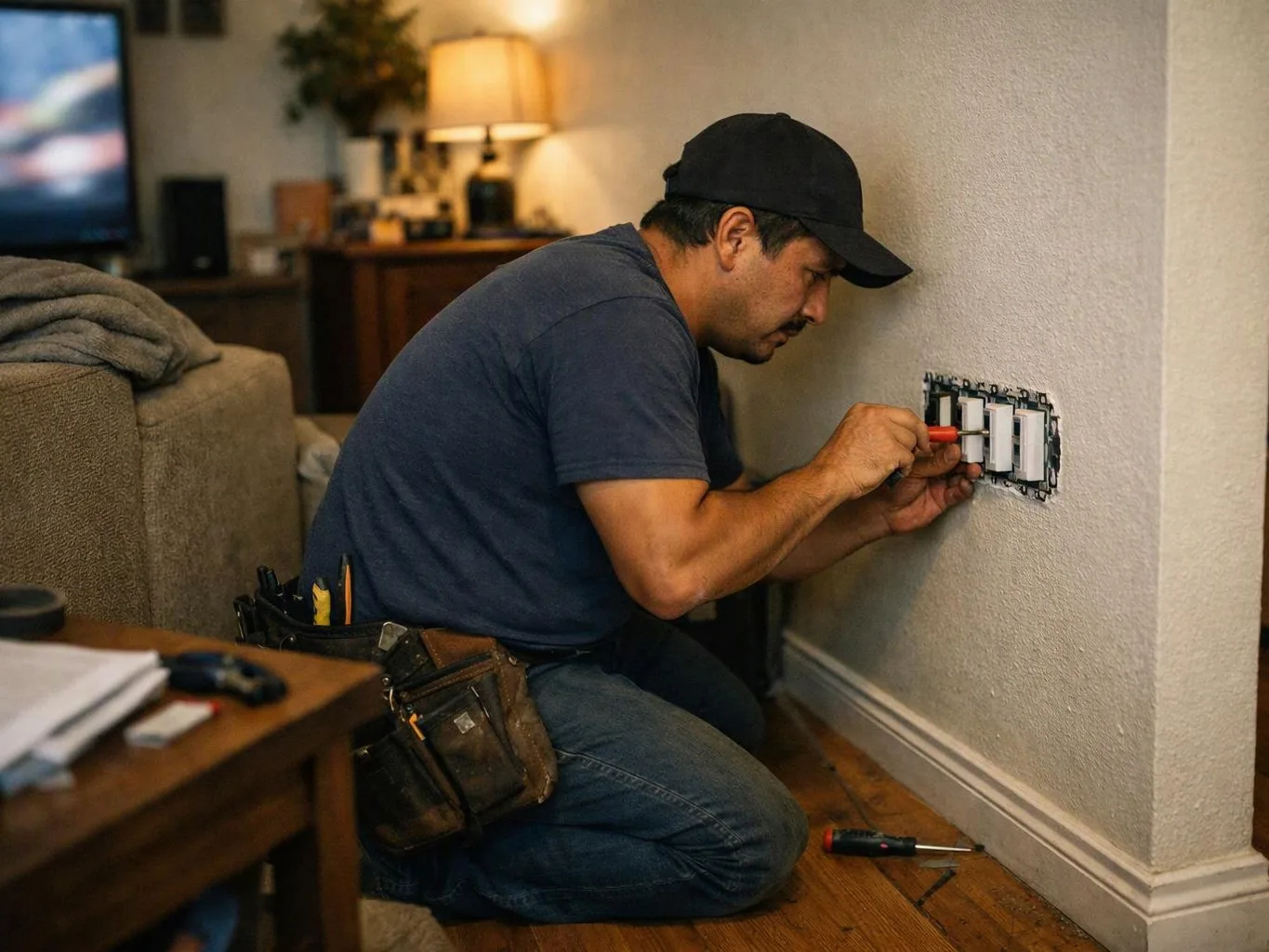
Home Power Outage Troubleshooting and Safety Steps
Home power outage troubleshooting starts with checking whether the outage affects one circuit, the whole home, or the wider area, then inspecting the electrical panel safely, protecting appliances, and avoiding hazards during restoration. Santa Ana Electrician handles outage troubleshooting and generator installation when the cause requires electrical work.
Get a Free EstimateHow to Tell What Kind of Power Outage You Have
Power outages may affect the utility area, the entire home, or only one circuit, so the first check is whether nearby properties and all rooms have lost power.
Look outside for working lights at nearby homes or businesses, and check whether street lighting is also off. A wider loss points to a utility outage, while power in some rooms but not others suggests a partial outage or circuit problem.
Our team uses the outage pattern, recent appliance use, and panel condition to narrow down the electrical fault without disturbing unsafe equipment.
Signs That a Home Power Outage Needs Electrical Attention
These signs indicate that a home power outage may involve an unsafe electrical problem and should not be treated as a simple blackout.
Turn off power only when the controls are dry and accessible, then keep away from damaged equipment. We trace the affected circuit and repair the cause when a breaker, wire, or connection is unsafe.
What to Check When the Power Is Out Only in Your Home
A power outage limited to one home can result from a tripped breaker, a tripped GFCI receptacle, a service issue, or an electrical fault, so check only accessible controls without removing panel covers.
Do not remove the electrical panel cover or inspect the utility meter internally. We diagnose service equipment and wiring faults when the controls do not restore power safely.
Common Causes of Residential Power Outages
Residential power outages commonly result from utility conditions, excessive circuit demand, or damage within the home.
Our crew separates utility problems from home wiring problems by checking the affected circuits and available service power. We repair the electrical cause when the fault is inside the property.
How to Stay Safe While the Power Is Out
Power outage safety depends on avoiding damaged electrical equipment, downed lines, water exposure, open flames, and indoor combustion sources.
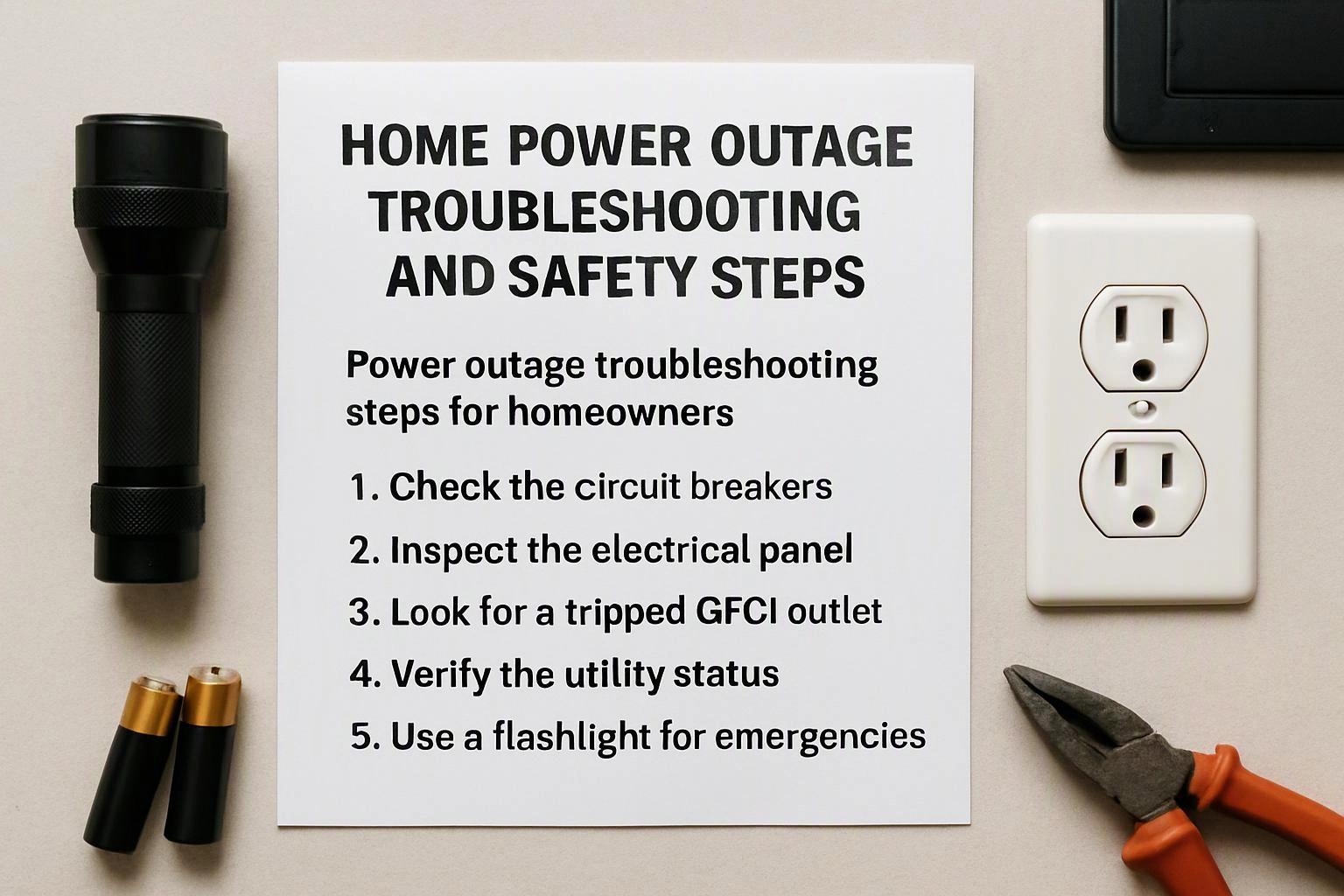
Move to a dry, safe area if smoke, sparks, fire, or rising water is present. We inspect electrical equipment after the immediate hazard is controlled.
How to Protect Appliances During a Power Outage
Appliance protection during a power outage means disconnecting sensitive electronics when safe, limiting unnecessary opening of refrigerated appliances, and reconnecting equipment after stable power returns.
Unplug computers, televisions, chargers, and other sensitive electronics if the area is dry and you can reach the plugs safely. Surge protection can help reduce damage from a power restoration surge, but it cannot correct unsafe wiring or replace proper circuit protection.
Keep the refrigerator and freezer closed as much as possible to preserve the cold environment. Switch off large appliances before power returns, then reconnect them gradually after lights are steady.
We can review appliance circuits, surge protective devices, and home standby equipment as part of a broader electrical assessment.
Prevention Steps That Reduce Future Outage Problems
Preventive electrical work reduces repeat outages by matching circuit demand to the wiring and improving protection at key points.
Our team checks the panel, circuit load, grounding, and protective devices before recommending changes. We use the inspection findings to plan backup power without placing extra demand on an existing circuit.
What to Check After Power Is Restored
After power is restored, check for unusual heat, odors, sounds, flickering, damaged equipment, and breakers that trip again before returning every appliance to normal use.
Do not repeatedly reset a breaker that trips after power restoration. We identify whether the problem is an appliance fault, overloaded circuit, short circuit, ground fault, or damaged wiring.
When a Generator Is the Right Backup Option
A generator can provide backup power during an outage, but safe home integration requires correct placement, load planning, and an approved transfer method that prevents backfeed.
A portable generator must remain outdoors in a location where exhaust cannot enter the home, garage, crawlspace, or nearby openings. Carbon monoxide can collect indoors even when doors or windows appear open.
A standby generator connects to selected home circuits through a transfer switch and fixed wiring. A portable generator may serve limited loads, but using an improper cord or connection can energize utility lines and create dangerous backfeed.
We plan generator loads, inspect the electrical panel, and complete generator installation with the transfer equipment needed for safe operation. Our team also explains which appliances the backup system can support.
How Santa Ana Electrician Helps With Outage Troubleshooting
Power outage troubleshooting from Santa Ana Electrician checks the electrical panel, circuits, service equipment, and outage symptoms to identify the cause and explain the required work.
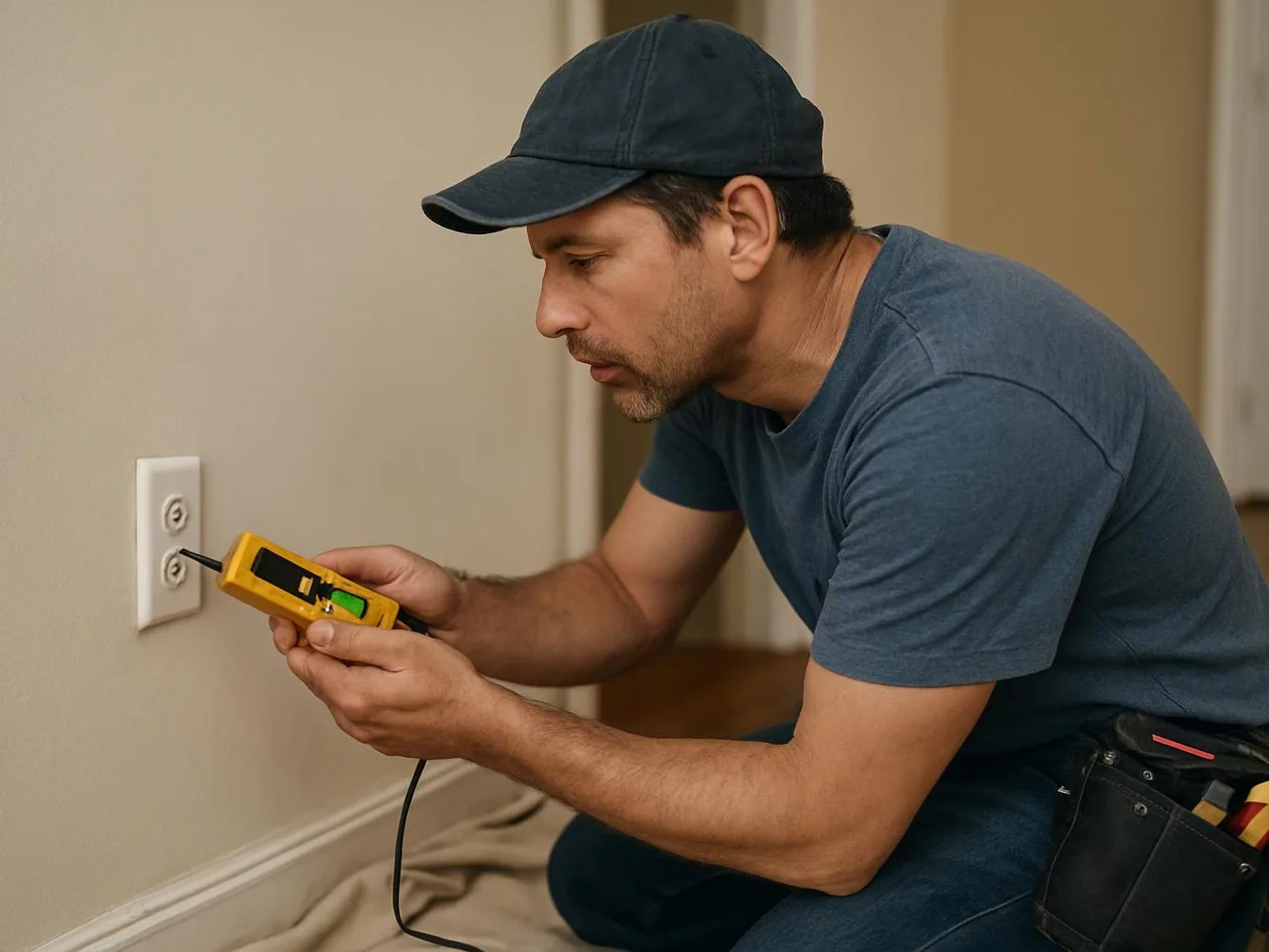
We begin with the outage pattern and safe visual checks before testing accessible equipment. Our crew then traces circuit problems, checks protective devices, and identifies conditions that may cause repeated power loss.
We also assess backup power needs when a portable generator or standby generator is being considered. Free Estimates Available for eligible electrical projects, with the scope based on the affected equipment, wiring condition, and required safety work.
Contact our team when the outage includes burning smell, smoke, sparks, water near electrical equipment, repeated breaker trips, or signs of damaged wiring.
Contact Santa Ana Electrician for outage troubleshooting and generator guidance.
Get a Free EstimateQuestions About Home Power Outage Safety
Can a tripped breaker cause power to go out in only one room?
Yes, a tripped breaker can interrupt power to one room or a group of outlets connected to the same circuit. Santa Ana Electrician checks the breaker, connected loads, and wiring when the circuit will not reset safely.
Can I run a portable generator indoors during a power outage?
No, a portable generator must not run indoors because its exhaust can produce dangerous carbon monoxide. Use outdoor placement, keep exhaust away from openings, and use a safe transfer method for home circuits.
What should I do if the breaker trips again after I reset it?
Stop resetting the breaker, disconnect safe-to-reach loads, and keep the circuit off if it trips again. Repeated tripping can indicate an overloaded circuit, short circuit, ground fault, damaged wiring, or a faulty appliance.
Should I unplug appliances before power is restored?
Yes, unplug sensitive electronics and switch off larger appliances when the area is dry and the plugs are safe to reach. Reconnect equipment after stable power returns to reduce the risk from a power restoration surge.
Related Resources
Generator Installation Timeline: How Long It Takes in Santa Ana, CA
How Long It TakesHow Long Does Emergency Electrical Repair Take?
What It CostsHome Generator Installation: Cost, Timeline, and What the Electrician Handles
What It CostsHow Much Does Emergency Electrical Repair Cost After Hours?