When Frequent Power Outages Mean You Need Backup Power
Frequent power outages may mean you need backup power when interruptions affect safety, essential equipment, work, or home systems; Santa Ana Electrician assesses the electrical load, panel, transfer equipment, and generator connection before installing a safe solution.
Get a Free EstimateWhen Do Frequent Power Outages Justify Backup Power?
Frequent power outages justify backup power when interruptions repeatedly disrupt safety, essential equipment, communication, work, or home systems.
We review which essential electrical loads must stay active during an outage. A standby generator can support selected circuits or a whole-home backup system, while a portable generator may suit temporary or limited needs.
Our team checks the electrical load, panel capacity, and transfer equipment before recommending a generator connection. This helps match the backup system to the way your home actually uses electricity.
Signs Your Home May Need Backup Power
A home may need backup power when a power interruption repeatedly affects safety, essential equipment, or daily living. We use these symptoms to guide the electrical assessment.
What Causes Repeated Power Outages?
Repeated power outages can come from the utility, the home wiring, or conditions around the electrical service. We identify the source before planning power restoration or backup equipment.
Power restoration may be appropriate when the fault is inside the home and does not match a wider utility outage. We inspect the panel, wiring, and affected circuits to separate a home electrical problem from a utility issue.
What Should You Do During Repeated Power Outages?
Electrical safety comes first during repeated power outages, especially when the cause is not clear. Our team can assess the system when a home fault continues after utility service is available.
Do not connect a generator directly to a wall outlet or electrical panel without approved transfer equipment. We plan the connection so utility lines remain protected from backfeeding.
How Can You Reduce the Impact of Future Outages?
A backup power plan reduces disruption by deciding which systems need electricity and how they will connect safely. We combine equipment planning with electrical maintenance to support reliable operation.
Which Backup Power System Fits Your Electrical Needs?
The right backup power system depends on the critical loads, desired operating method, and available connection point. We compare the equipment with your electrical load before selecting transfer equipment.
| System | Best suited for | Connection considerations |
|---|---|---|
| Standby generator | Automatic backup for selected circuits or whole-home backup | Usually uses an automatic transfer switch and a permanent fuel connection |
| Portable generator | Temporary power for limited critical loads | Needs a safe outdoor location, generator inlet, and approved transfer method |
| Inverter generator | Sensitive electronics and smaller essential loads | Requires safe placement, ventilation, and suitable load planning |
| Battery backup | Quiet backup for selected circuits and short interruptions | Depends on battery capacity, charging, and compatible transfer equipment |
Critical loads may include refrigeration, communications, medical equipment, or water systems. We design the system around those loads instead of connecting equipment without a load review.
Can an Electrician Install a Generator for a House?
Yes, Santa Ana Electrician can install a home generator by evaluating the electrical load, panel capacity, transfer equipment, grounding, and connection method.
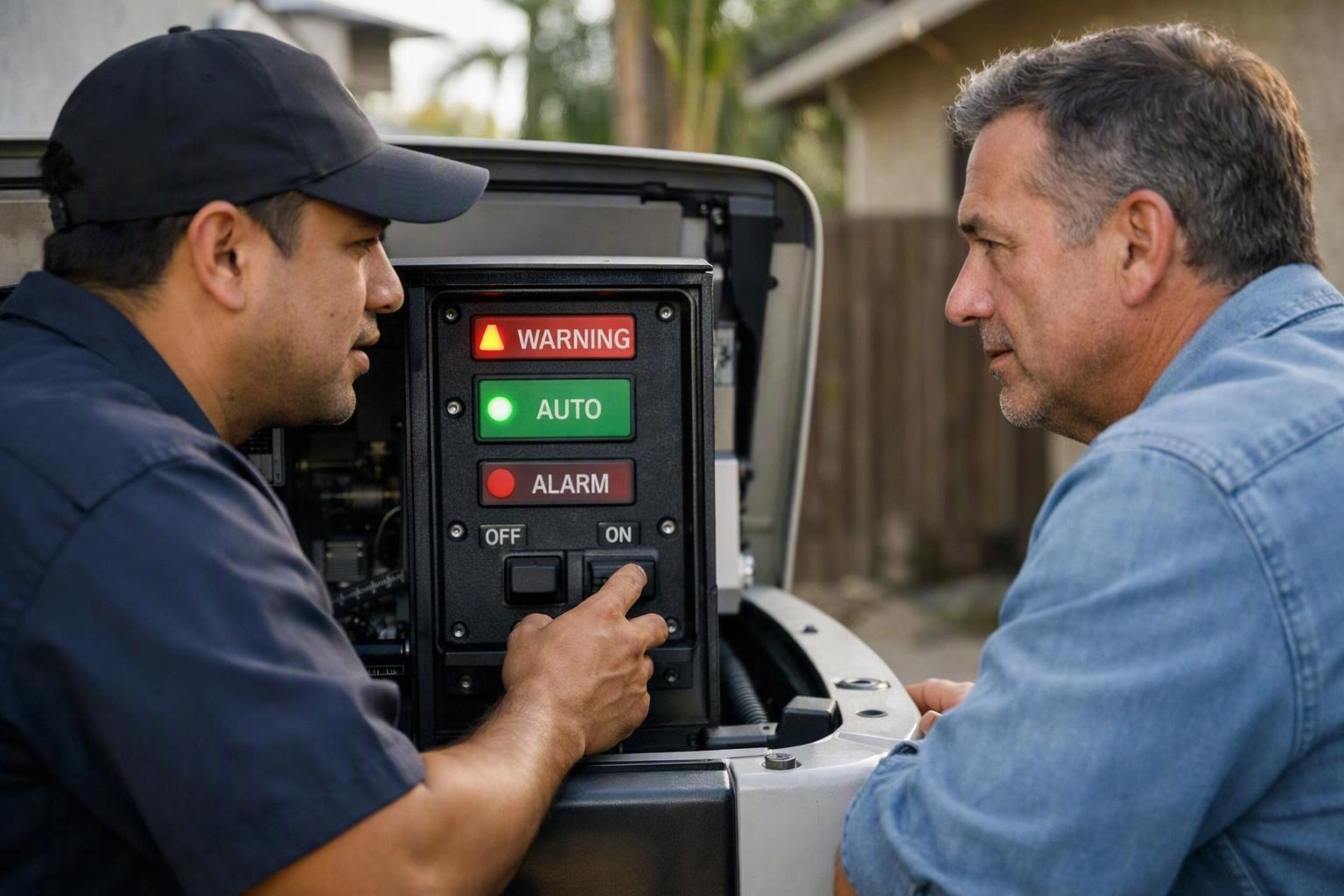
Generator installation begins with an electrical load calculation. We review service capacity, fuel supply, grounding, and the existing electrical panel before choosing the generator and connection method.
When the existing panel cannot support the planned system, our team can include electrical panel installation in the project scope. We also test the transfer equipment and connected circuits after the work is complete.
Can a Generator Be Connected to a House Safely?
Yes, a generator can be connected safely when the connection uses correctly installed transfer equipment and prevents power from feeding back into utility lines.
A generator interlock or transfer switch separates the generator from the utility connection. We select and install the approved method for the electrical panel and generator inlet.
Grounding and bonding must match the equipment and connection design. Our team checks backfeeding protection, conductor connections, and system operation before placing the generator into service.
What Does Generator Installation Include?
Generator installation includes a site assessment, electrical load calculation, equipment selection, wiring, transfer equipment, and system testing.
We review the installation location, ventilation needs, fuel supply, service capacity, and access for maintenance. The generator size is then matched to the essential circuits or whole-home demand.
Our crew installs the required panel components, transfer switch, generator inlet, and wiring route. We test the generator connection and confirm that the selected loads transfer correctly.
How We Plan a Backup Power Installation
Our backup power installation process starts with the home’s electrical condition and ends with a tested generator connection. Each step helps prevent unsafe loading and unexpected interruptions.
What Changes the Cost of Generator Installation?
Generator installation cost changes with the generator type, required load, fuel connection, transfer equipment, panel work, wiring route, and site preparation; we explain those items in an estimate.
Whole-home backup may require more equipment and panel capacity than partial-home backup. A longer wiring distance, difficult site preparation, or changes to the fuel source can also affect the work involved.
We review each cost driver during the site assessment and provide an estimate based on the actual electrical system. Requesting an estimate gives you a clear scope for the generator, connection, panel work, and testing.
When Should You Call for Power Restoration or Panel Work?
Call Santa Ana Electrician when repeated outages accompany panel damage, burning smells, flickering lights, tripped breakers, or loss of power that does not match a wider utility outage.
Power restoration may require circuit testing, damaged wiring repair, or electrical panel installation. We trace the loss of power and address the failed part before discussing backup equipment.
Flickering lights and repeated circuit breaker trips can signal a problem that needs attention. Our team can also use the guidance in “What to Do When a Circuit Breaker Keeps Tripping or Won’t Reset” when deciding what symptoms to report.
Questions About Backup Power and Generator Installation
Do frequent power outages damage home appliances?
Santa Ana Electrician can assess whether repeated power interruptions are exposing home appliances to voltage changes or unstable service. We can review surge protection, panel condition, and backup power options for the affected equipment.
Should I use a portable generator during a power outage?
A portable generator may suit limited critical loads when it is operated outdoors with proper ventilation and connected through approved transfer equipment. We can plan a safe generator inlet and connection method so the system does not backfeed utility lines.
What is the difference between a standby generator and a portable generator?
A standby generator is permanently installed and can support an automatic transfer system, while a portable generator is moved into position for temporary use. We match the generator type to the required loads, connection method, fuel supply, and desired operation.
Can a backup generator power every circuit in a house?
A backup generator can power every circuit only when its capacity, service connection, panel, and transfer equipment support the whole-home electrical load. We complete an electrical load calculation to determine whether whole-home backup or selected critical circuits fit the system.
Generator installation, panel work, and power restoration each require a plan based on the actual electrical system. Santa Ana Electrician can review your outage symptoms, essential loads, and connection needs to identify the safest next step.
Get a Free EstimateRelated Resources
How Long Does a 24 Hour Electrician Take to Arrive in Santa Ana, CA?
How Long It TakesHow Long Does an Electrical Panel Upgrade Take in Santa Ana, CA?
How Long It TakesGenerator Installation Timeline: How Long It Takes in Santa Ana, CA
What It CostsHome Generator Installation: Cost, Timeline, and What the Electrician Handles