Which bulb types work with recessed lighting?
Retrofit modules work with LED bulbs, flood bulbs, and dimmable bulbs when the parts are compatible. Santa Ana Electrician checks the module, socket, trim, and dimmer before recommending a bulb. LED bulbs suit many updates, while flood bulbs spread light across a wider area. Dimmable bulbs require a compatible dimmer and module.
How does a recessed lighting visit move from the first call to the last step?
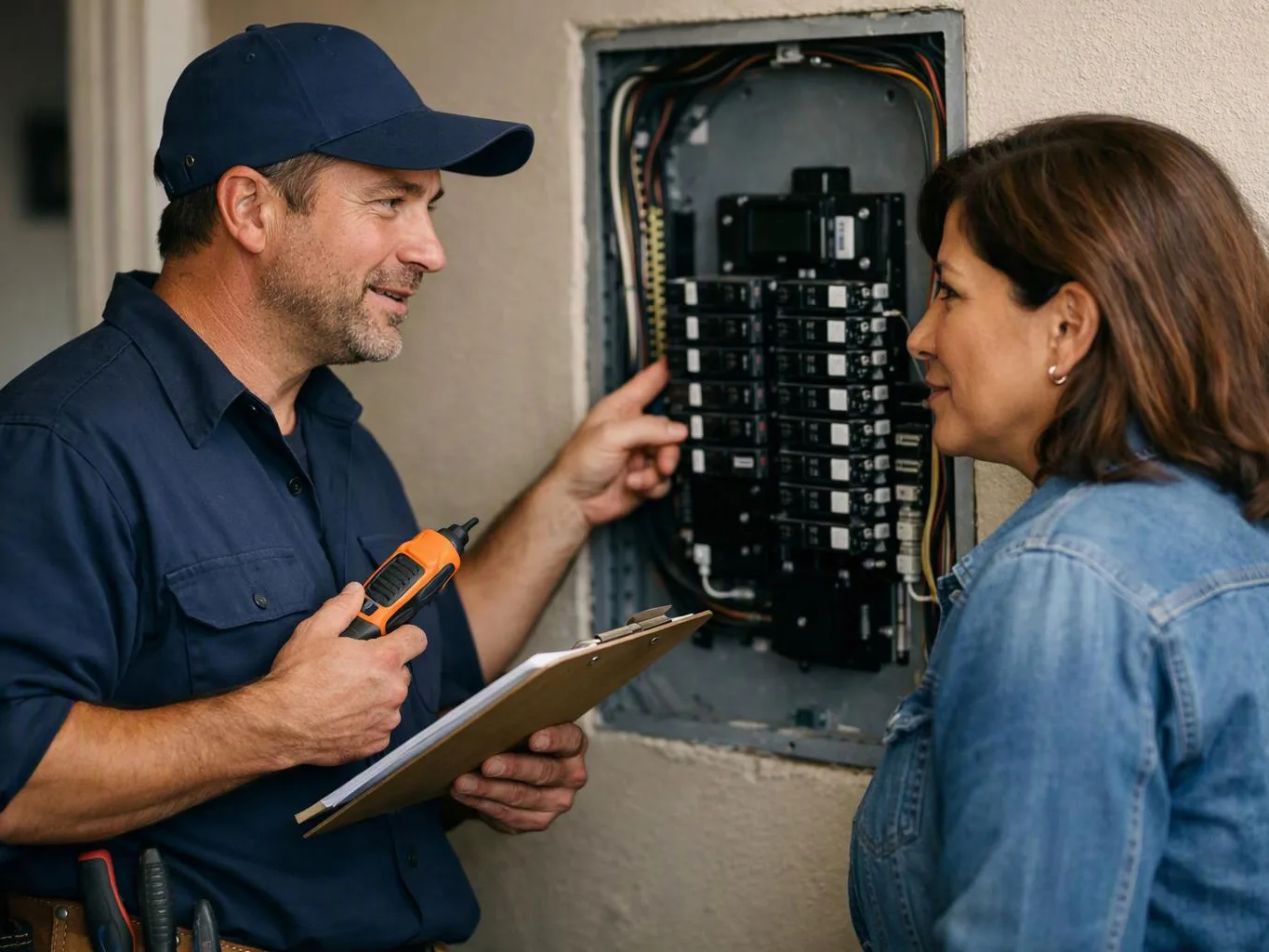
The visit starts with a fixture and wiring assessment, then moves to scope selection, installation, and testing. We check the housing, socket, trim, switch, and dimmer. After fitting the selected parts, we test the light and explain any separate repair needs. Free estimates are available for planned work.
Which material changes how long recessed lighting work takes?
The ceiling material and wiring access can change the work involved. Drywall may need careful cutting, while a difficult cavity can make wire access harder. We inspect the opening and path before setting the scope. The selected module, trim, bulb, and switch also affect the installation steps.
How can I tell whether recessed lighting fits my property?
The property fits recessed lighting when the ceiling, housing, wiring path, and desired light pattern support the fixture. We check ceiling access, existing openings, socket condition, and switch placement. A retrofit may suit a usable housing, while a new fixture fits a room that needs new wiring or a new lighting point.
What makes a retrofit module different from a new fixture?
A retrofit module updates an existing recessed housing, while a new fixture creates a new lighting point. We use the existing opening when its housing and wiring are suitable. New fixture work makes more sense when the room needs a different layout or the current housing cannot support the desired bulb and trim.
Why do recessed lights flicker after a bulb change?
Flickering often points to an incompatible bulb, dimmer, socket, module, or wiring connection. We test the bulb and control first, then inspect the fixture and wiring. A burning smell, warm switch plate, buzzing sound, or sparking outlet needs prompt electrical attention.
What should a property manager prepare before this lighting work?
A property manager should provide fixture locations, access details, switch information, and any known lighting symptoms. We use those details to set the inspection scope and coordinate access with occupants. The work may involve ceiling access, switch testing, and a final check of each updated light.