
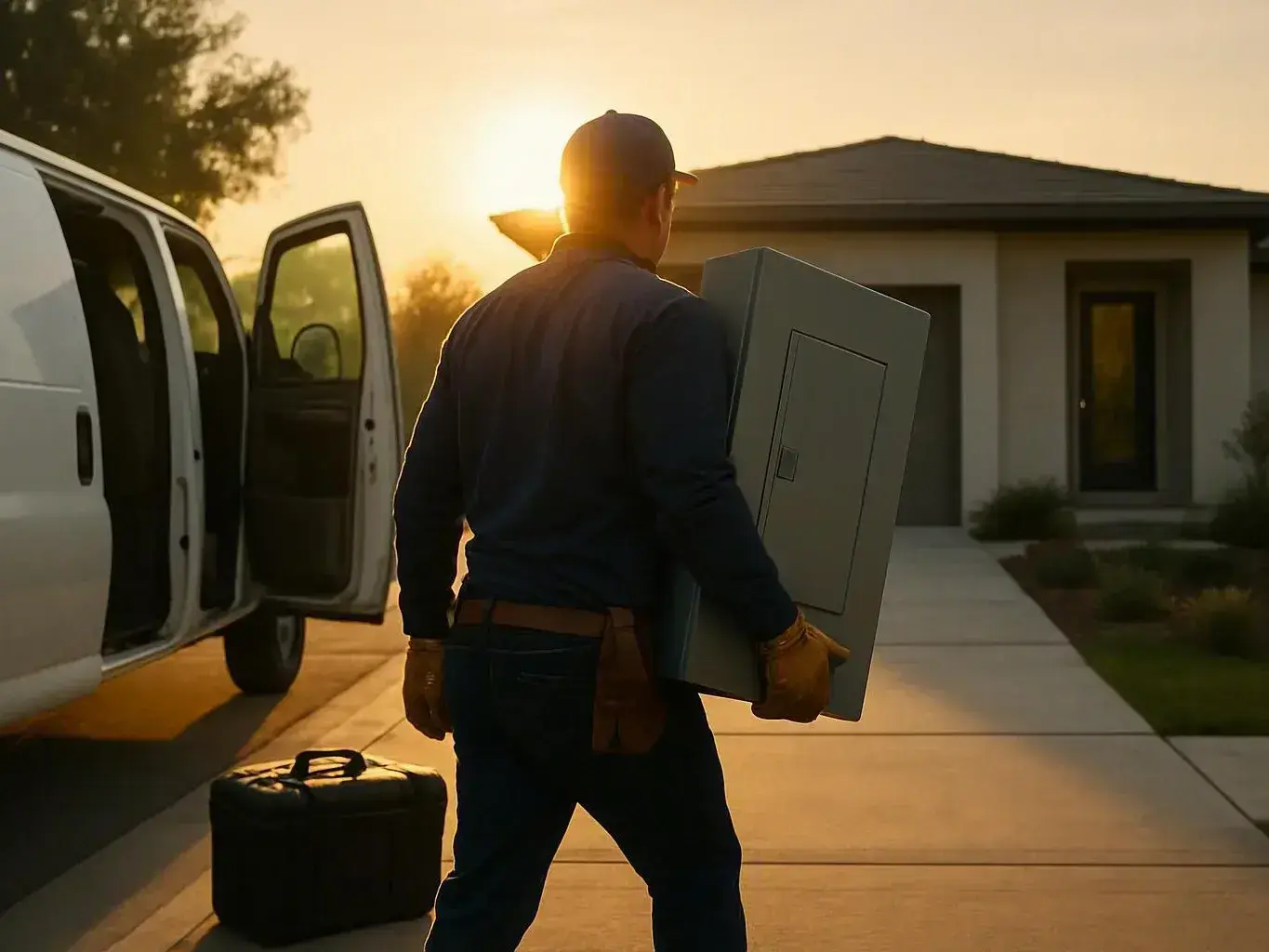
Attic Airflow Survey
We check attic volume, soffit vents, roof vents, insulation, and access. This shows whether the planned fan can exhaust heat safely.
A whole-house fan can move hot attic air during Santa Ana's dry summer heat. We plan safe wiring for homes, shops, and offices.
Moves stale indoor heat through the attic.
Reduces night-time strain on air conditioning.
Matches the fan circuit to panel capacity.
Accounts for Santa Ana's dry summer heat.
Fits attic access limits in older bungalows.
Adds tested switches and safe wiring connections.
According to the U.S. Department of Energy (2025), whole-house fans used with air conditioning can reduce air-conditioning energy use by 50% to 90%.
Source: U.S. Department of Energy·Year: 2025
Data from the California Energy Commission (2022) shows that California's 2022 Building Energy Efficiency Standards require whole-house fans to provide a minimum airflow efficiency of 1.5 cubic feet per minute per watt of fan power.
Source: California Energy Commission·Year: 2022
California's 2022 Building Energy Efficiency Standards require a whole-house fan's rated airflow to reach at least 1.5 cubic feet per minute for each square foot of conditioned floor area, as reported by the California Energy Commission (2022).
Source: California Energy Commission·Year: 2022
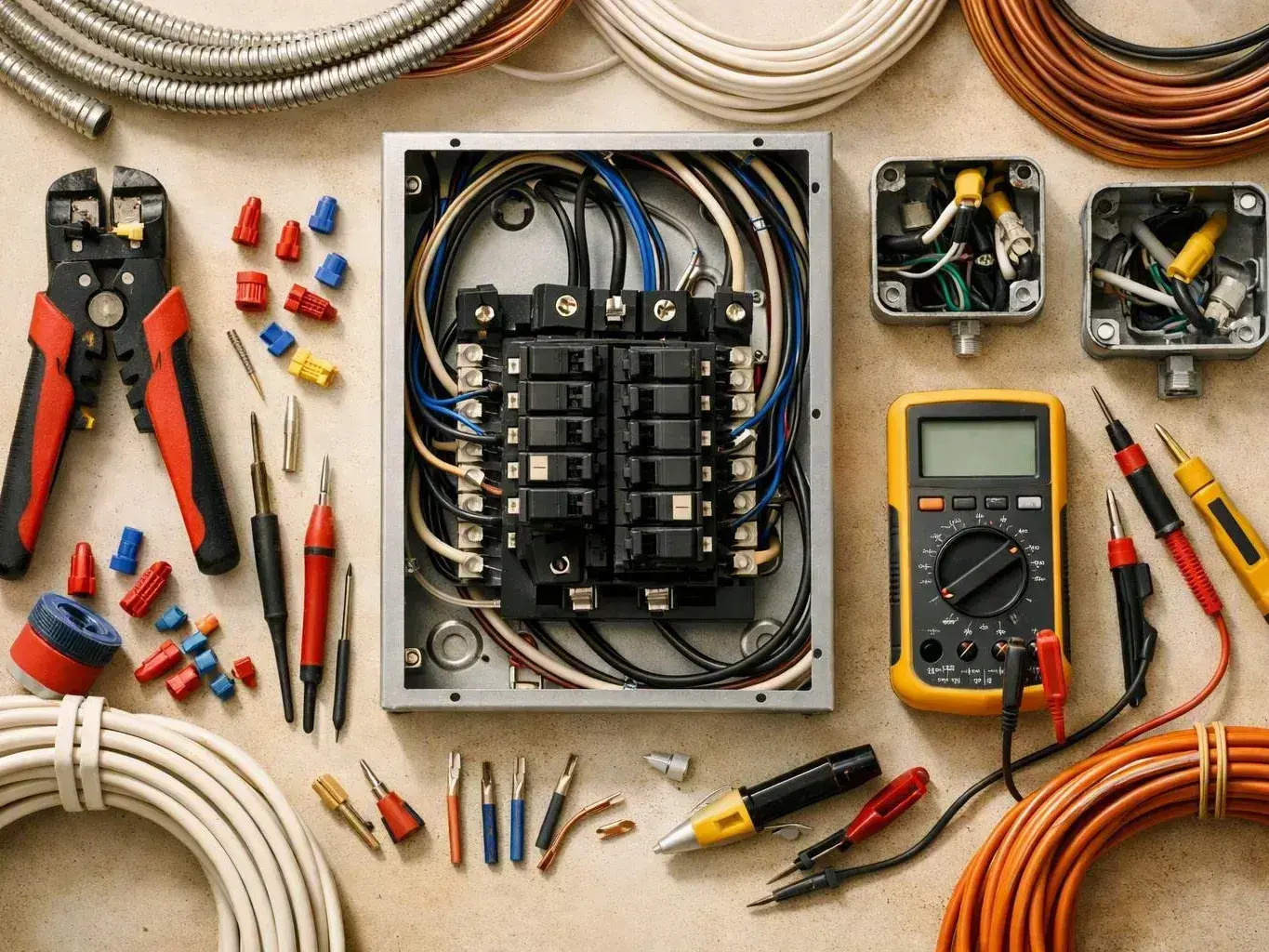
Whole-House Fan Installationis a home cooling installation that moves indoor heat through the attic and outdoors. Whole-House Fan Installation differs from attic fan work because it moves indoor air through the living space.Santa Ana, older homes need Whole-House Fan Installation planning for dry summer heat and limited attic space.
We check attic volume, soffit vents, roof vents, insulation, and access. This shows whether the planned fan can exhaust heat safely.
A load calculation and circuit mapping check panel capacity and wire routes. You receive a defined circuit plan before installation.
We place the fan, switch, grille, and controls around joists and duct paths. This limits noise and protects service access.
We identify permit needs and complete the rough-in wiring before the finish work. The step supports code review and safe concealment.
We test the circuit, controls, airflow, and shutoff. You receive the installed layout and any follow-up notes for future service.
Santa Ana Electrician holds every Whole-House Fan Installation engagement to the same standard—from first inquiry through completed work. Here is what guides our process.
Every Whole-House Fan Installation case is reviewed against our own checks before sign-off, so you receive exactly what was agreed.
Clear documentation at every stage—what we reviewed, what we found, and what happens next.
Dedicated communication throughout the process—from your first inquiry to completed Whole-House Fan Installation.
These steps help the attic and electrical checks move smoothly.
A planned whole-house fan installation often fits within one scheduled work period, but attic access and wiring scope control the duration.
The installation includes an attic airflow survey, load calculation, circuit mapping, fan placement, control wiring, and final testing.
Whole-House Fan Installation moves warm indoor air through the attic and outside.
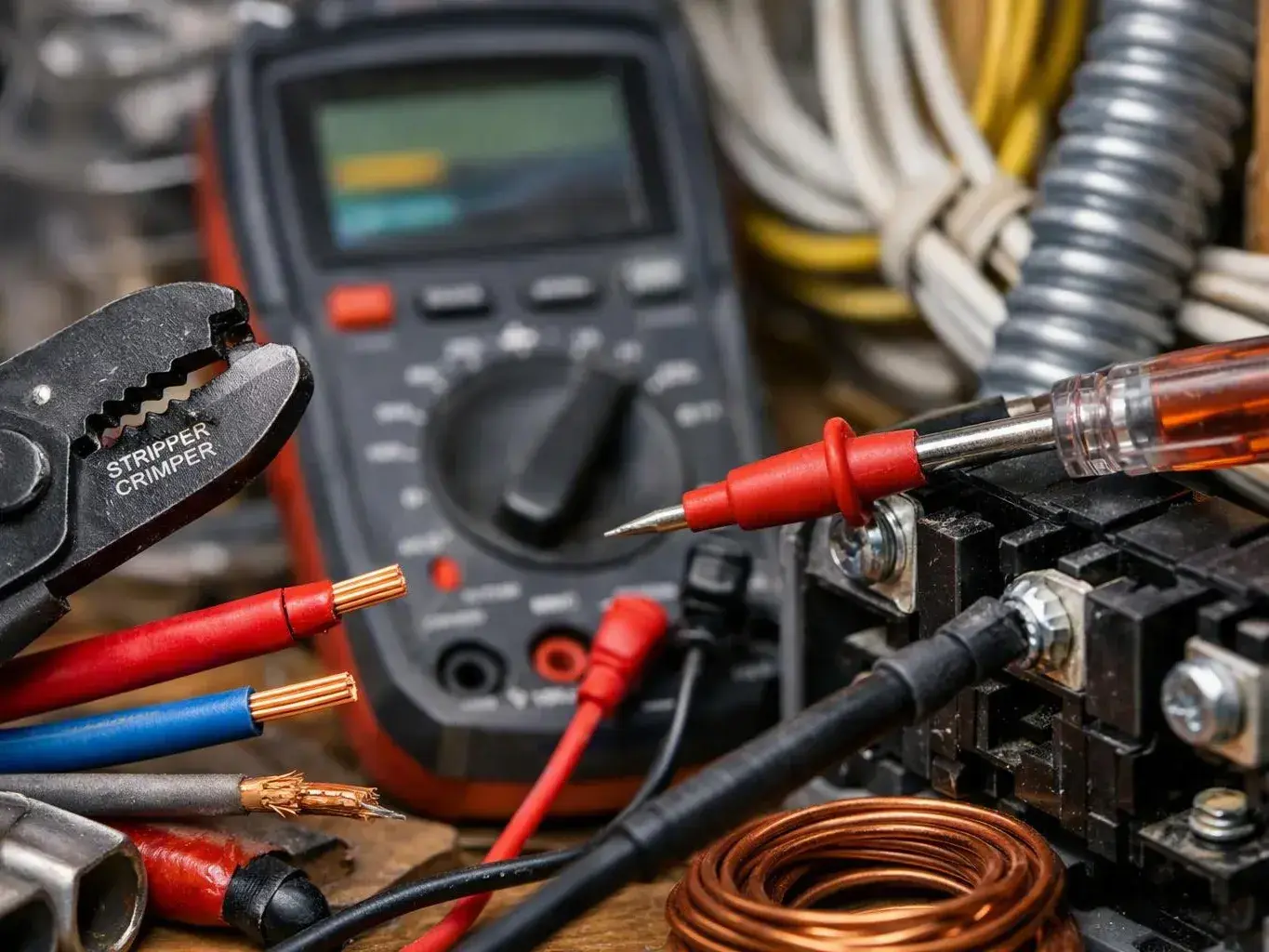
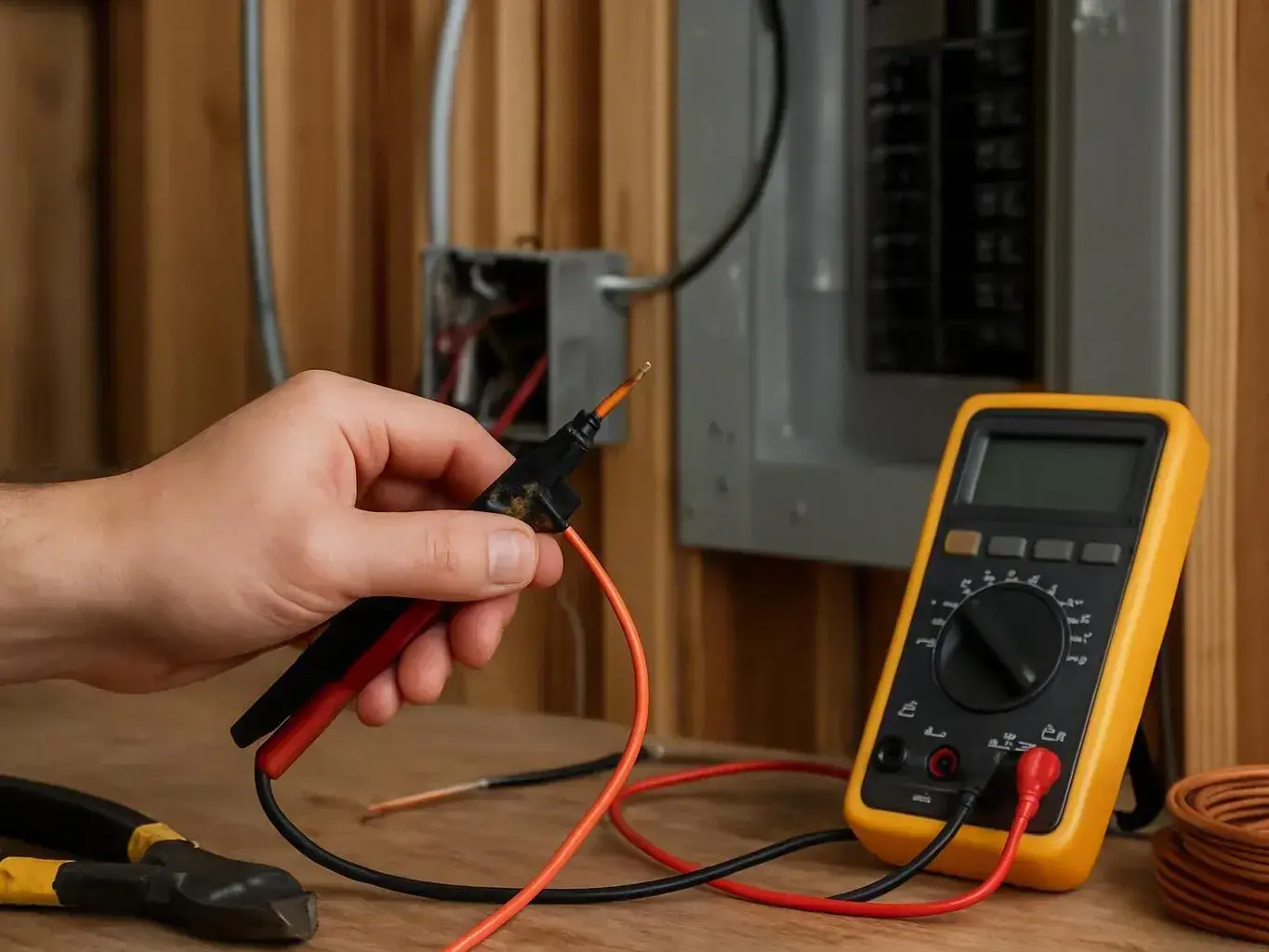
Request an estimate for a fan location and load check, with emergency dispatch or same-day scheduling when urgent wiring issues appear.
Call Santa Ana Electrician to discuss an outage, wiring concern, panel issue, or other electrical problem.
Santa Ana, CA
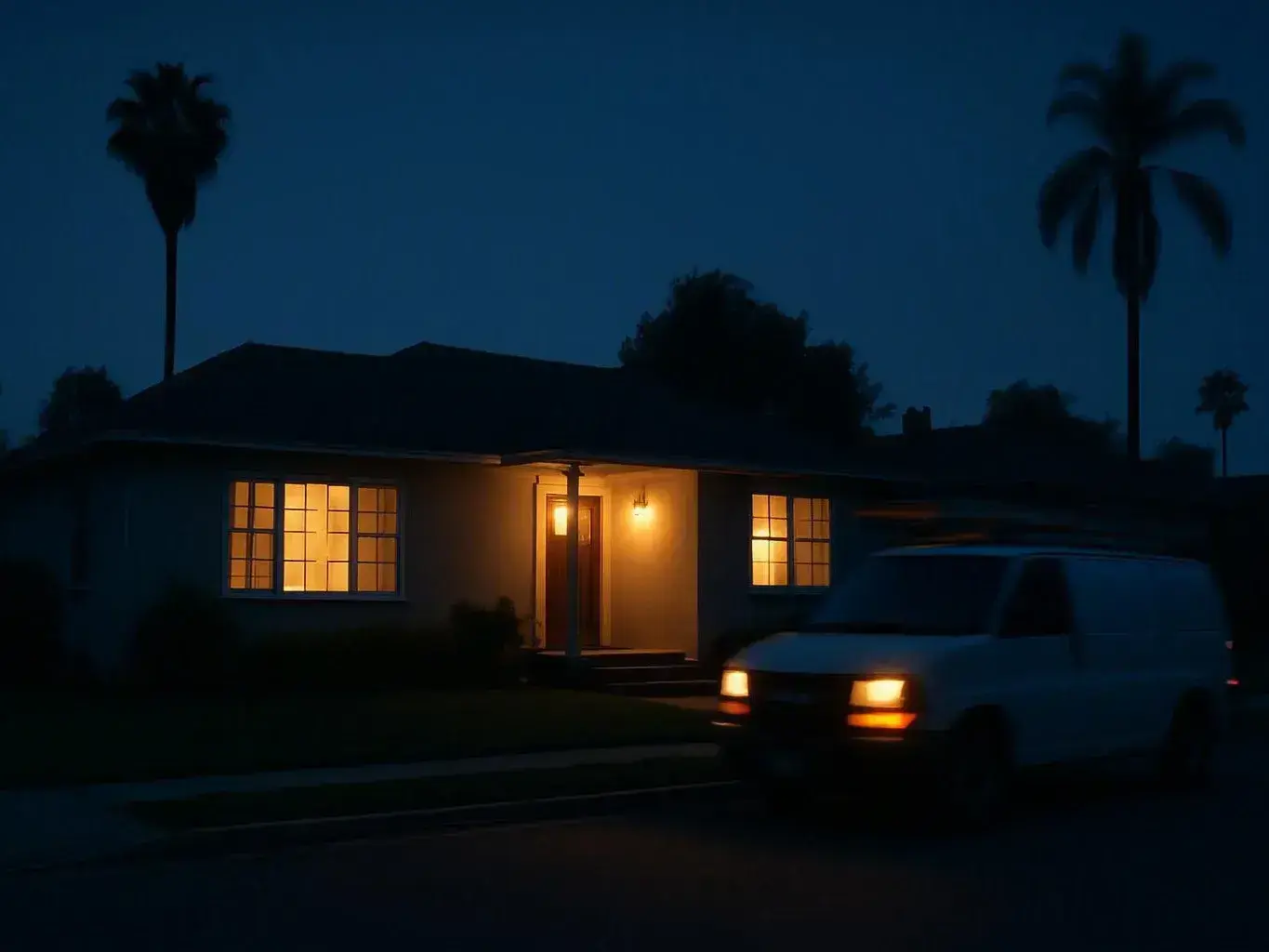
A homeowner near Bowers Museum plans to sell and wants cooling work checked first. The attic has limited access, and the panel serves several added circuits. We trace the existing wiring, check the vent path, and explain whether fan installation fits the home. The safe next step is a written scope with permit needs and any wiring work listed before the sale decision.
A buyer in Santa Ana, CA compares a new fan with another quick fix. The home still has hot upper rooms after a prior switch change. We inspect the switch box, trace the circuit, and check attic exhaust space. The findings separate an airflow fault from a wiring fault.
A shop in Santa Ana, CA needs less heat without blocking customer access. Work must fit quiet trading hours and a narrow service path. We plan attic entry, isolate the circuit, and test controls before reopening the space. The scope records access limits and code steps.