
What is AFCI?
AFCI is an arc-fault circuit interrupter, a protective device that monitors electrical current for patterns linked to unintended arcing. When the device detects a hazardous arc pattern, it opens the circuit to stop power flow. AFCI protection helps address faults that ordinary overcurrent protection may not detect quickly.
Quick Facts About AFCI
Category
Electrical protection device
Used for
Detecting unintended electrical arcing
Common confusion
Often confused with GFCI protection
Also called
Arc-fault circuit interrupter, Arc-Fault Circuit Breaker
Often discussed with
Electrical Code Correction, Circuit Breaker Repair
Key Takeaways About AFCI
- AFCIs respond to arc patterns, not only excessive current.
- A tripped AFCI may point to damaged wiring or a faulty device.
- AFCI and GFCI protection address different electrical fault conditions.
How AFCI Works
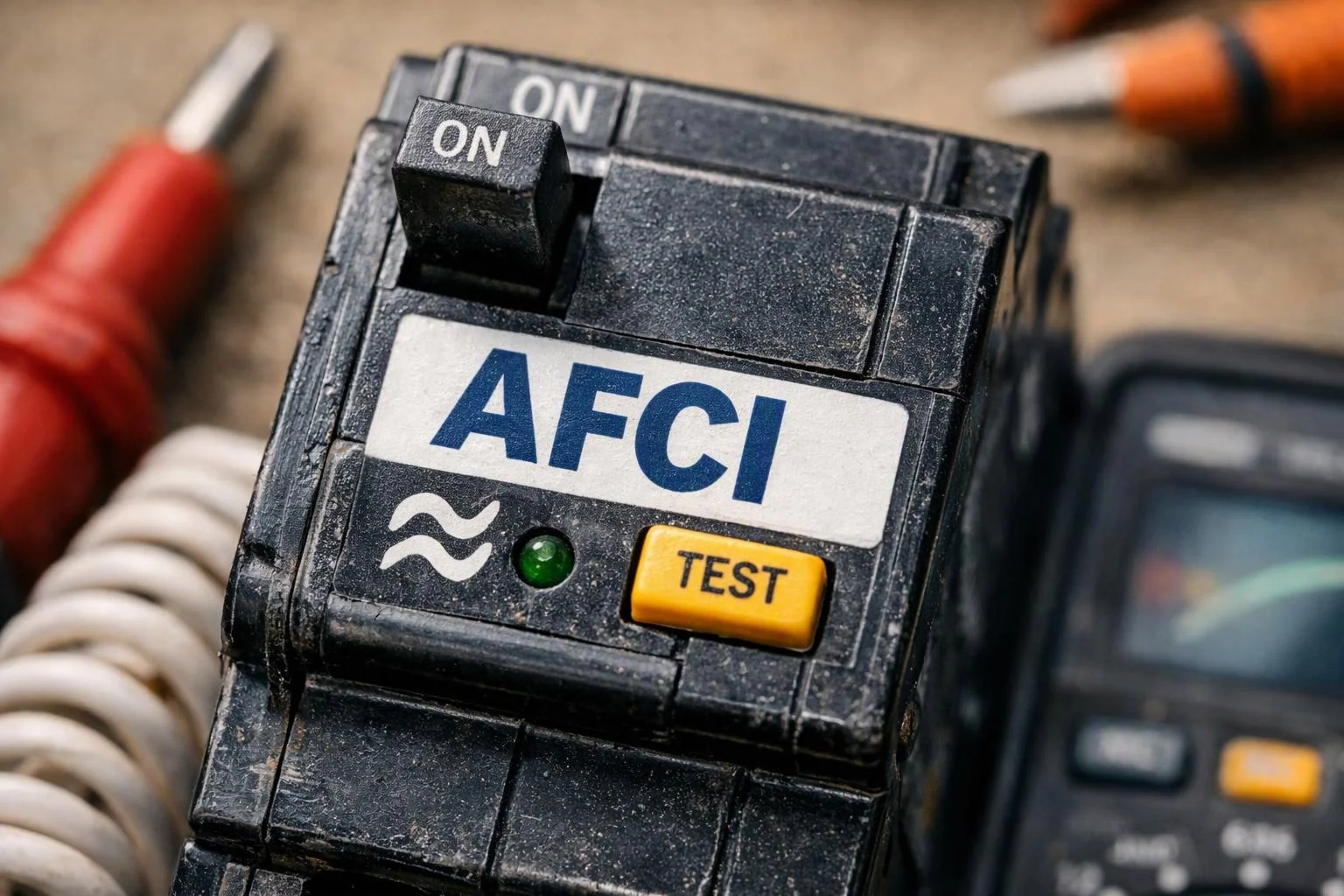
An AFCI monitors the electrical waveform on a circuit and looks for patterns that suggest arcing. Arcing can occur when current jumps across a damaged connection, loose terminal, or deteriorated conductor. The device opens the circuit when its detection system identifies that pattern.
Related glossary terms: Arc Fault, Conductor, Electrical Box.
An AFCI may be built into a circuit breaker or installed as another approved protective device. The breaker records a trip condition through its handle position or indicator, depending on the design. Resetting the device restores power only after the detected condition is no longer present. A recurring trip calls for testing of connected wiring, outlets, switches, and appliances. GFCI protection serves a different purpose by responding to current leakage involving the grounding path.
From the Santa Ana Electrician team
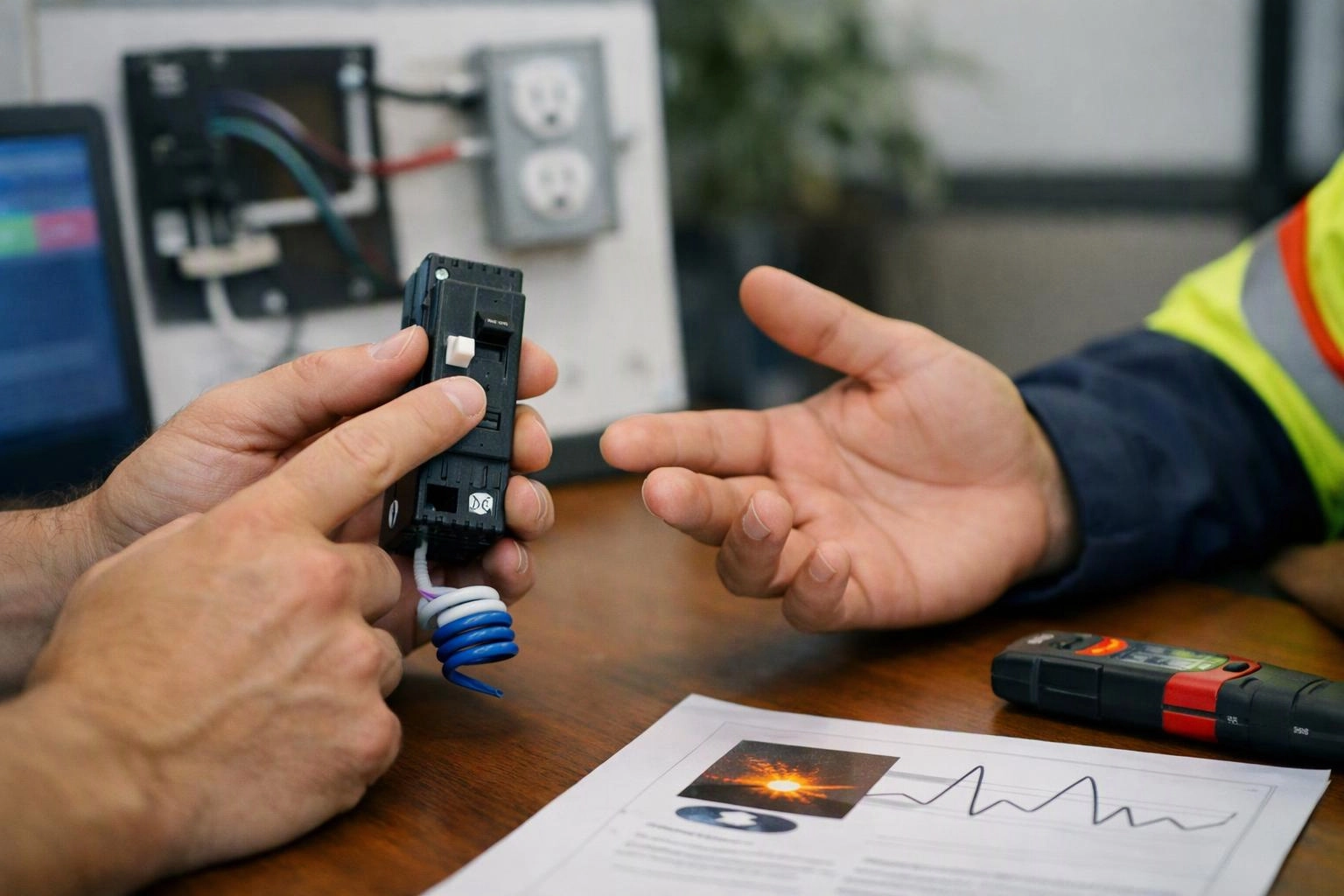
When we handle Electrical Code Correction work, we identify the affected circuit and inspect its breaker, wiring, connections, and connected devices. We look for loose terminals, damaged insulation, incompatible components, or a faulty appliance before replacing an AFCI. Our checks focus on finding the condition that caused the trip.
AFCI in Practice: A Real-World Example
A bedroom circuit trips its AFCI after a receptacle develops a loose connection. We inspect the receptacle, wiring, and connected loads to locate the arc condition before restoring dependable circuit operation.
Related Services
Related Terms
Arc Fault
An arc fault is an unintended electrical discharge that jumps across a gap between conductors or…
Conductor
A conductor is a material or component that allows electric charge to move through a circuit…
Electrical Box
An electrical box is a protective enclosure that holds wire connections, switches, receptacles, or other electrical…
Santa Ana Electrician
Have Questions About AFCI?
Contact Santa Ana Electrician for practical guidance on AFCI and related 24 hour electrician work in Santa Ana.