
What Is A Conductor?
A conductor is a material or component that allows electric charge to move through a circuit. In building wiring, conductors are usually metal wires that carry current between the electrical panel, switches, outlets, and equipment. A conductor may serve as an ungrounded hot wire, a neutral wire, or a grounding path.
Quick Facts About Conductor
Category
Electrical wiring component
Used for
Carrying current between circuit points
Common confusion
A conductor is one wire, while a cable may contain several conductors
Also called
Electrical conductor
Often discussed with
Whole-House Rewiring
Key Takeaways About Conductor
- Conductors carry current through a circuit.
- Wire size must match the circuit’s intended use.
- A conductor is not always the same as a cable.
How Conductor Works
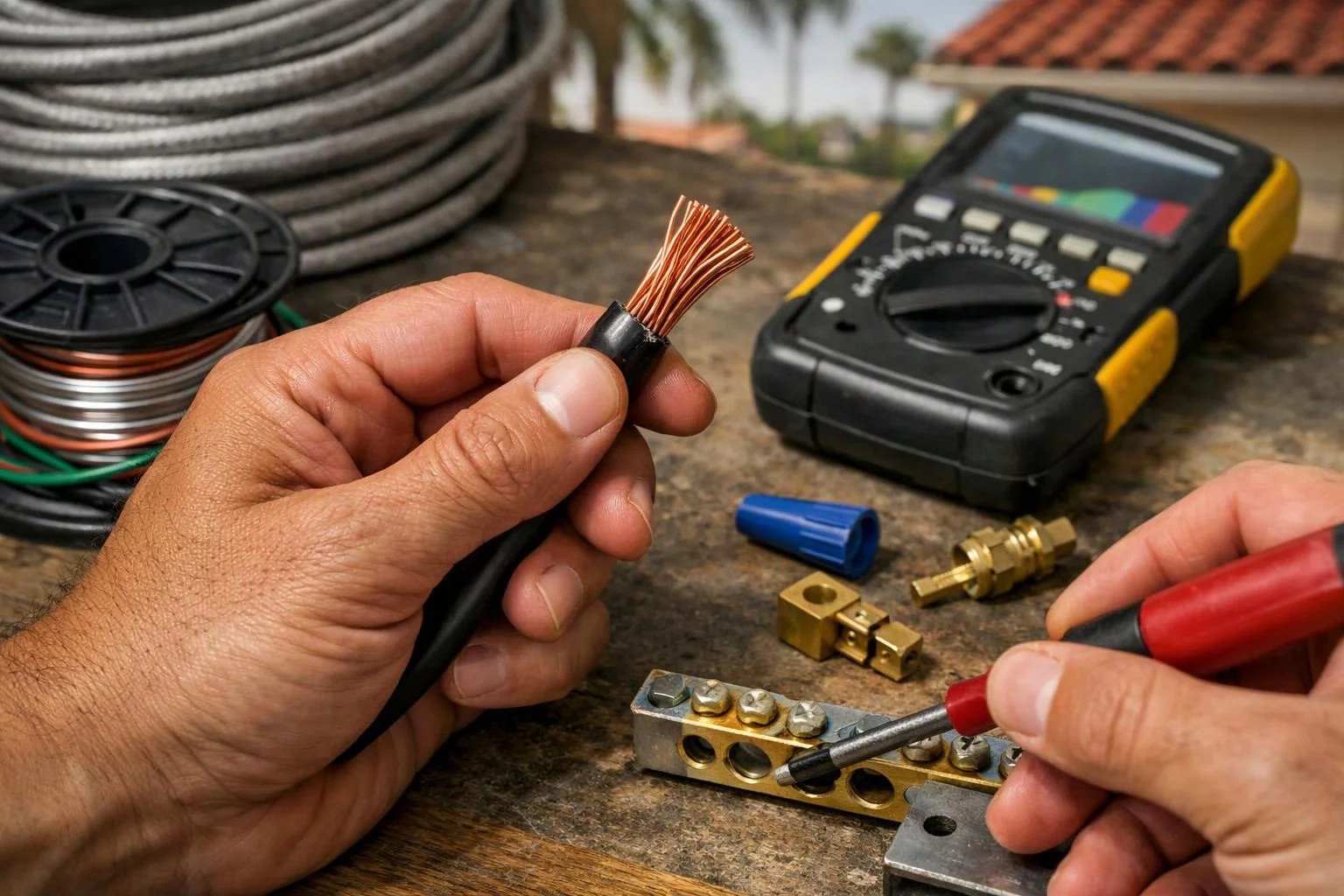
A conductor carries electric current along a planned path between connected parts of a circuit. Copper and aluminum are common conductor materials because their structure allows charge to move through them. Insulation surrounds many conductors to keep current contained and to separate adjacent wires.
Related glossary terms: Neutral Wire, Wire Gauge, Grounding Electrode.
In a home, each conductor has a defined role. A hot conductor delivers power to a load, while a neutral wire completes the normal circuit path back toward the supply. A grounding conductor provides a path for fault current so protective devices can respond. Electricians check conductor identity, condition, connections, and wire gauge during whole-house rewiring. Damaged insulation, loose terminations, or an unsuitable conductor can affect circuit performance and create a fault.
From the Santa Ana Electrician team
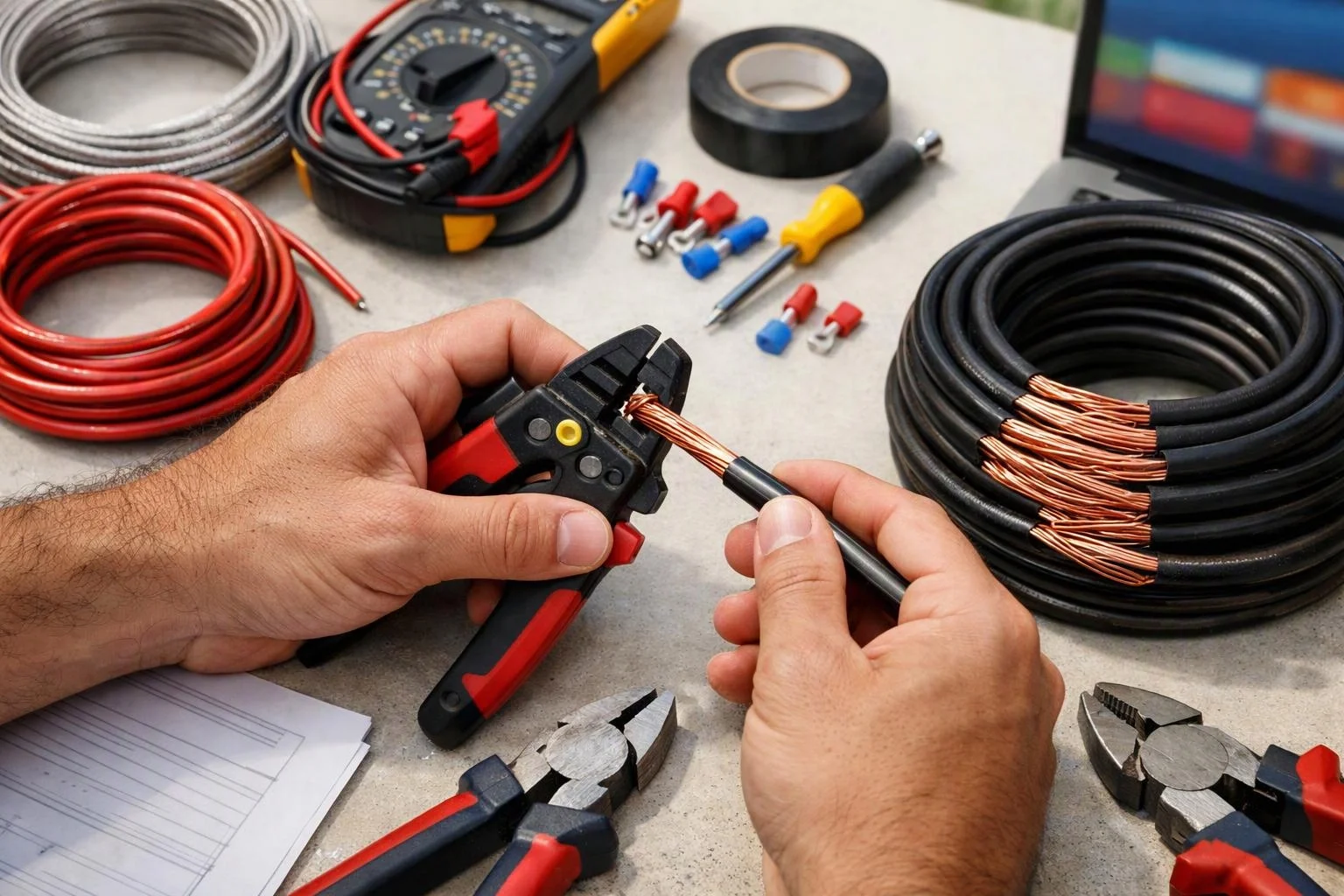
When we plan whole-house rewiring, we trace each conductor from the panel to its connected devices and confirm its role. We inspect insulation, terminations, routing, and wire gauge before connecting new wiring. Our team also checks that conductor identification remains clear at panels, boxes, switches, and outlets.
Conductor in Practice: A Real-World Example
During a whole-house rewiring project, a new conductor runs from the electrical panel to a bedroom outlet circuit. The electrician identifies the hot, neutral, and grounding paths, then secures each connection inside the proper electrical box.
Related Services
Related Terms
Neutral Wire
A Neutral Wire is a current-carrying conductor that normally completes the electrical path from a load…
Wire Gauge
Wire Gauge is a standard way to describe a conductor’s diameter and current-carrying capacity. Gauge identifies…
Grounding Electrode
A grounding electrode is a conductive object, such as a metal water pipe or grounding rod…
Voltage Drop
Voltage Drop is the reduction in electrical pressure that occurs as current travels through a conductor…
Santa Ana Electrician
Have Questions About Conductor?
Contact Santa Ana Electrician for practical guidance on Conductor and related 24 hour electrician work in Santa Ana.