Skip to content
Glossary

What is a Conduit?

Conduit is a tube or channel that protects and routes insulated electrical conductors. It may be made from metal, PVC, or other approved materials. Electricians select conduit by location, environmental exposure, conductor count, wire size, and required protection. Proper installation also supports grounding, physical protection, maintenance, and compliance with electrical codes.

Quick Facts About Conduit

Category

Electrical wiring method and raceway

Used for

Protecting and routing insulated conductors

Common confusion

Conduit is not the same as wire or cable

Relevant standard

National Electrical Code, Article 358 and related articles

Also called

Electrical conduit, Electrical raceway

Often discussed with

Electrical Wiring Repair, Electrical Code Compliance Inspection

Key Takeaways About Conduit

  • Conduit shields electrical conductors from impact, moisture, chemicals, sunlight, and other site hazards.
  • Metal and nonmetallic conduit types fit different sites, grounding methods, and install needs.
  • Conduit size depends on conductor size, conductor count, bend space, and fill limits.
  • Correct fittings, supports, bends, and physical protection matter as much as the tube.
  • Conduit is a wiring method, not the electrical wire inside it.

Understanding Conduit

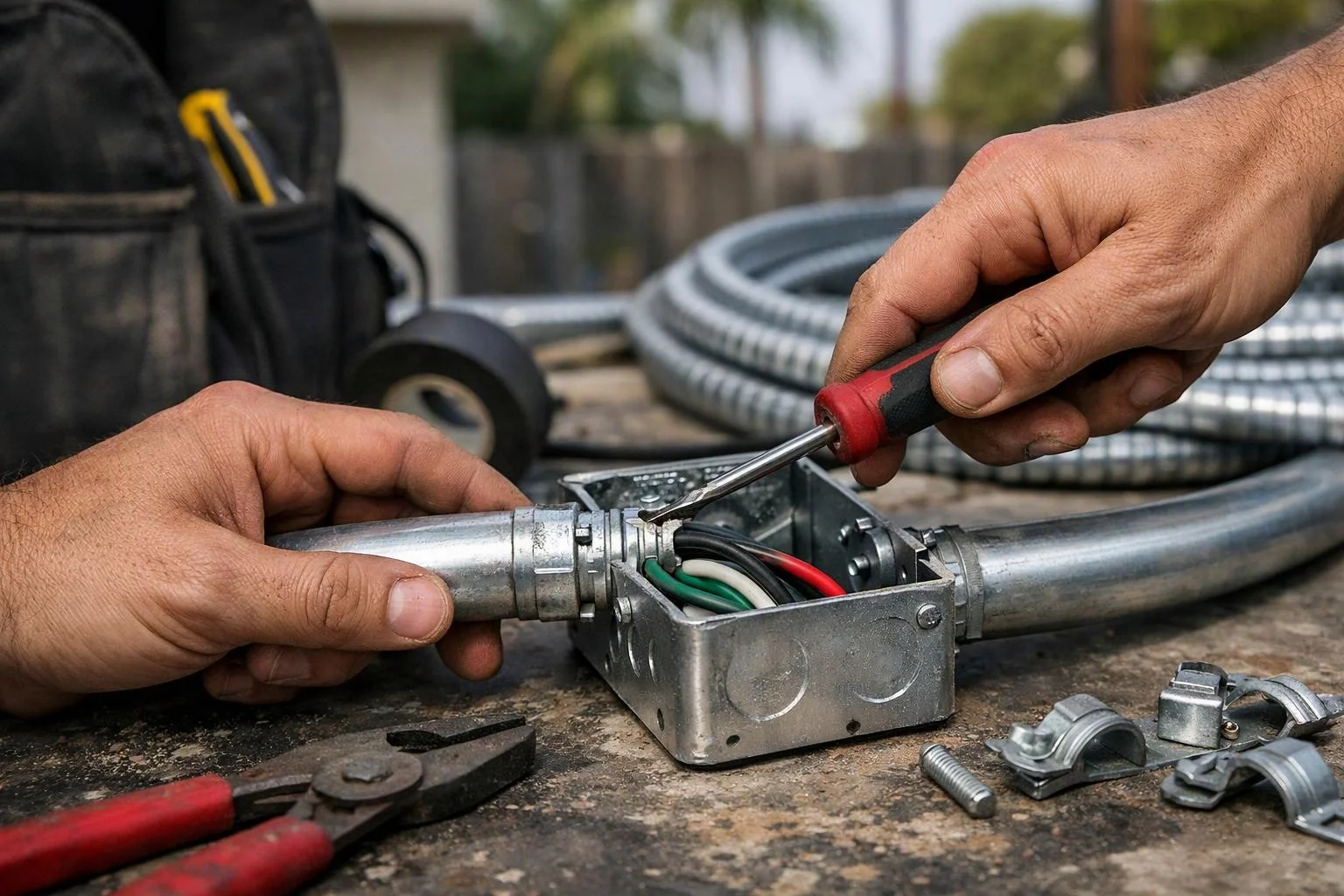
Santa Ana Electrician — detail view — Understanding Conduit

Conduit is a manufactured raceway that encloses electrical conductors and guides them between points. It protects wires from physical damage. It also helps organize wiring inside walls, ceilings, equipment, and outdoor installations. Common materials include electrical metallic tubing, rigid metal conduit, intermediate metal conduit, and PVC conduit.

Related glossary terms: Raceway, THHN Wire, Ampacity.

The correct type depends on the installation environment. Metal conduit may provide physical strength and, when installed as permitted, an equipment grounding path. PVC conduit resists corrosion and doesn't conduct electricity. The installation needs a separate grounding conductor. Flexible conduit helps connect equipment that moves or vibrates. However, it has limits on support, bending, and exposure.

How Conduit Works, Is Measured, or Is Used?

Conductors are pulled through the raceway after the conduit path is planned and assembled. Installers join sections with approved couplings and connect boxes or equipment with listed fittings. Bends must protect the wire insulation and leave enough space for pulling. Sharp edges, excessive bends, or poorly secured fittings can damage conductors.

Conduit size is selected from the conductor dimensions and the permitted raceway fill area. The calculation considers the number of conductors, their insulation type, and the raceway's internal area. Installers also check ampacity, temperature limits, pull length, and bend space. A larger raceway may cost more. However, it can make wire installation safer and future changes easier.

Each conduit system needs support and protection suited to its location. Indoor runs may pass through framing. Exposed outdoor runs need materials and fittings rated for sunlight, water, corrosion, or physical contact. A complete installation also includes properly bonded metal parts. It needs an approved equipment grounding conductor when the raceway itself does not provide that function.

Why Conduit Matters?

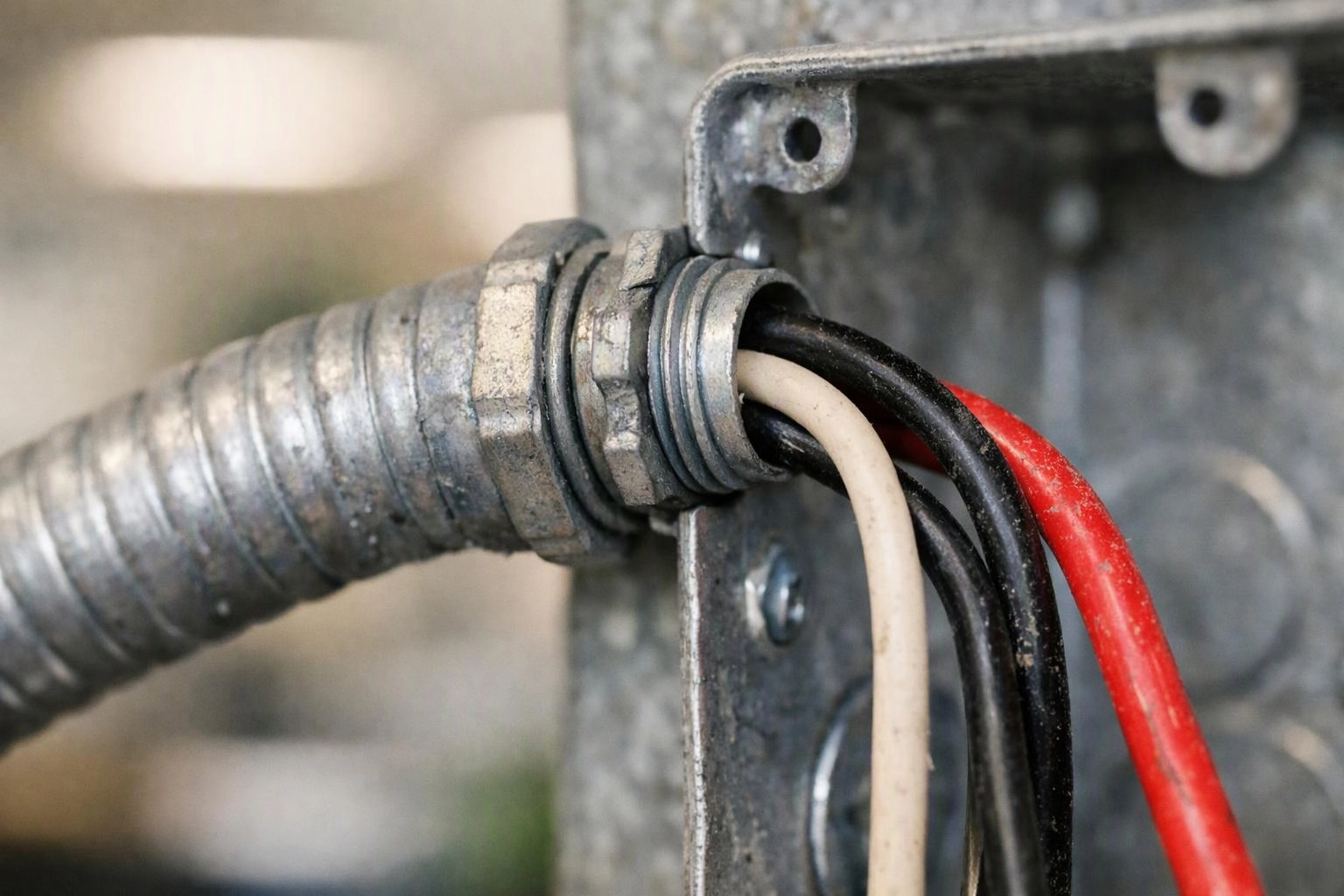
Santa Ana Electrician — service highlight — Why Conduit Matters?

Conduit reduces the chance that electrical conductors will suffer cuts, crushing, abrasion, or moisture damage. It also makes wiring easier to identify and replace than conductors buried without a suitable raceway. In commercial and industrial spaces, organized raceways simplify inspections, troubleshooting, and later equipment changes.

Conduit does not automatically make an installation safe. A raceway can still fail if its material is wrong for the environment, its fill is excessive, or its fittings are not listed for the application. Correct grounding, conductor protection, support, and enclosure connections must work together. These steps reduce shock, fire, and equipment risks.

When Conduit Matters Most?

Conduit becomes especially important where wiring is exposed to impact, moisture, chemicals, heat, sunlight, or movement. Garages, workshops, service areas, parking structures, rooftops, and exterior walls often need a raceway selected for those conditions. Local building requirements may also affect the approved wiring method, inspection process, and permit scope.

Conduit planning matters during panel upgrades, new circuits, remodels, and equipment installations. Before work begins, verify the available pathway, conductor sizes, raceway material, support spacing, pull access, and box capacity. A qualified review can identify hidden problems. These include a damaged raceway, an overfilled tube, an unprotected transition, or a missing grounding path.

How to Evaluate Conduit?

  • Check whether the conduit material is listed for the location, moisture level, sunlight, temperature, and chemical exposure.
  • Verify that the raceway size allows the planned conductors without exceeding applicable fill limits.
  • Inspect bends, couplings, connectors, and bushings for damage, sharp edges, looseness, or incompatible materials.
  • Confirm that the raceway and grounding conductor provide an approved fault-current path.
  • Look for secure supports, accessible junction boxes, and protection where the conduit passes through exposed areas.

Related Concepts Compared

Conduit vs. Raceway

Raceway is the broader term for a channel or enclosure that routes wires. Conduit is one type of raceway with a tubular or enclosed pathway.

Conduit vs. Cable

Cable contains two or more insulated conductors, or conductors with an outer jacket, as one manufactured assembly. Conduit is the protective pathway that may contain individual wires or cable.

Conduit vs. Wire

Wire is the electrical conductor that carries current. Conduit protects and routes the wire but does not replace its insulation or electrical rating.

Conduit vs. Wireway

Wireway is a generally rectangular, hinged or removable raceway used to route multiple conductors. Conduit is usually tubular and uses bends and fittings for its path.

Expert Note

A conduit route should be planned around conductor pulling limits, not only the shortest path. Too many bends between access points can damage insulation or make installation impossible. Experienced installers coordinate box size, grounding, support, and future access before selecting the final raceway size.

Common Mistakes or Myths About Conduit

  • Treating conduit as a substitute for conductor insulation or overcurrent protection.
  • Filling a raceway beyond its permitted capacity.
  • Using indoor fittings or materials in wet, outdoor, corrosive, or sun-exposed locations.
  • Leaving sharp cut edges that can damage conductor insulation.
  • Assuming every metal raceway automatically provides a complete grounding path.

Conduit in Practice: A Real-World Example

A homeowner adds a 240-volt circuit to a detached garage. The installer runs appropriately sized PVC conduit underground and adds a listed outdoor fitting. The installer adds insulated conductors and a separate grounding conductor. The raceway guards wiring from soil moisture and physical harm and allows future replacement.

Related Terms

Raceway

Raceway is a channel, tube, or enclosed path that protects and routes electrical conductors. Common raceways…

THHN Wire

THHN Wire is a thermoplastic-insulated electrical conductor rated for dry locations and commonly installed inside conduit…

Ampacity

Ampacity is the maximum current, measured in amperes, that a conductor can carry continuously under stated…

Electrical Grounding

Electrical Grounding is a safety system that connects electrical equipment and circuits to earth or a…

Santa Ana Electrician

Have Questions About Conduit?

Contact Santa Ana Electrician for practical guidance on Conduit and related 24 hour electrician work in Santa Ana.

+1 (949) 850-2844