Skip to content
Glossary

What is Wire Nut?

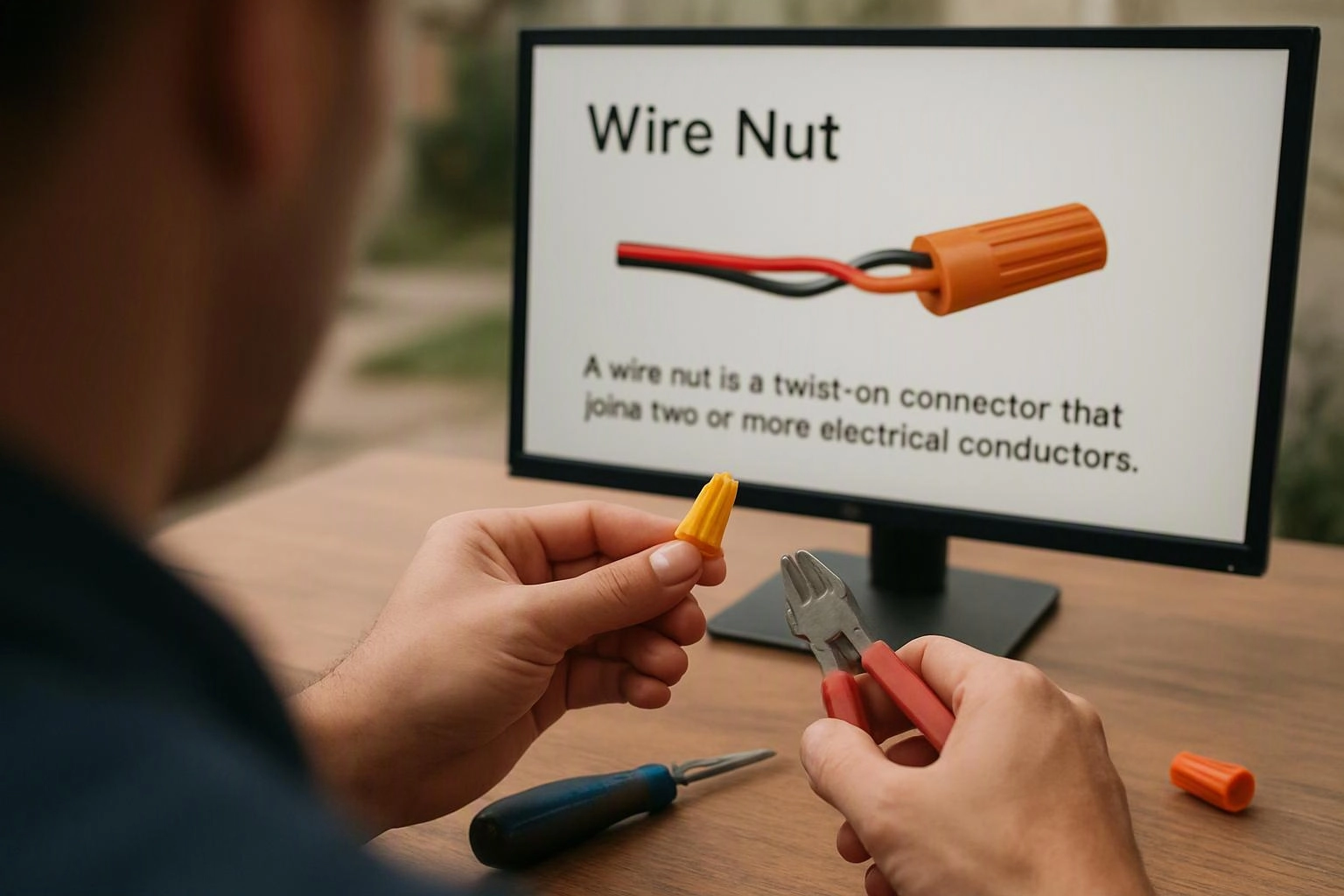
Wire Nut is a twist-on connector that joins two or more electrical conductors inside an approved enclosure. Made from insulating plastic with an internal metal spring, a wire nut grips properly stripped wires and creates a secure electrical path. Its size must match the wire type, gauge, number of conductors, and circuit conditions.

Quick Facts About Wire Nut

Category

Twist-on electrical wire connector

Used for

Joining compatible conductors

Measured by

Wire gauge and conductor count

Common confusion

A wire nut is not a fuse or circuit breaker

Also called

Twist-on wire connector, Wire connector

Often discussed with

Electrical Wiring Repair, Emergency Electrical Troubleshooting

Key Takeaways About Wire Nut

  • Choose a wire nut rated for the wire gauge, conductor material, and number of wires.
  • Strip wires to the manufacturer’s stated length before twisting the connector into place.
  • Connections must remain inside an approved box, enclosure, or other permitted wiring space.
  • A loose, damaged, or overheated wire nut can create resistance, arcing, and fire risk.

Understanding Wire Nut

Santa Ana Electrician — detail view — Understanding Wire Nut

Wire Nut is a reusable-looking but normally single-installation connector for joining electrical conductors. Its molded insulating shell protects the connection. An internal metal spring grips the stripped wire ends. Electricians commonly use wire nuts with copper wires in branch circuits, lighting boxes, switches, and receptacles.

Related glossary terms: AWG, Branch Circuit, Electrical Grounding.

A wire nut doesn't replace an electrical box, grounding method, or overcurrent device. The splice must stay inside an approved junction box or another allowed enclosure. The enclosure must follow the applicable electrical code. The connector must also carry a rating for wire size, material, wire count, and circuit conditions. A wire nut listed for two small copper wires may not fit larger wires. It may also not fit aluminum conductors.

How Wire Nut Works, Is Measured, or Is Used?

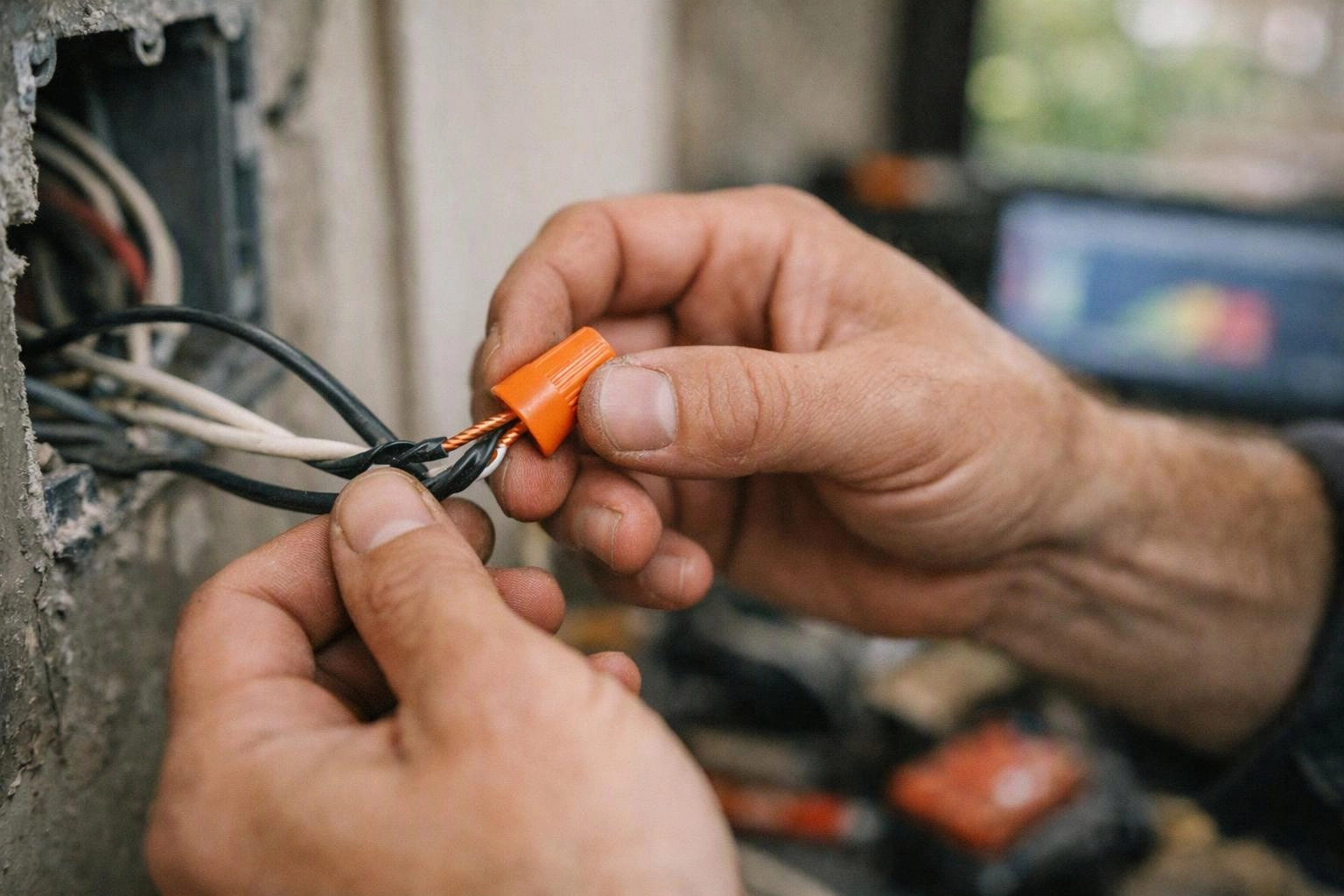
To make a connection, the installer turns off the circuit. The installer checks that the conductors have no power. Then, the installer removes the required amount of insulation. The conductors are aligned evenly. Then, they are twisted together with the connector. The wire nut must be secure. The connector's spring presses against the conductors. This creates a firm grip and a steady electrical path.

Wire nuts are selected by their published combination range, not color alone. A label may list combinations such as two 14 AWG copper wires. It may also list three 12 AWG copper wires. The installer should follow the maker's strip length and twisting instructions. The installer should also follow approved conductor combinations. A pull test and visual check can help find a sound splice. The installer should confirm that no bare copper extends beyond the connector.

  • Match the connector to the wire gauge and conductor material.
  • Keep the connection inside an approved enclosure with enough space.
  • don't reuse a connector that's cracked, deformed, corroded, or heat damaged.

Why Wire Nut Matters?

Santa Ana Electrician — service highlight — Why Wire Nut Matters?

A properly installed wire connector reduces the chance of a loose splice. It also reduces exposed conductors and accidental contact. A poor connection can raise electrical resistance and create heat under load. Continued heating may discolor the connector or damage insulation. It may also cause arcing.

Wire nuts also affect inspection results and future maintenance. A clear splice gives another electrician room to test, repair, or extend the circuit. Correct connectors support.National Electrical Code and product listing rules. They also support local inspection practices. Exact installation rules depend on the project and location.

When Wire Nut Matters Most?

Selection matters during electrical wiring repair, fixture replacement, remodeling, and troubleshooting. Older installations may contain mixed wire sizes or brittle insulation. They may also contain crowded boxes or aluminum conductors. These conductors need a connector listed for that use. Heat, moisture, vibration, and repeated circuit loading can expose hidden weaknesses. A quick visual check may not show these problems.

Pay close attention when a splice shows heat marks or a melted shell. Also check for corrosion, loose wires, or a burning odor. The circuit may have a poor connection, excessive load, or damaged insulation. It may have another fault that a new wire nut alone won't fix. In Santa Ana, an emergency repair may involve a crowded ceiling box or outdoor exposure. Check the enclosure, conductor condition, and connector listing together.

How to Evaluate Wire Nut?

  • Confirm the connector lists the exact wire gauge, conductor material, and number of wires in the splice.
  • Check that the shell is intact and that no copper is visible beyond the connector.
  • Look for discoloration, melting, corrosion, loose wires, or a burning odor.
  • Verify that the splice sits inside an approved enclosure with adequate box volume.
  • Compare the installation with the connector manufacturer’s strip length and torque or twisting instructions.

Related Concepts Compared

Wire Nut vs. Push-in Wire Connector

A push-in connector holds stripped conductors in spring terminals rather than through a twist-on cap. Both products require a listing that covers the wire size, material, and number of conductors.

Wire Nut vs. Crimp Connector

A crimp connector forms a permanent connection when a tool compresses a metal sleeve around the conductors. A wire nut uses a threaded cap and internal spring, so the installation method and approved applications differ.

Wire Nut vs. Terminal Block

A terminal block joins wires at fixed screw or spring terminals mounted in an organized assembly. A wire nut is a compact cap used for an individual splice inside an enclosure.

Wire Nut vs. Wire Splice

A wire splice is the electrical joining of conductors. A wire nut is one product used to make and insulate that splice.

Expert Note

Wire nut color is not a universal size code. Manufacturers assign different combinations and ratings to products that look similar. Read the package or product marking, especially when joining more than two wires, larger conductors, stranded wire, or aluminum conductors.

Common Mistakes or Myths About Wire Nut

  • Choosing a connector by color without checking its listed wire combination.
  • Using a standard wire nut on aluminum conductors without an approved aluminum-rated connector.
  • Leaving a splice outside an electrical box or burying it without an accessible enclosure.
  • Reusing a damaged wire nut or forcing too many wires into a connector.
  • Leaving excessive bare copper exposed beyond the connector.

Wire Nut in Practice: A Real-World Example

A ceiling light box contains two 14 AWG copper conductors and the light fixture leads. After turning off and testing the circuit, an electrician selects a connector listed for that combination, joins each matching conductor group, and folds the splices into the box. A cracked connector or exposed copper would require correction before the box is closed.

Related Terms

AWG

AWG is the American Wire Gauge system used to identify the diameter and cross-sectional area of…

Branch Circuit

Branch Circuit is the wiring between the final overcurrent device, such as a circuit breaker, and…

Electrical Grounding

Electrical Grounding is a safety system that connects electrical equipment and circuits to earth or a…

National Electrical Code

National Electrical Code is a safety standard published by the National Fire Protection Association that sets…

Santa Ana Electrician

Have Questions About Wire Nut?

Contact Santa Ana Electrician for practical guidance on Wire Nut and related 24 hour electrician work in Santa Ana.

+1 (949) 850-2844