How to Choose an Emergency Electrician: Questions to Ask Before Hiring in Santa Ana, California
How to choose an emergency electrician starts with checking the electrician's qualifications, explaining the electrical hazard clearly, confirming what the estimate covers, and asking how the repair will be tested. Santa Ana Electrician uses this process for emergency electrical troubleshooting, power restoration, and electrical wiring repair, with Free Estimates Available.
Get a Free Estimate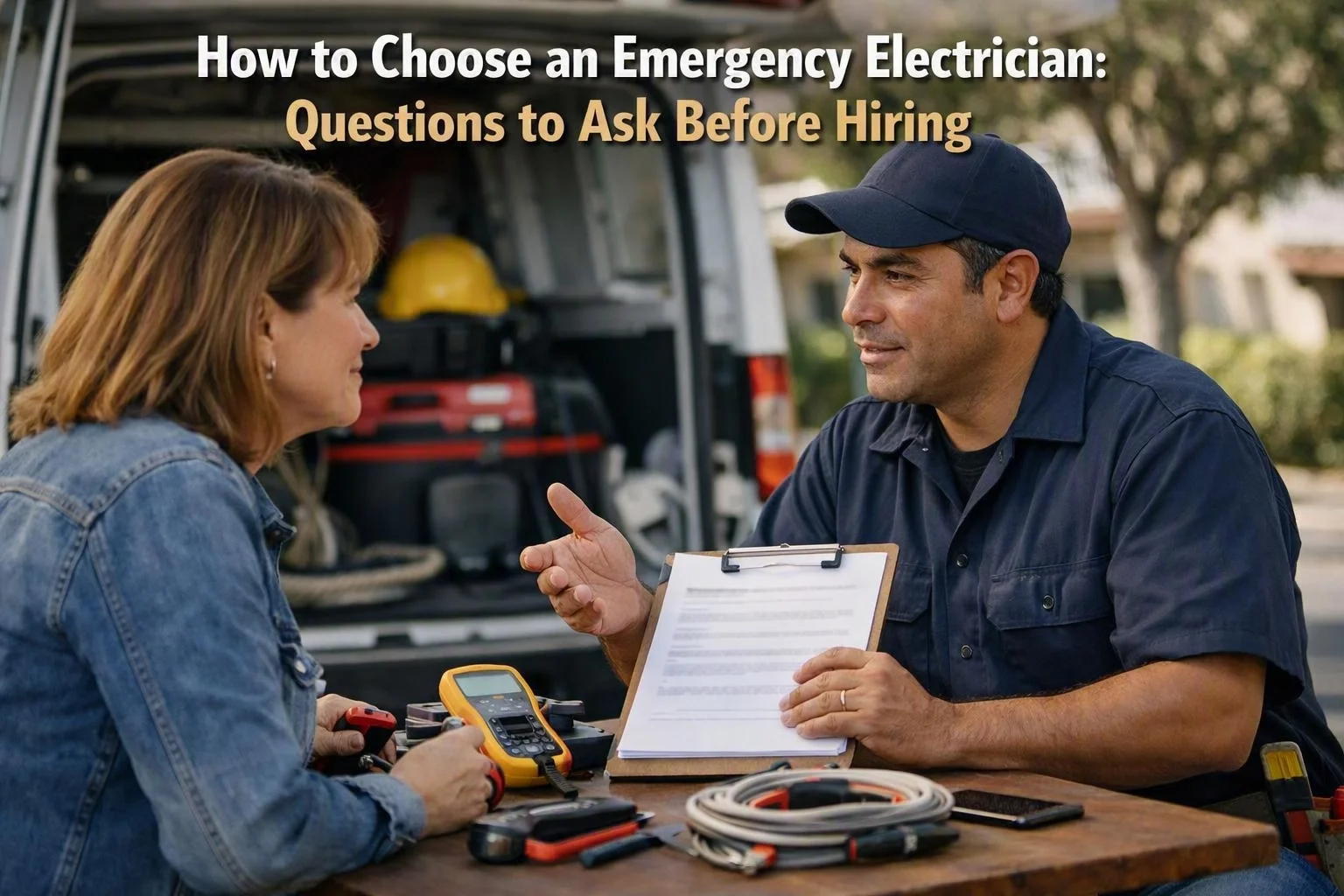
What Should You Check Before Hiring an Emergency Electrician?
Choosing an emergency electrician requires checking the electrical service needed, the electrician's qualifications, the repair explanation, the estimate, and the post-repair safety check. Santa Ana Electrician uses this process to help address an electrical emergency safely in Santa Ana, California.
Start by describing the symptom instead of guessing the cause. A burning smell, sparking outlet, tripped breaker, flickering lights, exposed wiring, power outage, or loss of power can point to different hazards.
We explain the suspected problem, the safe shutdown steps, and the work needed before repairs begin. You can then decide whether the proposed emergency electrical service matches the issue.
Questions to Ask Before Hiring
These questions help you evaluate emergency electrical troubleshooting, power restoration, and electrical wiring repair before work starts. Ask for clear answers about qualifications, safety, pricing, and follow-up care.
Santa Ana Electrician provides Free Estimates Available so we can explain the repair scope before authorized work begins. Our team also explains the planned testing and any condition that could change the scope.
Which Questions Reveal the Quality of an Emergency Electrical Service?
Clear answers show whether the service is organized around safe electrical diagnosis and a defined repair scope.
| Question | Why It Matters | What a Good Answer Sounds Like |
|---|---|---|
| How will you diagnose the fault? | A diagnosis connects the symptom to the actual electrical problem. | The answer explains the checks used to isolate the fault. |
| What does the repair scope include? | A defined scope helps prevent unexplained repairs. | The answer separates urgent correction, parts, labor, and follow-up testing. |
| What are the estimate terms? | Clear terms show what the estimate covers and when the scope could change. | The answer explains included work and approval steps for added work. |
| How will you confirm safe operation? | A safety inspection helps identify problems that remain after the repair. | The answer includes circuit testing, connection checks, and stable operation checks. |
| What warranty terms apply? | Warranty terms define the coverage for the completed repair. | The answer states covered work, exclusions, and the process for requesting service. |
We answer these questions before work proceeds so you can understand the repair plan. Our team connects the diagnosis, estimate terms, safety inspection, and warranty discussion to the same repair scope.
How Can You Recognize Red Flags Before Work Starts?
Red flags include unclear work descriptions, pressure to approve repairs, unsupported safety claims, and estimates that do not explain the repair scope. You should pause the approval when the explanation does not match the electrical symptom.
Our team explains why a repair is needed and what safe shutdown steps apply. We also identify the testing that follows the repair so the process remains understandable.
How Should an Emergency Electrician Explain the Diagnosis and Repair?
An emergency electrician should identify the suspected fault, explain the safe repair path, separate urgent correction from optional work, and describe how the electrical system will be tested afterward. We use that approach for power outage troubleshooting and emergency electrical repair.
A circuit breaker may trip because of an overloaded circuit, a short circuit, or another fault. An electrical panel can also show signs of a wider problem that affects connected wiring.
We trace the reported symptom, inspect the affected circuit, and explain whether the work involves circuit breaker repair, panel work, or electrical wiring repair. We then describe the post-repair testing before restoring power.
What Should an Emergency Electrical Estimate Include?
An emergency electrical estimate should explain the diagnosed problem, planned work, parts, labor, testing, and conditions that could change the scope; Santa Ana Electrician offers Free Estimates Available. The estimate should make the proposed repair understandable before approval.
For emergency electrical troubleshooting, we identify the repair scope and list the replacement parts connected to the diagnosis. We also explain follow-up testing and any access or equipment condition that could affect the work.
You can request an estimate through Emergency Electrical Troubleshooting. Our team will use the reported symptoms and site findings to explain the relevant service.
How Do You Confirm the Repair Is Safe?
A safe emergency electrical repair includes testing the affected circuit, checking connections, confirming stable operation, and explaining any remaining electrical safety concerns. We use safety testing to confirm that the repaired area operates as intended.
An electrical safety inspection can include circuit testing, grounding checks, and inspection of electrical connections. These checks help identify loose conductors, damaged components, or an electrical code correction that still needs attention.
Our team completes the relevant checks before power restoration. We explain any condition that remains outside the completed repair scope.
What Local Electrical Conditions Can Affect Emergency Repairs in Santa Ana, California?
Seismic movement can damage electrical equipment, loosen connections, and shift wiring supports, so emergency troubleshooting may need to include a careful inspection of affected connections and equipment stability. The concern is especially relevant when a power problem follows noticeable ground movement.
We inspect accessible electrical equipment, connections, and wiring supports when the reported problem suggests movement-related damage. Our team explains whether the emergency electrical repair requires connection work, equipment stabilization, or electrical wiring repair.
How Do You Contact Santa Ana Electrician About an Emergency Electrical Problem?
Contact Santa Ana Electrician with the symptom, affected area, recent electrical event, and any immediate safety concern so our team can explain the next step and the relevant emergency electrical service. Include details such as a burning smell, sparking outlet, tripped breaker, flickering lights, or exposed wiring.
Do not touch exposed wiring or attempt to reset equipment that is hot, damaged, or sparking. If safe shutdown is possible without contact with damaged components, describe what you have already done when you contact us.
Our team can discuss Emergency Electrical Troubleshooting, Power Restoration, or Electrical Wiring Repair based on the reported condition. Use our contact page to send the details, then use the provided CTA to begin the conversation.
Questions About Choosing an Emergency Electrician
How can I verify an emergency electrician's license and insurance?
Santa Ana Electrician can explain the qualifications and insurance information connected to the proposed electrical work. Ask for license verification and insurance coverage details before approving emergency electrical service.
What should an emergency electrician explain before replacing an electrical part?
An emergency electrician should explain the electrical diagnosis, why the part failed, which replacement part is proposed, and how the repair will be tested. We also explain whether the replacement addresses the immediate fault or requires related electrical work.
What should I do if an electrician cannot explain the cause of the power problem?
Ask for the diagnostic process, the suspected fault, and the safety checks that support the proposed repair. Do not approve unexplained work when the repair scope and electrical safety steps remain unclear.
What should an electrical repair warranty explain?
An electrical repair warranty should explain which completed work is covered, which conditions are excluded, and how to request follow-up service. The warranty terms should match the repair scope described in the estimate.
Related Resources
How Long Does a 24 Hour Electrician Take to Arrive in Santa Ana, CA?
How Long It TakesHow Long Does It Take to Rewire a House?
How Long It TakesGenerator Installation Timeline: How Long It Takes in Santa Ana, CA
What It CostsHome Generator Installation: Cost, Timeline, and What the Electrician Handles