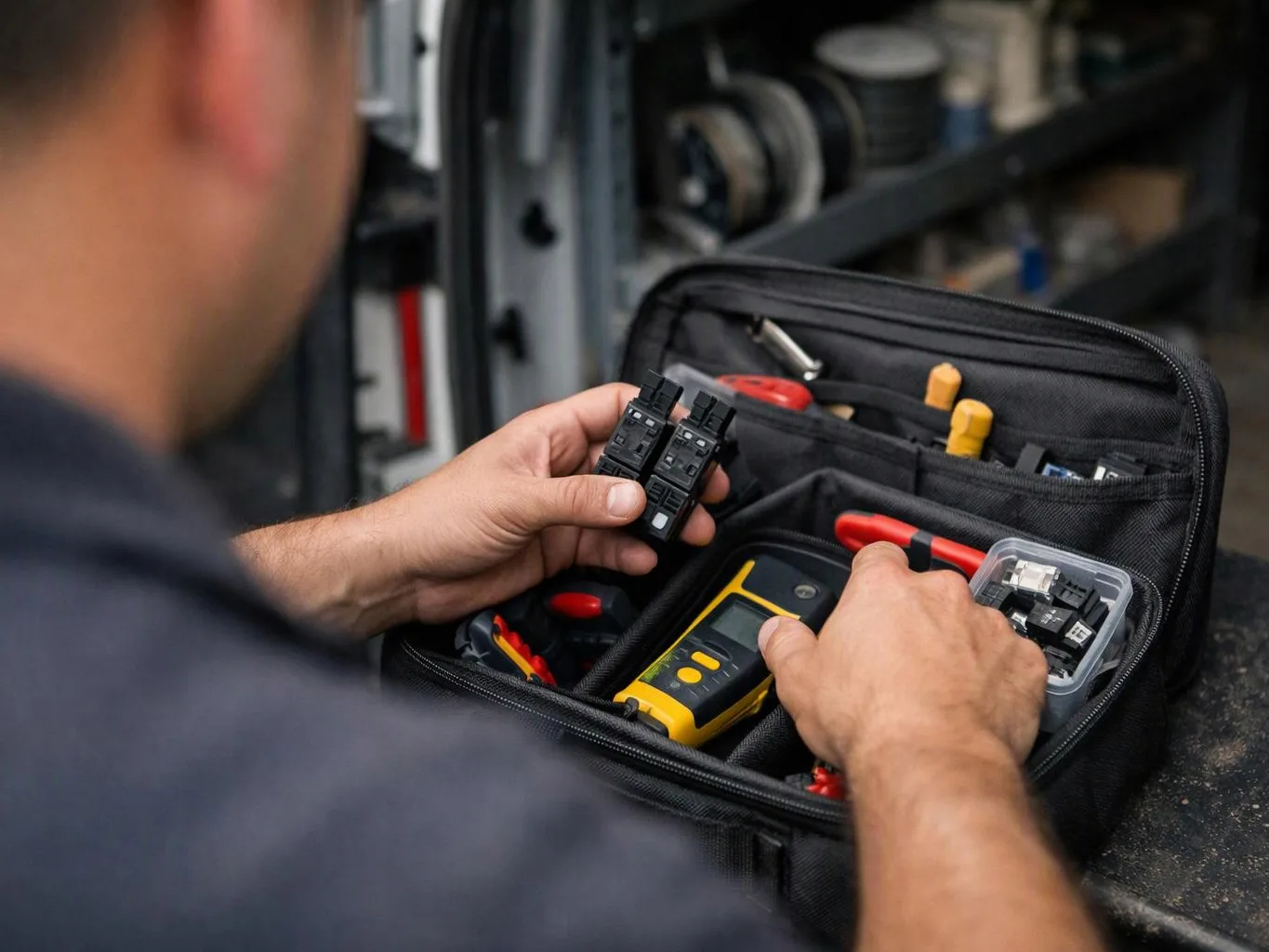
What Buzzing or Crackling From an Outlet, Switch, or Panel Means
Buzzing or crackling from an outlet, switch, or panel can indicate a loose connection, overload, arcing, or failing electrical component; Santa Ana Electrician checks the source and performs the needed repair.
Get a Free EstimateWhat Buzzing or Crackling Usually Means
Electrical buzzing or crackling usually means that current is passing through a loose, damaged, overloaded, or failing electrical connection.
An electrical outlet, light switch, or electrical panel can make noise when electricity meets resistance at a poor connection. A loose connection can create heat, while electrical arcing can produce a sharper crackling or popping sound. We locate the source before deciding which repair is safe.
Signs the Electrical Noise Needs Prompt Attention
Electrical noise needs prompt attention when it appears with heat, visible damage, or changes in power. These signs can point to a developing electrical fault.
Stop using the affected component when these signs occur. We use electrical troubleshooting to identify whether the problem is limited to one device or reaches the branch circuit.
Common Causes of a Buzzing Outlet, Switch, or Panel
A buzzing outlet, switch, or panel usually has a connection, load, or component problem. Our team checks the complete circuit because the sound may travel from the original fault.
We test the suspected source and inspect nearby connections before replacing parts. This helps prevent a new component from being connected to damaged electrical wiring.
Is Crackling From an Outlet Dangerous?
Yes, crackling from an outlet can be dangerous because it may indicate electrical arcing, heat buildup, shock risk, or damage that can worsen.
Arcing can create a fire hazard when heat reaches nearby material or damaged wiring. It can also create a shock hazard if the receptacle, cover, or conductors are no longer secure. We inspect the circuit protection and repair the source before the outlet returns to normal use.
What to Do When an Outlet or Panel Is Buzzing
Turn off the affected circuit when you can do so safely, stop using the noisy component, and arrange an electrical inspection. Do not remove a panel cover or handle exposed conductors.
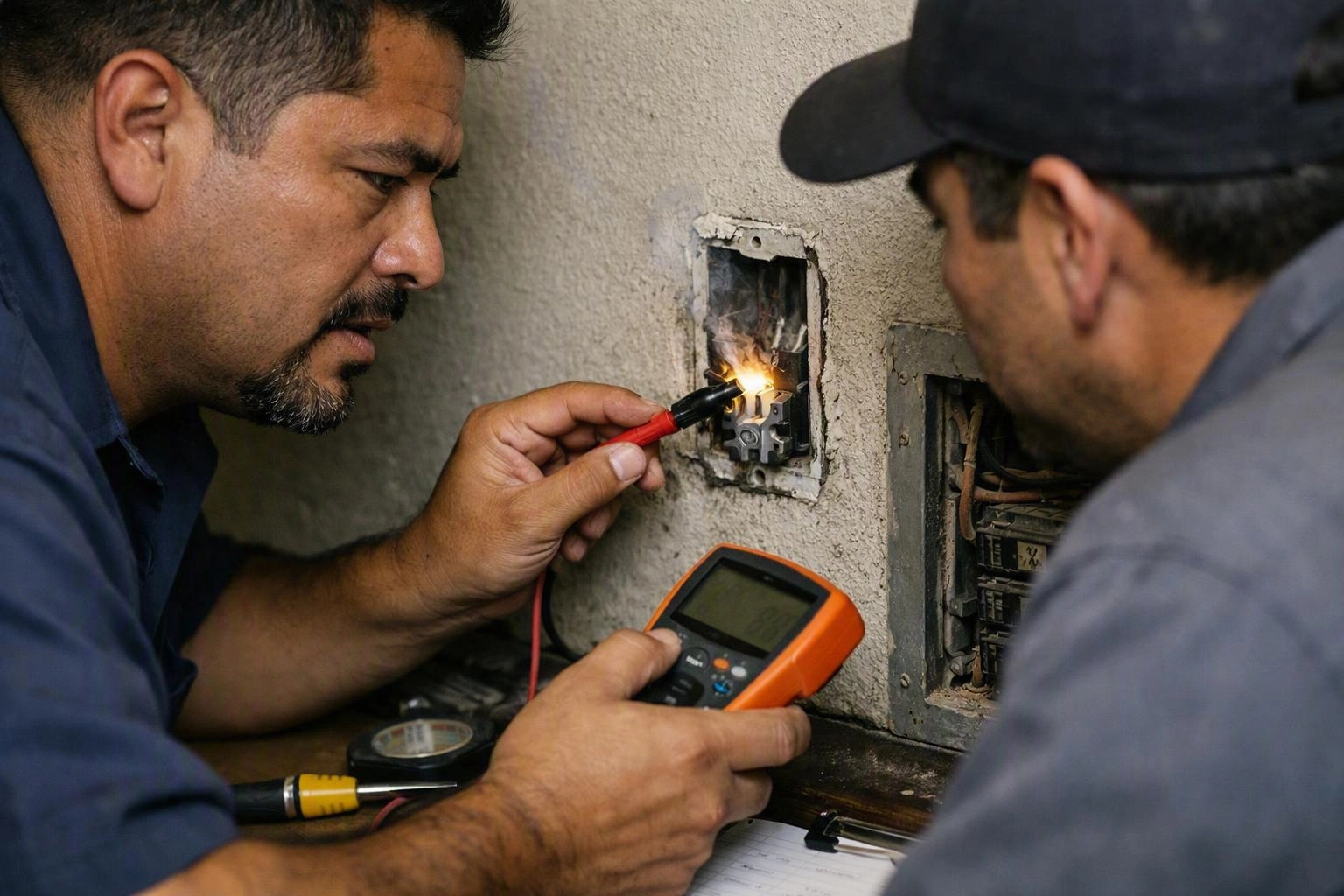
Our team can provide an electrical inspection when the source is not clear. Free Estimates Available applies when we prepare an estimate for the needed work.
How We Check the Source of the Noise
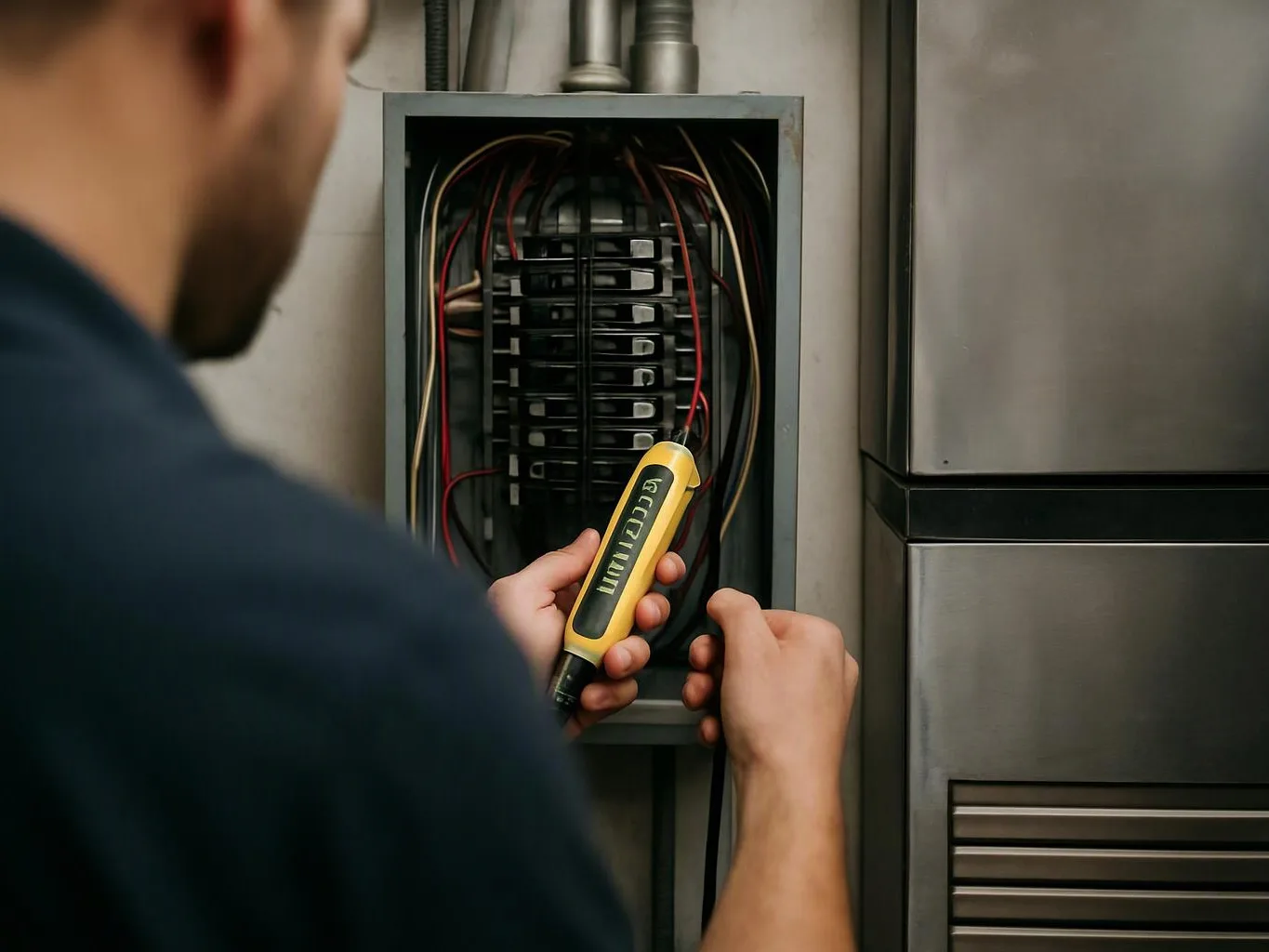
Electrical troubleshooting starts with identifying whether the noise comes from an outlet, light switch, electrical panel, or connected appliance.
We perform outlet testing, switch inspection, and panel inspection as needed. Our team checks the circuit breaker, traces the branch circuit, and examines each wire termination for heat, movement, corrosion, or damage. We also compare the sound with the circuit load so an electrical hum from an appliance is not confused with a fault in the wiring.
Electrical Repairs That Can Stop Buzzing or Crackling
The correct repair depends on the failed part and the condition of the surrounding circuit. We explain the repair before completing the work.
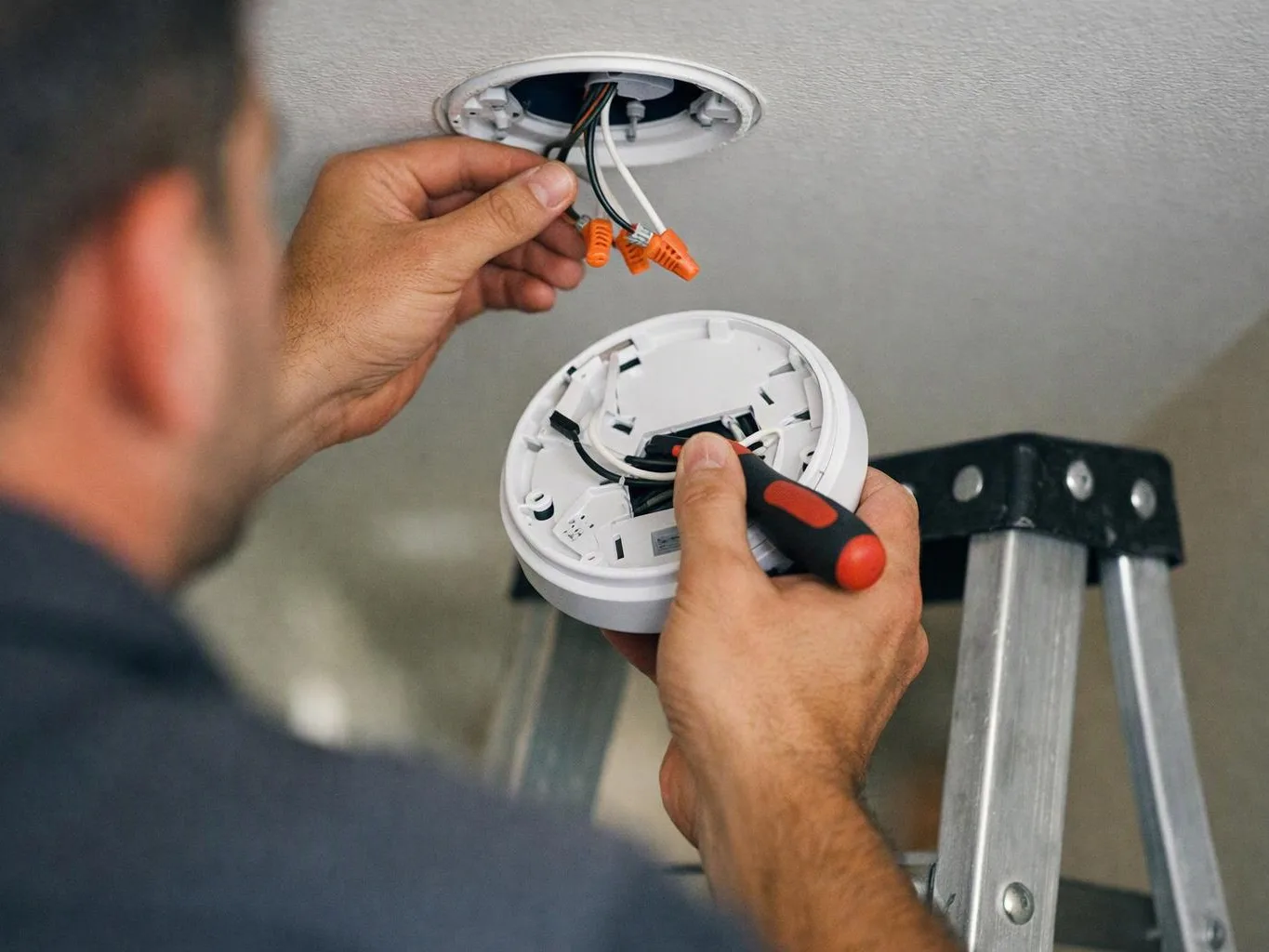
Possible work includes outlet repair, light switch repair, or electrical panel repair. We may secure a wire connection, replace a damaged receptacle, replace a circuit breaker, or repair damaged wiring. When an arc fault has affected more than one component, our crew addresses the underlying circuit problem instead of treating only the sound.
Ways to Prevent Electrical Buzzing and Crackling
Preventing electrical noise starts with reducing stress on the circuit and noticing damaged parts early. We can identify unsafe conditions during electrical maintenance before they become a larger repair.
Our team checks the condition of the circuit, connections, and protective devices during service. Early attention can limit damage to the outlet, switch, or electrical panel.
What Changes the Cost of Repairing the Noisy Electrical Part?
The repair cost depends on whether the source is an outlet, switch, wiring connection, breaker, or panel component and on how much corrective work the circuit needs.
Outlet repair or light switch repair may require access to a single connection, while electrical panel repair can involve circuit damage, replacement parts, or wider wiring access. Diagnostic work also changes the scope when the sound travels through the branch circuit. We inspect the source, explain what the quote includes, and provide an exact estimate before approved repairs begin.
Questions About Buzzing and Crackling Electrical Parts
Why does an outlet buzz when something is plugged in?
An outlet buzzes when a plugged-in appliance exposes a loose connection, damaged receptacle, overloaded circuit, or appliance fault. Santa Ana Electrician tests the outlet and circuit to locate the source before recommending repair.
Why is my light switch making a buzzing sound?
A light switch makes a buzzing sound when its switch contacts, terminal connection, or connected wiring is failing. We inspect the switch and wire termination, then complete light switch repair when the component or connection is damaged.
Why does my electrical panel hum when appliances are running?
An electrical panel can hum when a circuit breaker, breaker bus connection, or overloaded branch circuit is under stress. Our team inspects the panel and checks circuit loading before repairing or replacing the affected component.
Can a buzzing outlet stop working?
Yes, a buzzing outlet can stop working when a connection fails, a circuit breaker trips, or heat damages the receptacle. Stop using the outlet and have us test the outlet, breaker, and related wiring.
Should I turn off the breaker for a crackling outlet?
Yes, turn off the breaker for a crackling outlet when you can identify it and reach it safely. Stop using the outlet, avoid damaged components, and contact us for electrical troubleshooting.
Contact Santa Ana Electrician to have a buzzing or crackling outlet, switch, or panel checked safely.