What Happens When You Call an Emergency Electrician?
Emergency electrical troubleshooting follows a safety-first process: Santa Ana Electrician assesses the hazard, isolates the fault, diagnoses the system, explains the repair, restores power when safe, and verifies the result.
Get a Free EstimateWhat Does an Emergency Electrician Do First?
Emergency electrical troubleshooting begins with a safety assessment that identifies immediate hazards and determines whether the affected circuit should be isolated.
Our team first listens to the reported symptoms, such as a burning smell, sparking outlet, flickering lights, loss of power, or a dead circuit. We then look for signs of an electrical hazard around the power supply, electrical panel, outlets, switches, and connected appliances.
We keep people away from unsafe areas and isolate the circuit when continued energization could worsen the fault. This first decision helps protect people and equipment while giving us a safe starting point for the electrical inspection.
How Emergency Electrical Troubleshooting Works
Emergency electrical troubleshooting moves from inspection to testing, repair planning, and final verification. Our crew follows the condition of the system instead of resetting equipment without identifying the cause.
The time needed for emergency electrical repair depends on the fault location, access to the circuit, damage severity, and the parts required. We explain the condition and the next decision as the diagnosis develops.
What We Check Before Restoring Power
Power restoration starts only after we understand why the circuit stopped working. A tripped circuit breaker or blown fuse can indicate an overload, short circuit, ground fault, or another problem farther along the circuit.
We inspect the electrical panel and examine the condition of the circuit breaker, fuse, branch circuit, and accessible wiring. We also assess connected loads, outlets, switches, and appliances that could be contributing to the unsafe electrical condition.
Our team checks for heat damage, loose connections, insulation problems, moisture, and repeated fault activity. We do not treat a reset breaker or fuse replacement as a complete repair when the underlying cause remains.
What the Electrical Troubleshooting Visit Covers
An electrical troubleshooting visit connects your reported symptoms to the condition of the electrical system. We use the findings to define a clear repair recommendation.
The inspection may cover the following areas:
| Visit area | What we review |
|---|---|
| Customer-reported symptoms | Loss of power, a tripped breaker, a blown fuse, flickering lights, burning smell, sparks, or a dead circuit. |
| Electrical panel | Panel condition, circuit identification, signs of heat, and the relationship between protective devices and branch circuits. |
| Circuit breaker or fuse | Whether the device operated because of an overload, short circuit, ground fault, or component problem. |
| Branch circuit | Circuit connections, accessible wiring, outlets, switches, and other points along the affected path. |
| Connected load | Appliances and equipment that may be drawing excessive current or causing the fault. |
| Repair recommendation | The repair scope, replacement component, and steps needed for safe operation. |
How We Explain the Repair and Estimate
Santa Ana Electrician explains the diagnosed fault, recommended repair, required parts, and work scope before proceeding; Free Estimates Available.
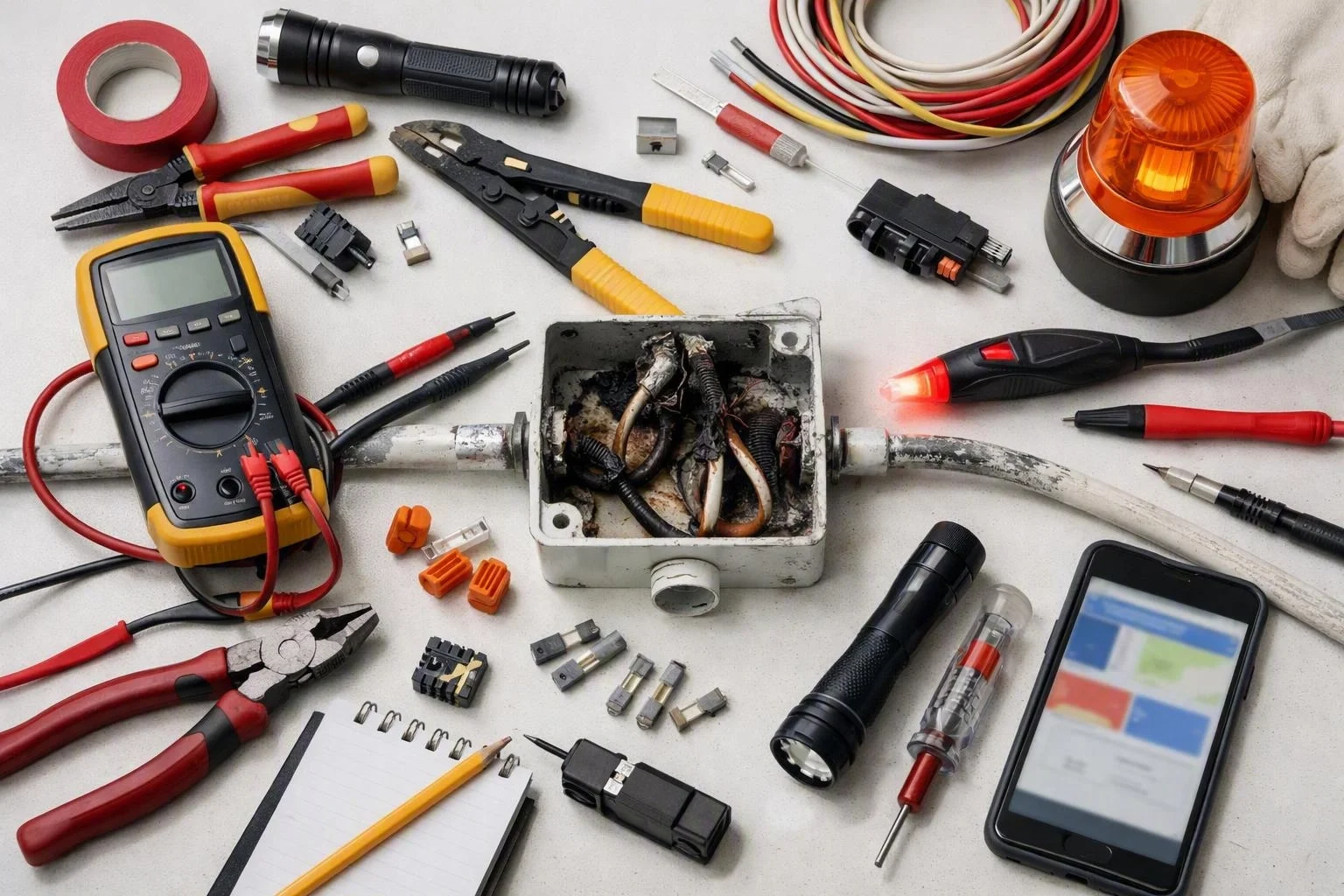
Our team connects the findings to the proposed work in plain language. If the issue involves circuit breaker repair or fuse replacement, we explain why the component operated and whether another condition must also be corrected.
The repair estimate is shaped by the fault location, access, damaged wiring, replacement part, connected load, and required safety work. We provide the repair scope before proceeding so you can understand what power restoration involves.
What to Do Before the Electrician Arrives
Electrical safety comes first while you wait for help. Avoid touching damaged equipment or investigating a suspected fault yourself.
Use this preparation checklist to give our crew useful information without increasing the risk:
When Can Power Be Restored?
Power restoration can proceed when Santa Ana Electrician has isolated the fault, completed the necessary repair, and verified that the circuit is safe to energize.
We may restore power after a circuit breaker repair, fuse replacement, wiring repair, or correction of the connected load. The exact decision depends on whether the electrical fault has been removed and whether the circuit passes electrical safety verification.
Same-day restoration is possible when the fault is accessible, the repair can be completed safely, and the needed replacement component is available. When those conditions are not met, we explain the safe next step instead of energizing a damaged circuit.
What Changes the Repair Process?
The repair process changes according to the fault location, damage severity, circuit condition, component availability, and safety requirements.
A fault near an accessible outlet may require a different approach from damaged wiring inside a wall or an issue within the electrical panel. We adjust the inspection and repair scope to match the actual condition of the system.
Code-related safety requirements, replacement components, circuit accessibility, and the connected load can also affect power restoration. Our crew explains these factors in the repair estimate before work proceeds.
Questions About Emergency Electrical Troubleshooting
Should I reset a tripped breaker before calling an emergency electrician?
No, do not reset a tripped breaker when you notice burning, sparks, heat, water, or damaged equipment; Santa Ana Electrician can assess the circuit and isolate the fault safely.
What should I do if I smell burning from an electrical outlet?
Leave the outlet alone, move people away from the area, and contact emergency services if there is fire or immediate danger. Do not use the outlet or touch nearby equipment while waiting for our crew to assess the electrical hazard.
Can an emergency electrician diagnose a problem that keeps tripping the breaker?
Yes, repeated breaker trips can be investigated through an electrical inspection, voltage testing, circuit testing, and fault isolation. We check for overloads, short circuits, ground faults, damaged wiring, and connected equipment that may be causing the repeated operation.
What information should I give the electrician when I report an electrical emergency?
Describe the loss of power, tripped breaker, blown fuse, burning smell, sparking outlet, flickering lights, or other symptom. Tell us which areas and appliances are affected and whether you see water, smoke, heat, or damaged wiring.
Contact Santa Ana Electrician for a safety-first assessment, clear repair scope, and verified power restoration.
Contact Santa Ana ElectricianRelated Resources
How Long Does a 24 Hour Electrician Take to Arrive in Santa Ana, CA?
How Long It TakesGenerator Installation Timeline: How Long It Takes in Santa Ana, CA
How to HireHow to Choose an Emergency Electrician: Questions to Ask Before Hiring
Compared ToCircuit Breaker Repair, Replacement, or Fuse Replacement: Which Do You Need?