What Hot, Discolored, or Scorched Outlets and Switches Mean
A hot, discolored, or scorched electrical outlet or switch can indicate a loose connection, overloaded circuit, damaged wiring, or failing device. Stop using the affected device, keep clear of smoke or sparks, and contact Santa Ana Electrician for outlet repair, switch repair, or wiring repair.
Get a Free EstimateWhat Do Hot, Discolored, or Scorched Outlets and Switches Mean?
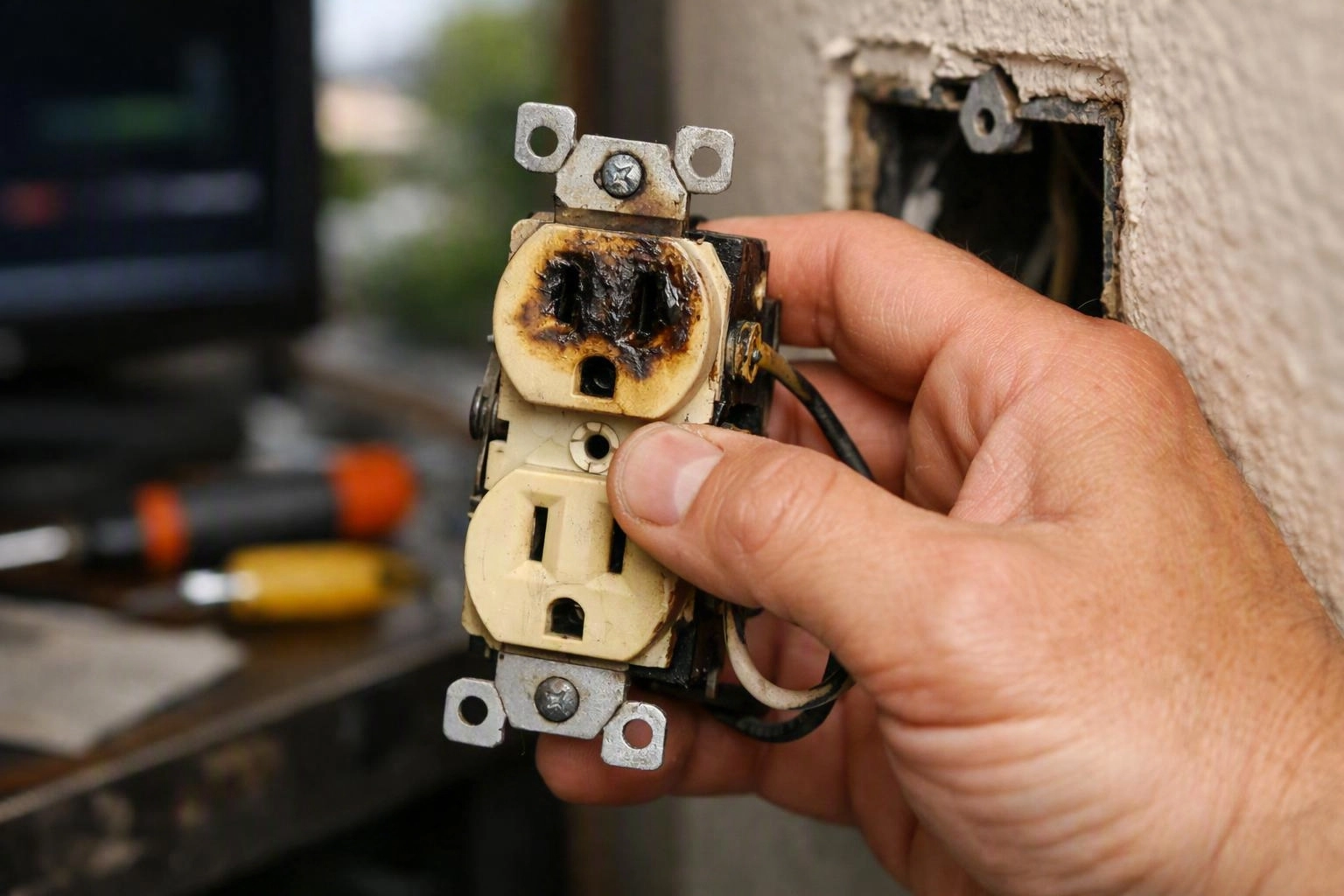
A hot, discolored, or scorched outlet or switch usually indicates abnormal electrical resistance, excessive load, damaged wiring, or a failing device. An electrical outlet, light switch, and switch plate should stay cool and intact during normal use.
Electrical heat damage can darken a faceplate, weaken wire insulation, and leave burn marks around a receptacle. We inspect the device and the surrounding electrical box to identify whether the damage is limited to the component or extends into the building wiring.
What Signs Should You Check for Around an Outlet or Switch?
A warm outlet or switch plate deserves attention, especially when the change is new or becomes worse during use. Check for these signs without removing the cover or touching damaged parts:
Stop using the device when any of these symptoms appear. Our team can inspect the outlet, switch, wire connection, and circuit safely.
Why Do Electrical Outlets and Switches Get Hot or Discolored?
An electrical outlet or switch gets hot or discolored when current encounters excessive resistance, excessive load, or damaged components. Common causes include:
We trace the heat back to its source instead of replacing only the visible cover. Our inspection checks the receptacle, connections, grounding conductor, wire insulation, and circuit condition.
Is a Warm Switch Plate or Outlet Dangerous?
Yes, a warm switch plate or outlet can be dangerous when the heat is persistent, increasing, or accompanied by odor, noise, discoloration, or sparks. A warm surface may signal overheating or electrical arcing, which can create a fire risk inside the electrical box.
A circuit breaker can interrupt current during some faults, but a breaker does not guarantee that a loose connection or damaged device will be detected immediately. We test the affected circuit and repair the source of the heat.
What Should You Do When an Outlet or Switch Is Scorched?
Stop using the scorched outlet or switch and move away from smoke, sparks, or active heat before contacting Santa Ana Electrician. Follow these electrical safety steps:
Do not remove the cover, pull out the receptacle, or reset a breaker repeatedly. Our crew can determine whether the problem involves the device, wiring, or circuit.
When Does a Scorched Outlet Need Urgent Electrical Repair?
A scorched outlet needs urgent electrical repair when it is smoking, sparking, melting, producing a burning odor, or becoming hot during normal use. These signs point to active heat damage or a fault that can spread beyond the receptacle.
A tripped breaker connected with a burning smell, black marks, or a sparking outlet also needs prompt attention. We isolate the unsafe circuit, inspect the wiring, and replace damaged components as part of the repair.
How We Diagnose a Hot or Discolored Electrical Outlet
Outlet inspection starts with the visible device, the switch inspection, and the condition of the faceplate. We look for heat damage, loose connections, damaged insulation, and signs that an appliance load contributed to the problem.
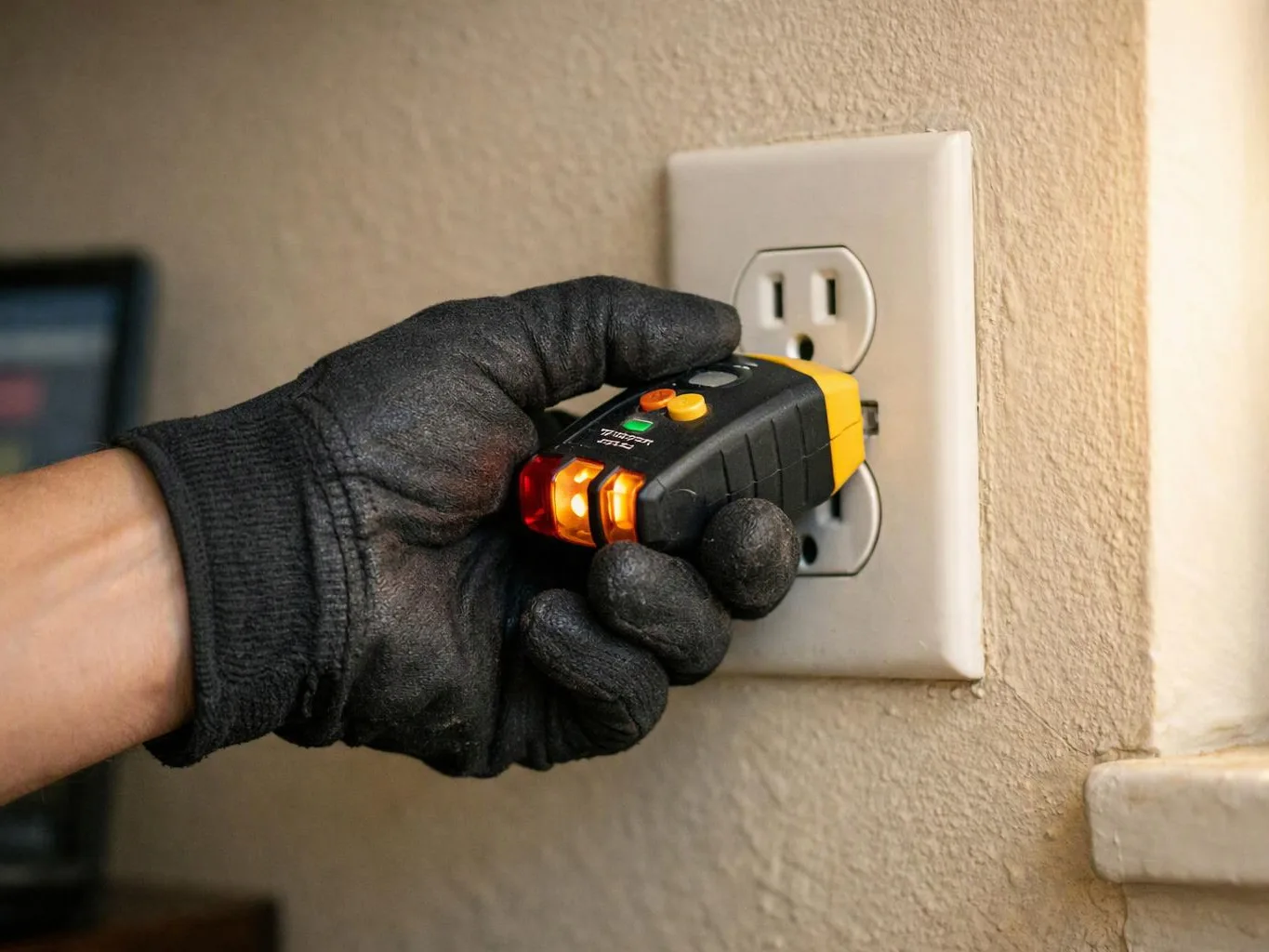
Our team then checks the wire connection, electrical box, grounding path, and circuit load. Voltage testing helps identify abnormal readings, reversed connections, or a fault that may not be visible from the outside.
After we find the cause, we explain whether the repair needs a replacement receptacle, wiring repair, circuit repair, or another corrective step. We do not treat a burned cover as the complete repair when the underlying electrical wiring is damaged.
How Can You Prevent Outlet and Switch Heat Damage?
Preventing heat damage starts with keeping circuit loading within the wiring and device design. Our team can inspect an outlet or circuit when plugs feel loose, appliances cause heat, or power strips and extension cords are used often.
Which Electrical Service Fits a Damaged Outlet or Switch?
The right electrical service depends on whether the damage affects the device, the wiring, or the circuit supplying it. We match the repair to the condition found during inspection.
| Observed condition | Service that may fit | What we address |
|---|---|---|
| Worn, loose, or heat-damaged receptacle | Outlet repair | Device condition, terminals, box, and safe connections |
| Missing, unsuitable, or damaged wall outlet | Outlet installation | Replacement receptacle, grounding, and box fit |
| Hot, noisy, or discolored switch | Light switch repair | Switch contacts, terminal connections, and control wiring |
| Burned insulation or damaged conductors | Electrical wiring repair | Wire condition, access, connections, and circuit safety |
| Repeated trips or several affected devices | Circuit repair | Circuit load, breaker behavior, and the source of the fault |
We can also assess a GFCI outlet, standard receptacle, dimmer switch, toggle switch, or three-way switch when the device shows heat or damage. The service choice follows the condition of the electrical component and its circuit.
What Does an Electrical Repair Quote Include?
An electrical repair quote should identify the damaged outlet or switch, the underlying wiring or circuit issue, the required parts, and the work included; Santa Ana Electrician provides Free Estimates Available.
Our quote reflects the repair scope, replacement parts, wiring access, and circuit condition. We explain whether the work involves outlet repair, a replacement receptacle, light switch repair, or electrical wiring repair.
For an exact quote, contact us through Outlet Repair. We review the symptoms and arrange the inspection needed to define the work.
Questions About Hot and Discolored Outlets
Can an outlet be warm without being dangerous?
A warm outlet can be dangerous when the heat persists, increases, or appears with a burning smell, discoloration, buzzing sound, or crackling sound. Santa Ana Electrician checks the device and circuit to determine whether the warmth comes from normal appliance load or an unsafe fault.
Should I replace an outlet that has brown marks?
Yes, an outlet with brown marks should stop being used until the device and wiring are inspected. Brown marks can show overheating, and we replace the receptacle while correcting any loose connection or circuit problem we find.
Can a bad appliance make an outlet hot?
Yes, a faulty appliance can make an outlet hot when it draws abnormal current or has a damaged cord. We inspect the receptacle and circuit while considering the appliance load that was connected.
Why does an outlet smell like burning plastic?
An outlet can smell like burning plastic when heat damages the receptacle, faceplate, wire insulation, or a connected plug. Stop using the outlet and contact us for inspection before the heat causes more damage.
Can a circuit breaker prevent a scorched outlet?
A circuit breaker can stop some overcurrent faults, but a breaker may not prevent a scorched outlet caused by a loose terminal, damaged receptacle, or localized arcing. We inspect the outlet and wiring even when the breaker has not tripped.
Contact Santa Ana Electrician for a safe inspection when an outlet or switch is hot, discolored, scorched, smoking, or making noise. We identify the cause and explain the repair needed.
Get a Free Estimate