When Storm or Physical Damage Requires Emergency Electrical Service
Storm or physical damage to an electrical system requires emergency attention when wiring, service equipment, outlets, panels, or power lines are exposed, wet, sparking, overheating, or causing unsafe power loss. Santa Ana Electrician checks the affected system, isolates hazards, restores safe power, and repairs damaged wiring or equipment.
Get a Free Estimate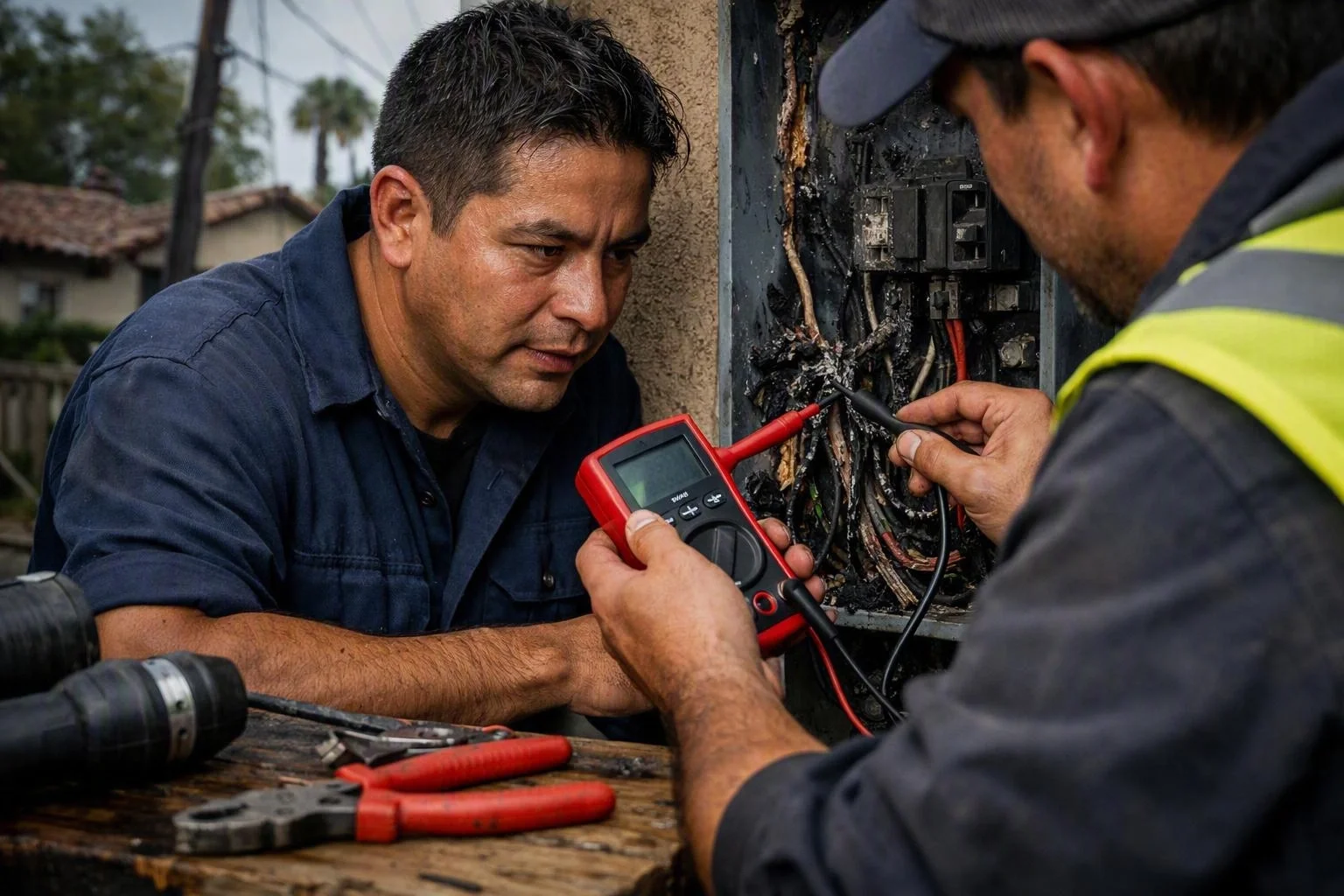
When Storm or Physical Damage Becomes an Electrical Emergency
Storm or physical damage becomes an electrical emergency when the damage creates a shock, fire, arc, exposed-conductor, water-ingress, or unsafe-power condition.
Emergency electrical service helps control hazards before damaged equipment causes further harm. We inspect the electrical system, isolate unsafe parts, and plan the safest path to power restoration.
Signs Your Electrical System Needs Immediate Attention
These signs can indicate an active electrical emergency that needs immediate attention. Keep people and pets away from the affected area while we assess the risk.
Do not touch wet equipment, fallen wires, or damaged panels. We can perform emergency electrical troubleshooting after the immediate area is safe to access.
What to Do After Storm or Impact Damage
After storm or impact damage, move away from hazards, avoid touching damaged electrical equipment, contact the utility when public power equipment is involved, and call Santa Ana Electrician to assess private electrical equipment.
We identify the hazard before attempting power restoration. Our team isolates the affected circuit and restores safe power only after damaged wiring and equipment have been checked.
Which Electrical Damage Can Be Repaired?
Electrical damage can often be repaired or replaced after we determine whether the affected component is safe and suitable for continued use. Water intrusion, heat, arcing, and physical impact can make replacement necessary.
| Affected part | How we assess it | Possible work |
|---|---|---|
| Electrical service equipment | We check for impact, water intrusion, heat, and unsafe energized parts. | Service equipment repair, replacement, and utility coordination. |
| Electrical panel and circuit wiring | We inspect the enclosure, breakers, conductors, and affected circuits. | Circuit isolation, panel repair, wiring repair, or replacement. |
| Outlets and light fixtures | We look for moisture, scorching, loose connections, and physical damage. | Replacement, circuit testing, and safe reconnection. |
| Generator system | We confirm that the electrical system can safely accept backup power. | Generator installation, transfer switch work, and testing. |
Power restoration depends on the condition of the damaged parts and the source of the outage. We explain which components can remain in service and which require replacement.
Common Causes of Storm and Physical Electrical Damage
Storm damage and physical damage can affect wiring, service equipment, and branch circuits in different ways. We identify the cause because the repair must address both the failed part and the condition that caused it.
Our crew checks nearby components for hidden damage when the visible failure came from impact or water. This helps reduce the risk of restoring power to an unsafe circuit.
How We Inspect and Restore a Damaged Electrical System
Santa Ana Electrician inspects the damage, identifies unsafe components, isolates affected circuits, repairs or replaces damaged electrical parts, and tests the system before restoring service.
Our electrical inspection starts with the damage location, the condition of the service equipment, and any signs of water intrusion or arcing. We then complete circuit testing, electrical wiring repair, or component replacement as needed.
When utility coordination is required, we separate utility-owned equipment from privately owned equipment. If the system cannot safely support normal service, we can assess generator installation and backup power options.
When Electrical Service Equipment Needs Repair
Damaged electrical service equipment needs an inspection before power is restored because service components can remain energized and may require coordination with the utility.
A meter base, service mast, weatherhead, main disconnect, or electrical panel may be affected by impact, wind, or water. We identify the damaged component, make the private-system repairs, and coordinate the required steps for the utility connection.
When a Generator Can Support Power Restoration
A generator can support power restoration when the electrical system is safe for backup power and the generator is connected through properly selected equipment.
A standby generator may support selected circuits through a transfer switch. A portable generator also requires safe connection and placement so backup power does not energize public lines or create a carbon monoxide hazard.
We inspect the damaged system before generator installation and confirm that the transfer equipment matches the electrical load and connection method.
How to Prevent Further Electrical Damage
Prevention reduces the chance that weather or physical impact will turn a small fault into an electrical emergency. We can help identify vulnerable equipment during electrical maintenance and repair work.
We check whether protective equipment is suitable for the existing electrical system. Our team also explains which conditions need attention before the next storm.
What Changes the Scope of Storm Damage Electrical Repair?
The repair scope depends on where the damage occurred, whether water reached energized parts, which components failed, how accessible the wiring is, and whether utility coordination is required.
Damage location affects whether we can reach the circuit without opening finished surfaces. Water intrusion can require additional inspection because moisture may remain inside panels, boxes, conduits, or wiring.
Replacement components, circuit accessibility, service equipment condition, and electrical code compliance also shape the work. We explain the repair scope after the damage assessment and identify any utility coordination needed for safe power restoration.
How We Prepare an Estimate for Emergency Electrical Work
Santa Ana Electrician prepares an estimate after assessing the damaged components, required repairs or replacements, testing needs, and power-restoration work; Free Estimates Available.
The electrical estimate reflects the repair scope, replacement parts, access to damaged wiring, circuit testing, and any required utility coordination. We explain the work needed to restore safe power before repairs begin.
For an exact quote, contact our team so we can assess the affected electrical system.
When Should You Call the Utility for Storm Damage?
Call the utility for a downed public power line or suspected utility-owned equipment, and keep away from the area until the hazard is controlled.
The utility company handles public power infrastructure and utility-owned equipment, including parts of an electrical service drop. We assess private electrical equipment after the public hazard has been controlled and explain any remaining repair work.
Questions About Storm-Damaged Electrical Systems
Can an electrician repair storm-damaged service equipment?
Yes, Santa Ana Electrician can assess and repair privately owned storm-damaged service equipment when the area is safe to access. Service equipment may remain energized, so we inspect the meter base, service mast, weatherhead, main disconnect, and electrical panel before power restoration.
Who should I call for a damaged power line?
Call the utility company for a downed public power line or suspected utility-owned equipment, and keep away from the area. Santa Ana Electrician can assess private wiring and service equipment after the utility controls the public power hazard.
Can water-damaged electrical equipment be reused?
Water-damaged electrical equipment can be reused only when inspection shows that it remains safe and suitable for service. We check for moisture, corrosion, contamination, insulation damage, and hidden problems before recommending reuse or replacement.
Can a generator be installed after storm damage?
Yes, a generator can be installed after storm damage when the electrical system is safe and the generator connects through properly selected transfer equipment. We inspect the system, determine the appropriate backup power arrangement, and complete generator installation with testing.
Call Santa Ana Electrician for emergency electrical troubleshooting, electrical wiring repair, power restoration, or generator installation after storm or physical damage.
Contact Santa Ana Electrician to arrange an assessment of the affected electrical system.
Related Resources
How Long Does a 24 Hour Electrician Take to Arrive in Santa Ana, CA?
How Long It TakesHow Long Does It Take to Rewire a House?
How Long It TakesGenerator Installation Timeline: How Long It Takes in Santa Ana, CA
What It CostsHome Generator Installation: Cost, Timeline, and What the Electrician Handles