
What Is a Circuit Tracer?
Circuit Tracer is a diagnostic tool that identifies which breaker, cable, or outlet belongs to a particular electrical circuit. The tool sends a detectable signal through a conductor, then a receiver follows that signal through a panel or building. Electricians use circuit tracers to map wiring and isolate circuits during troubleshooting.
Quick Facts About Circuit Tracer
Category
Electrical diagnostic tool
Used for
Identifying circuit paths and breakers
Common confusion
Different from a voltage tester
Also called
Circuit finder, Circuit Identifier
Often discussed with
Power Outage Troubleshooting
Key Takeaways About Circuit Tracer
- A transmitter and receiver work together to follow a circuit.
- Tracing helps identify unknown breakers during outage diagnosis.
- A circuit tracer is not the same as a voltage tester.
How Circuit Tracer Works
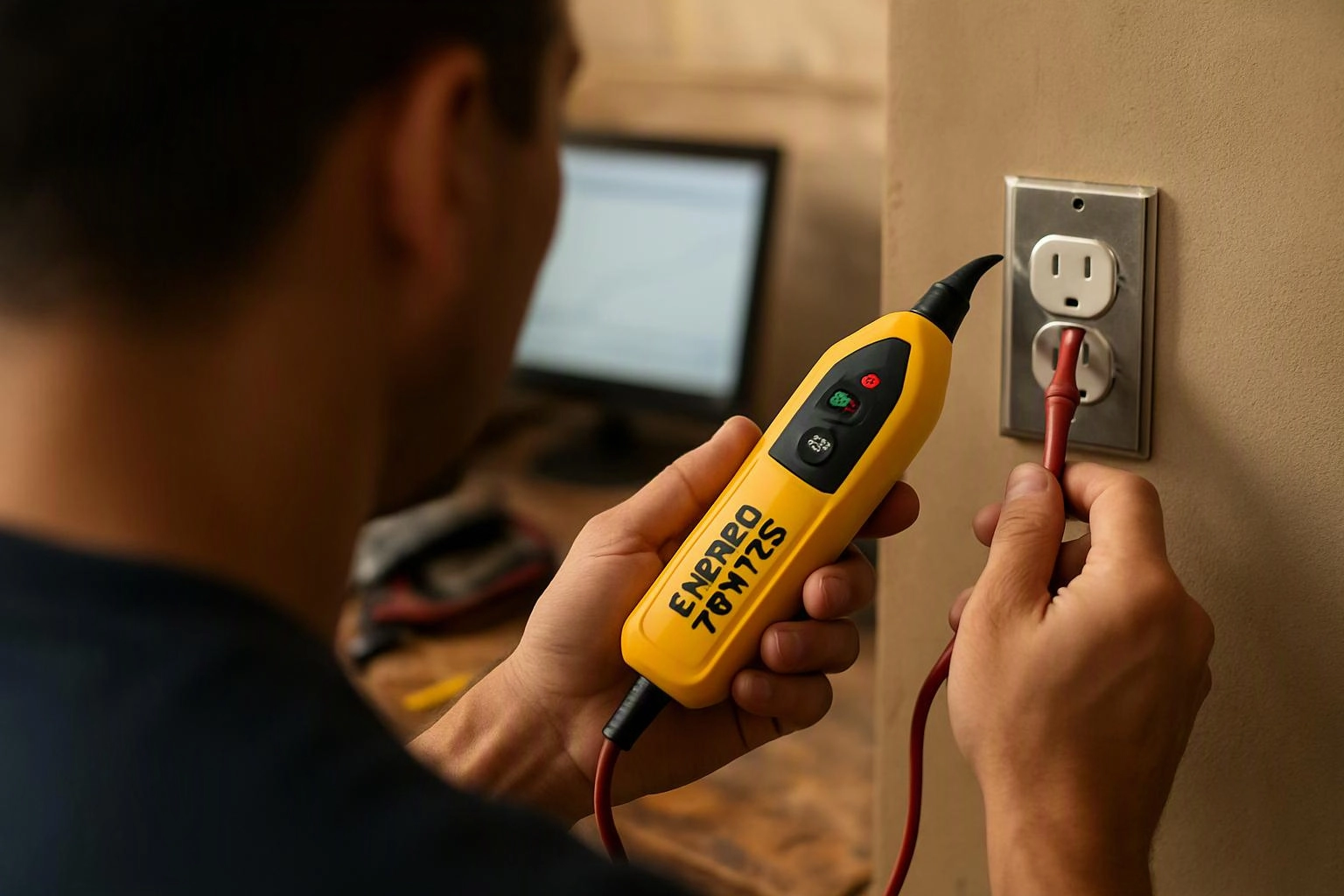
Circuit Tracer equipment usually includes a transmitter and a handheld receiver. The transmitter connects to an outlet or conductor and places a recognizable signal on the circuit. The receiver detects that signal near wiring or breakers, which lets an electrician match a circuit to its controlling device.
Related glossary terms: Continuity, Voltage.
During power outage troubleshooting, the receiver helps separate an affected circuit from nearby wiring. The electrician can compare signal strength at the panel, outlets, and accessible junction points. A weak or absent signal may point to an open connection, a disconnected conductor, or a circuit path that does not reach the expected location. A breaker panel provides the main reference point, while a voltage tester confirms electrical conditions before further testing.
From the Santa Ana Electrician team
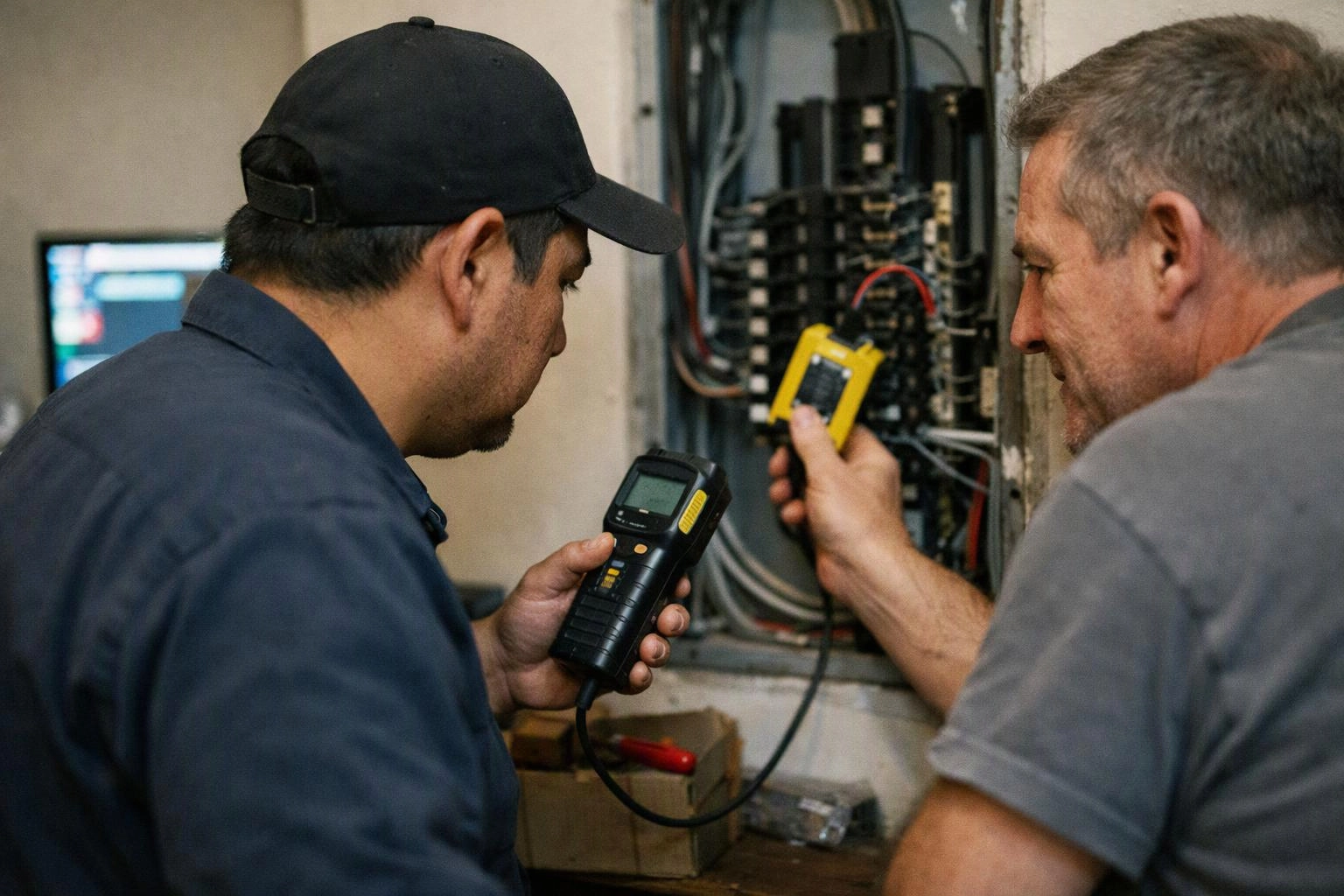
When we trace a circuit, we connect the transmitter at an accessible point and follow the receiver toward the panel. We compare the identified path with the outage symptoms, then verify the circuit condition with appropriate testing before diagnosing a loose connection, tripped breaker, or wiring fault.
Circuit Tracer in Practice: A Real-World Example
A homeowner reports that several kitchen outlets lost power, but the breaker labels are unclear. We place the tracer on an affected outlet, identify the matching breaker, and then check whether the outage continues beyond that circuit.
Related Services
Related Terms
Continuity
Continuity is an unbroken electrical path that allows current to travel between connected points. Electricians check…
Voltage
Voltage is the electrical potential difference that pushes electric charge through a circuit. Voltage provides the…
Santa Ana Electrician
Have Questions About Circuit Tracer?
Contact Santa Ana Electrician for practical guidance on Circuit Tracer and related 24 hour electrician work in Santa Ana.