
What is GFCI?
GFCI is a protective electrical device that monitors current flowing through a circuit and disconnects power when it detects an imbalance associated with current leaving the intended path. It helps reduce shock risk in damp areas by interrupting power quickly, while circuit breakers primarily protect wiring from overloads and short circuits. For more detail, see Outlet, GFCI, and Light Switch Repair Costs: What to Expect in Santa Ana, California.
Quick Facts About GFCI
Category
Electrical safety device
Used for
Ground-fault protection
Common confusion
Not a substitute for every circuit breaker function
Also called
Ground-fault circuit interrupter, Ground-Fault Interrupter
Often discussed with
GFCI Outlet Installation
Key Takeaways About GFCI
- A GFCI responds to current imbalance, not ordinary circuit overload.
- GFCI protection commonly serves areas exposed to moisture.
- A GFCI outlet is not the same as a standard circuit breaker.
How GFCI Works
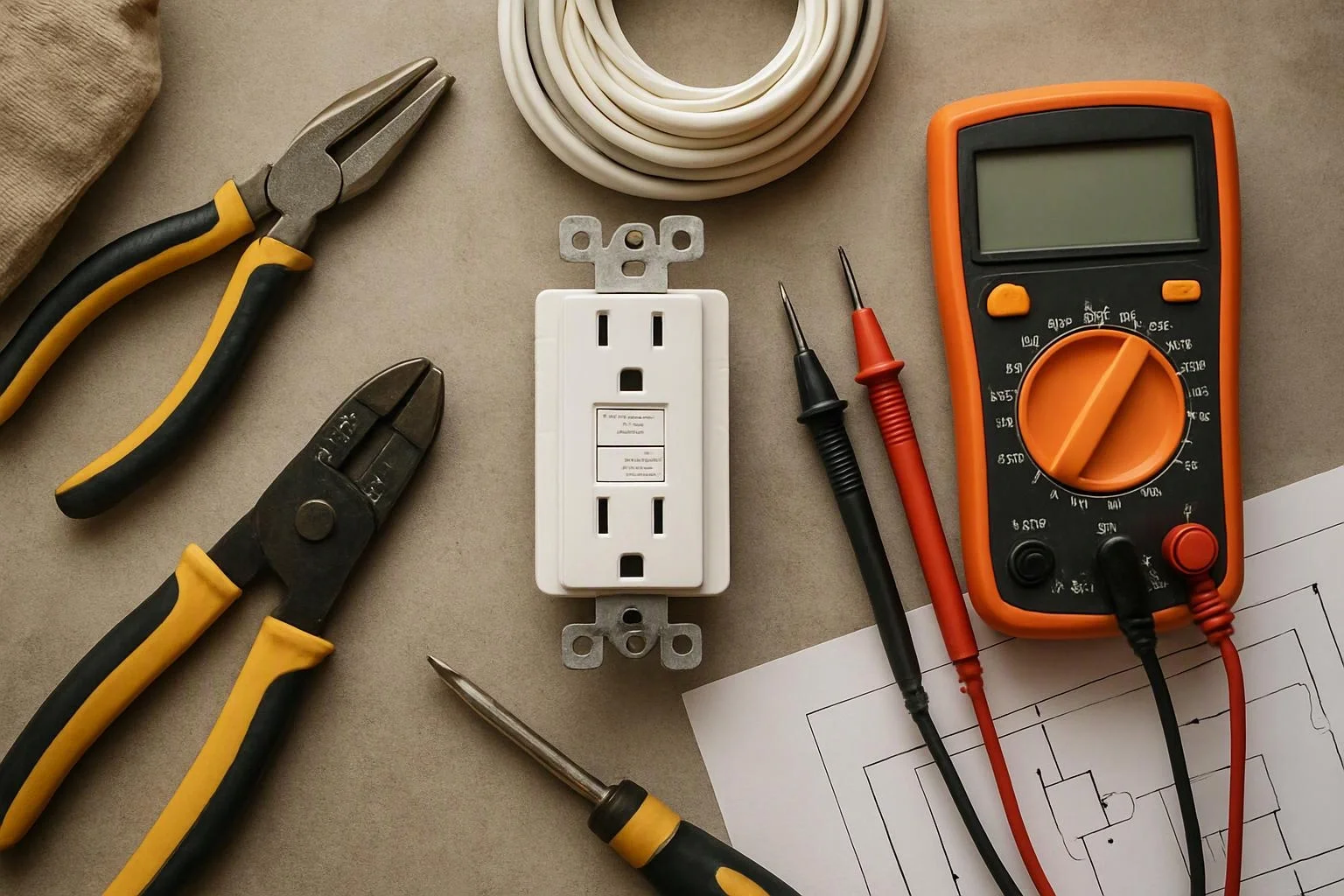
GFCI protection compares the current leaving a circuit with the current returning through the circuit. A difference signals that electricity may be moving through an unintended path, such as a person or grounded surface. The device then opens the circuit and stops power to the protected outlet or downstream outlets.
Related glossary terms: Ground Fault, Polarity, Continuity.
A GFCI may be built into an outlet or installed as a circuit-protection device in an electrical panel. The outlet style usually has test and reset controls, while a panel device protects the connected branch circuit. Ground fault describes the unwanted path, and circuit breaker describes the device that primarily responds to overloads and short circuits.

From the Santa Ana Electrician team
When we install or troubleshoot GFCI outlets, we check the line and load connections, grounding, polarity, and downstream protection. We also test whether the device trips and resets correctly. A recurring trip can point to moisture, a connected appliance, damaged wiring, or a faulty device.
GFCI in Practice: A Real-World Example
A bathroom outlet may lose power when moisture allows current to leave its intended path. GFCI Outlet Installation can add protection at that outlet and may also protect connected outlets downstream, depending on the wiring arrangement.
Related Services
Related Terms
Ground Fault
A ground fault is an unintended electrical connection between an energized conductor and a grounded surface…
Polarity
Polarity is the correct relationship between the energized, neutral, and grounding conductors in an electrical circuit…
Continuity
Continuity is an unbroken electrical path that allows current to travel between connected points. Electricians check…
Santa Ana Electrician
Have Questions About GFCI?
Contact Santa Ana Electrician for practical guidance on GFCI and related 24 hour electrician work in Santa Ana.