What Is an Overload?
An overload is a condition in which connected electrical demand exceeds the safe capacity of a circuit, conductor, or protective device. The excess demand raises current flow and can heat wiring. A circuit breaker responds by opening the circuit to reduce the risk of equipment damage, insulation failure, or fire.
Quick Facts About Overload
Category
Electrical fault condition
Used for
Circuit protection and breaker diagnosis
Common confusion
Often confused with a short circuit
Also called
Electrical overload, Excessive electrical load
Often discussed with
Circuit Breaker Repair
Key Takeaways About Overload
- An overload develops from excessive demand on one circuit.
- A breaker may trip to interrupt the overloaded circuit.
- An overload differs from a short circuit, which creates an unintended low-resistance path.
How Overload Works
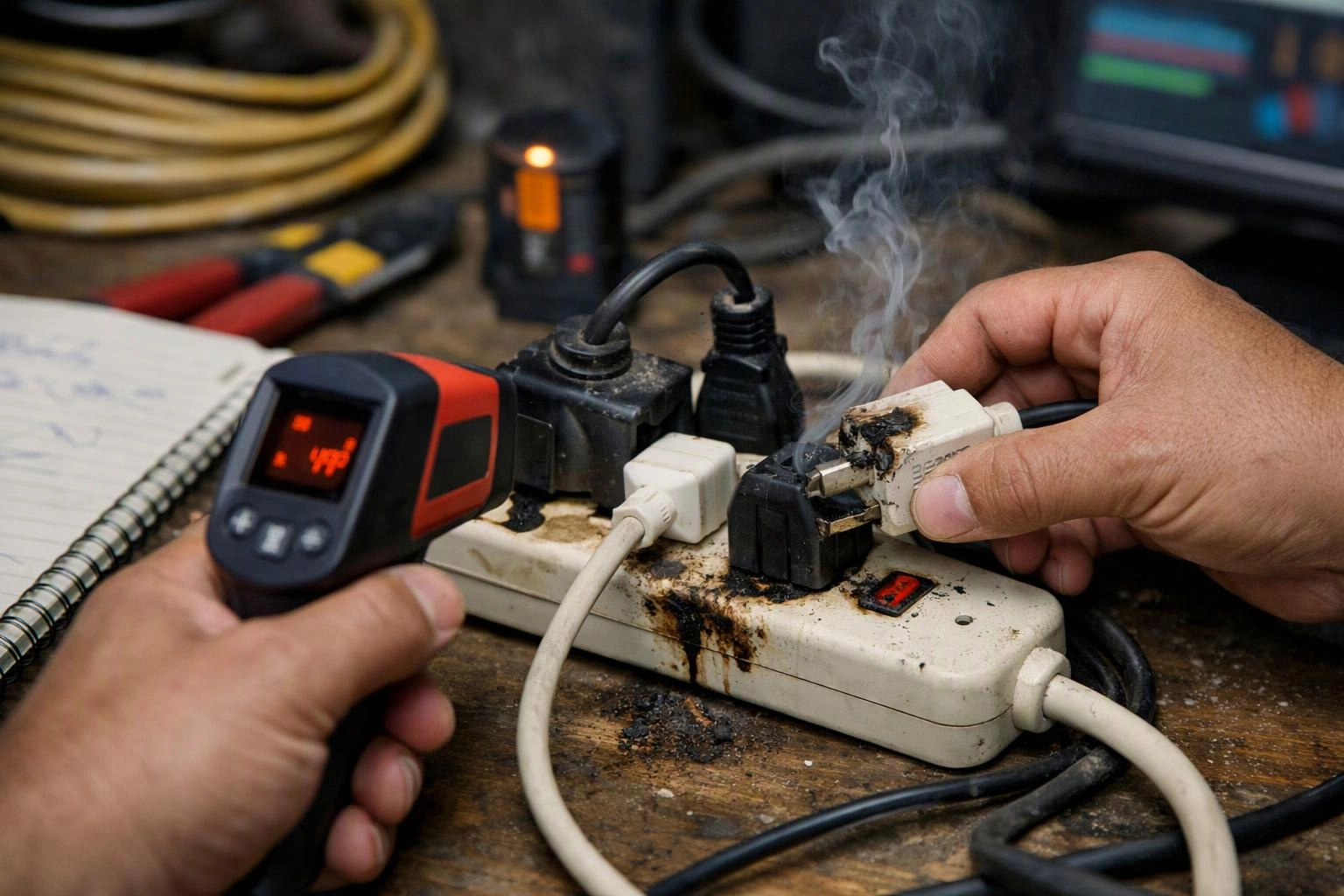
Overload begins when appliances and other loads draw more current than a circuit can safely carry. Heat builds in the conductors and connection points as the demand continues. A circuit breaker senses the excessive current and opens the circuit, which stops power to the connected loads.
Related glossary terms: Electrical Load, Amperage, Conductor.
Breaker trips can indicate a temporary demand problem, a damaged appliance, or a circuit that serves too many loads. Resetting a breaker without finding the cause does not correct the underlying condition. During circuit breaker repair, an electrician checks the breaker, wiring, terminals, and connected equipment to separate an overload from a short circuit or another fault.
From the Santa Ana Electrician team
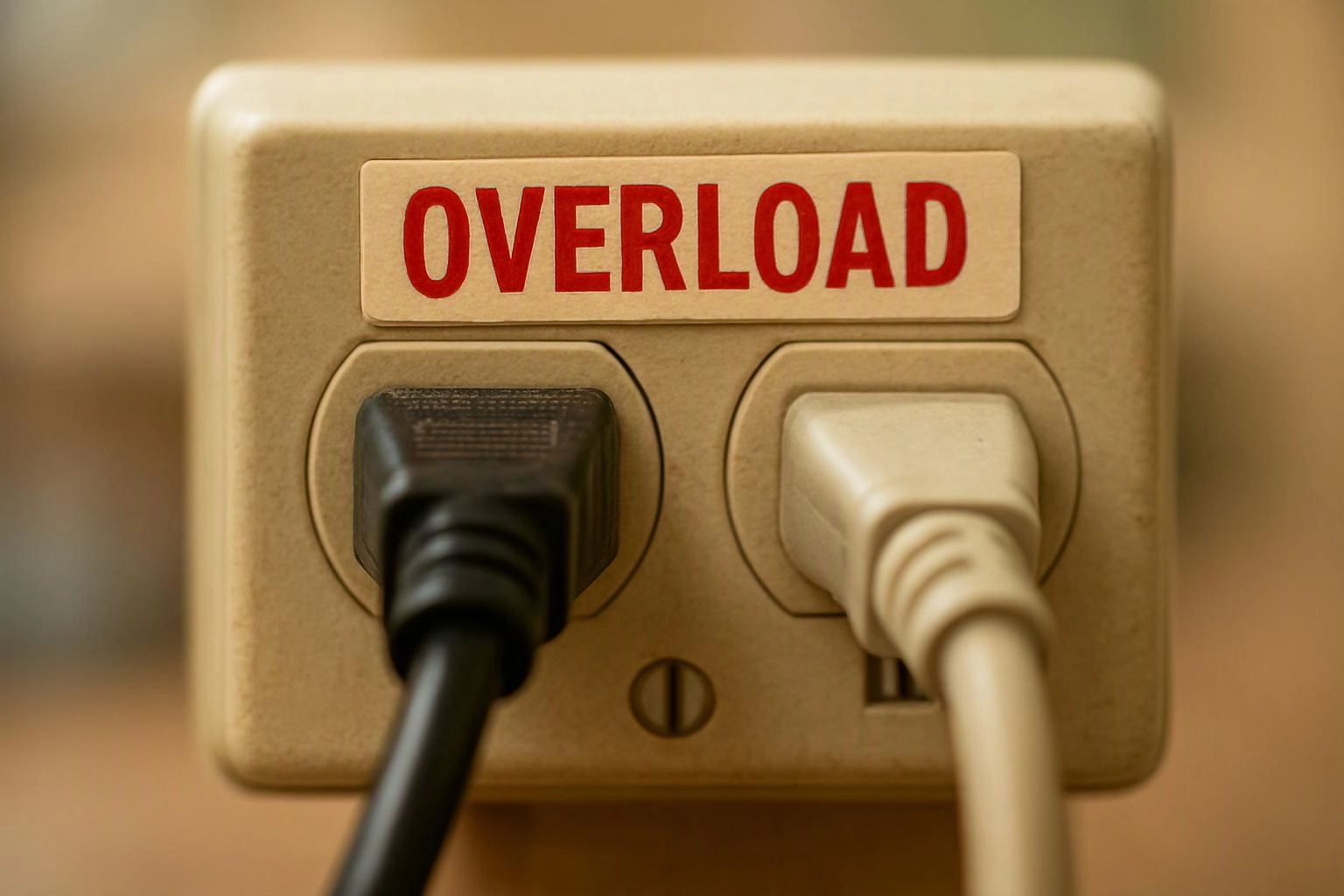
When we investigate an overload, we identify which loads share the circuit and check the breaker, conductors, terminals, and connected equipment. We look for heat damage, loose connections, and repeated tripping. Our team also considers whether the circuit problem follows one appliance or remains after loads are disconnected.
Overload in Practice: A Real-World Example
A kitchen circuit may trip when a countertop appliance operates while other high-demand equipment remains connected. The repair process includes checking the circuit load, breaker, wiring connections, and appliances to identify the source of the overload.
Related Services
Related Terms
Electrical Load
Electrical Load is the amount of electrical power that connected equipment draws from a circuit or…
Amperage
Amperage is the rate of electric charge flowing through a circuit or conductor. Electricians express amperage…
Conductor
A conductor is a material or component that allows electric charge to move through a circuit…
Wire Gauge
Wire Gauge is a standard way to describe a conductor’s diameter and current-carrying capacity. Gauge identifies…
Santa Ana Electrician
Have Questions About Overload?
Contact Santa Ana Electrician for practical guidance on Overload and related 24 hour electrician work in Santa Ana.