
What is Service Entrance?
Service Entrance is the part of an electrical system that connects the utility supply to a building’s service equipment. It includes service conductors, the service point, meter equipment, and the main disconnecting means. This connection delivers utility power to the premises and establishes where utility and customer electrical responsibilities typically meet.
Quick Facts About Service Entrance
Category
Electrical service equipment
Used for
Connecting utility power to a building
Common confusion
Not the same as the main service panel
Relevant standard
National Electrical Code Article 230
Also called
Service entrance conductors, Service entrance equipment
Often discussed with
Electrical Panel Upgrade, Electrical Safety Inspection
Key Takeaways About Service Entrance
- The service entrance links utility conductors to a building’s main disconnect and sharing system.
- Service entrance conductors carry power from the utility service point to service equipment.
- The meter socket, main panel, grounding electrode system, and disconnect may form the service setup.
- Correct sizing depends on calculated load, conductor ampacity, equipment ratings, and local requirements.
- Service entrance damage can stop power to the entire building and cause shock or fire hazards.
Understanding Service Entrance
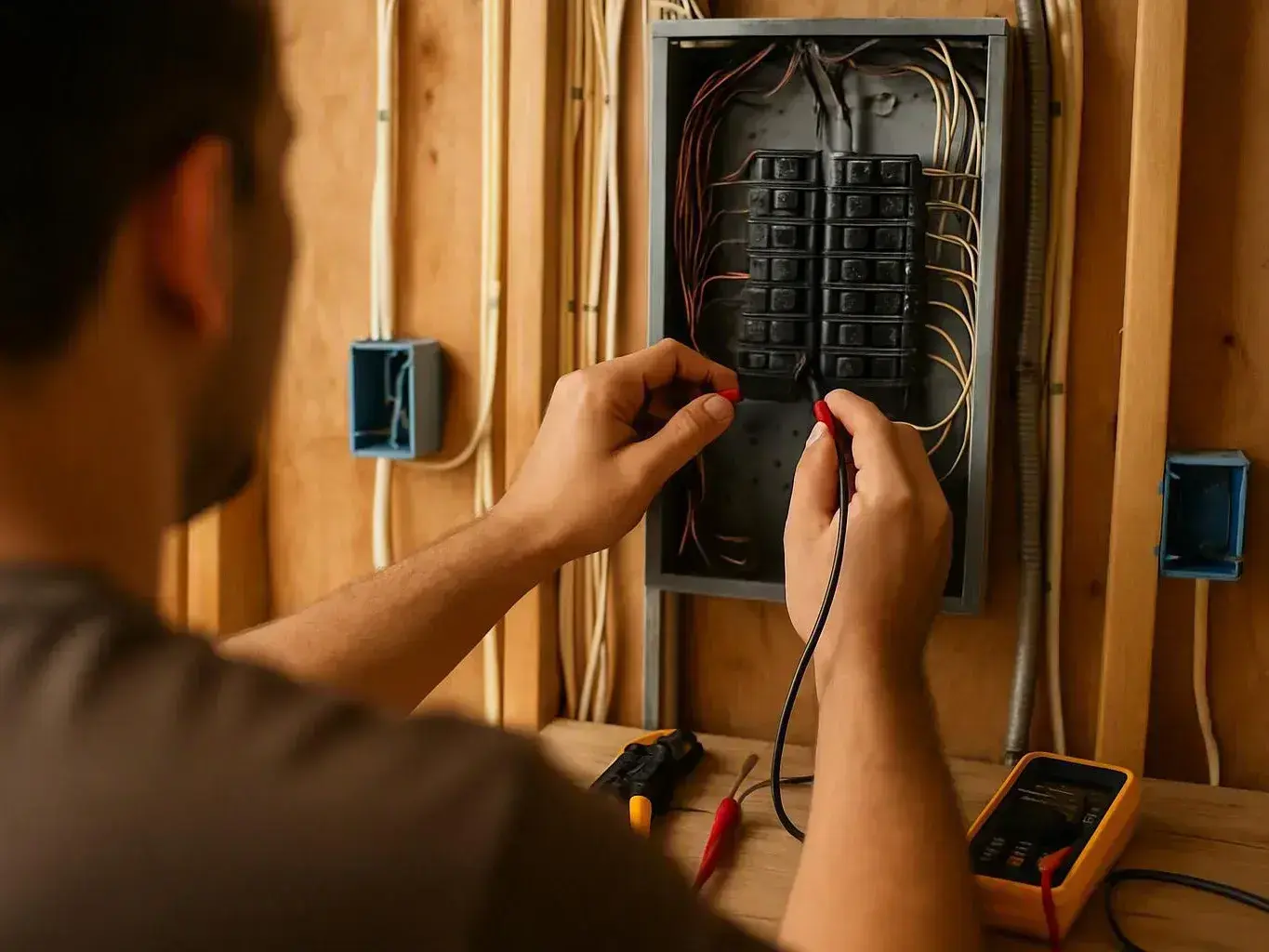
Service Entrance describes part of an electrical installation. It receives power from a utility. It delivers power to the building’s service equipment. The setup usually includes the service point and service conductors. It also includes the meter socket or metering equipment. It includes the main disconnect and service-rated overcurrent protection. The utility’s rules define the exact boundary. The installation type also affects this boundary.
Related glossary terms: Electrical Service, Load Calculation, National Electrical Code.
Service entrance equipment differs from ordinary branch-circuit equipment. It controls the building’s incoming power. A residence may have overhead service conductors. These conductors run to a weatherhead, meter, and main panel. An underground installation may use a service lateral and raceway. It may also use a meter enclosure and disconnect. These sit near where conductors enter the structure. The National Electrical Code governs many details. Utility standards and local amendments also govern details.
How Service Entrance Works, Is Measured, or Is Used?
Electricity travels from the utility distribution system to the service point. It then moves through service-entrance conductors. These conductors reach the metering equipment and main disconnect. The disconnect lets workers shut off power to the premises. Feeders and branch circuits then distribute electricity. They supply panels, receptacles, lighting, appliances, and other loads.
Designers size the service by performing a load calculation. They don't simply add every device nameplate rating. The calculation considers general lighting and receptacles. It also considers appliances, heating, cooling, and motors. Electric vehicle charging and other loads also count. Conductor ampacity must match the calculated load. It must also match the equipment ratings.service grounding and bonding arrangement provides a controlled path. This path carries fault current.
- Overhead systems use a service drop from the utility. It reaches the building connection.
- Underground systems use a service lateral. It runs between the utility source and the building.
- Service equipment normally includes a marked disconnect. It also includes suitable overcurrent protection.
Why Service Entrance Matters?
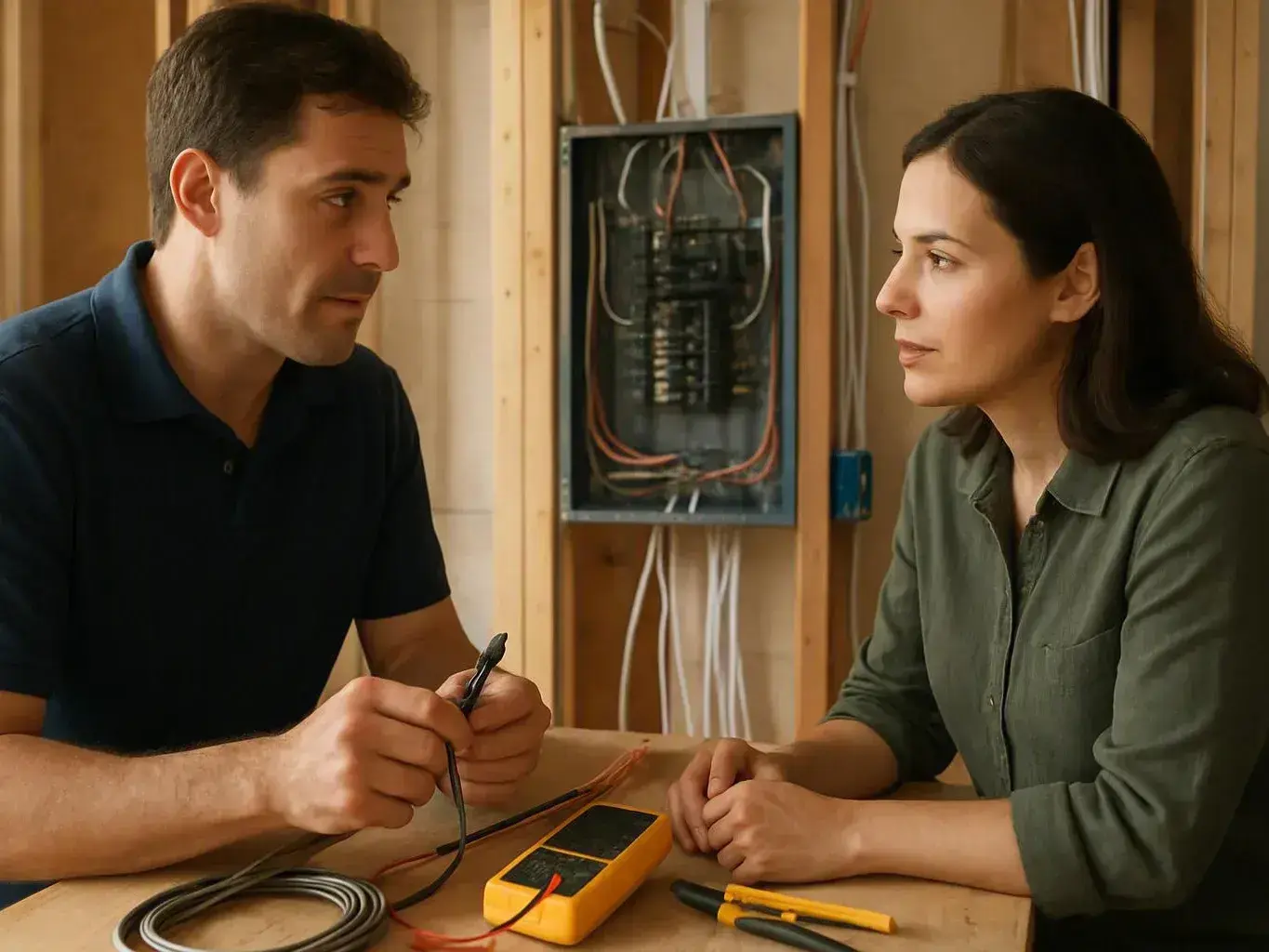
The service entrance affects every circuit inside the building. A loose connection can cause voltage problems and overheating. A damaged conductor can cause equipment damage or power loss. A failed meter enclosure can cause similar problems. An undersized service can also cause these problems. Service conductors may stay energized when interior breakers are off. Work in this area creates serious shock and arc-flash risks.
A properly designed service entrance supports safe fault clearing. The main disconnect must work with the grounding electrode system. Bonding connections must also work with these parts. This teamwork lets protective devices respond to faults. Inspectors and utilities may reject equipment with poor clearances. They may reject equipment without labels or weather protection. They may also reject unapproved parts or poor working space.
When Service Entrance Matters Most?
Service entrance details matter during a service upgrade or panel replacement. They also matter during a remodel or addition. A change in building use can make them important too. Installing a larger panel doesn't automatically increase electrical capacity. The conductors must support the proposed service rating. The meter equipment and disconnect must also support it. Utility transformer capacity must support it as well. The grounding system and calculated load must also support it.
Urgent attention is needed when you see burned insulation or buzzing near the meter. Water entry, corrosion, and flickering across several circuits also need attention. Exposed conductors or vehicle and storm damage also need attention. A utility may need to disconnect and reconnect the service. This must happen before electrical work can proceed. In Santa Ana, local permitting and inspection can affect the work. Utility requirements and California electrical rules can also affect it. These rules may affect the work sequence and equipment choices.
How to Evaluate Service Entrance?
- Compare the service rating with the documented load calculation and the building’s present and planned loads.
- Check that service conductors, meter equipment, disconnects, and panels have compatible ampere ratings.
- Inspect the meter enclosure, raceway, weatherhead, and service attachment for corrosion, water entry, or physical damage.
- Verify clear working space, equipment labels, grounding electrode connections, and bonding details.
- Confirm that utility requirements, permits, inspections, and applicable California code rules are addressed.
Related Concepts Compared
Service Entrance vs. Electrical Service
Electrical service means the complete utility supply arrangement for a building. Service entrance refers more specifically to the conductors and equipment that bring that supply into the premises.
Service Entrance vs. Main Service Panel
The main service panel is one enclosure that may contain the service disconnect, breakers, neutral termination, and grounding connections. A service entrance can include equipment outside the panel, such as the service conductors and meter socket.
Service Entrance vs. Service Drop
A service drop is the overhead utility connection from a pole or other utility source to a building. It is one possible part of the overall service arrangement, not a synonym for every service entrance.
Service Entrance vs. Service Lateral
A service lateral is an underground utility connection to a building. An underground service entrance may include that lateral, but it also includes the building-side service equipment and conductors.
Expert Note
The service point is not always located at the meter or property line. The serving utility usually defines that boundary, so responsibility for a damaged conductor must be confirmed before anyone opens equipment or starts repairs.
Common Mistakes or Myths About Service Entrance
- Assuming a larger main panel creates more electrical capacity without changing the service conductors or completing a load calculation.
- Treating the meter socket as the entire service entrance.
- Turning off interior breakers and assuming all service entrance conductors are de-energized.
- Ignoring corrosion or water entry around the meter and service raceway.
- Replacing service equipment without checking utility rules, permits, and inspection requirements.
Service Entrance in Practice: A Real-World Example
Utility conductors reach the weatherhead and meter. Service-entrance conductors link the meter section to the main disconnect.
Related Terms
Electrical Service
Electrical Service is the complete system that delivers electricity from a utility connection to a building’s…
Load Calculation
Load Calculation is the process of estimating the electrical demand that a building, panel, feeder, or…
National Electrical Code
National Electrical Code is a safety standard published by the National Fire Protection Association that sets…
Grounding Electrode
Grounding Electrode is a conductive object that connects an electrical system to the earth. Common examples…
Santa Ana Electrician
Have Questions About Service Entrance?
Contact Santa Ana Electrician for practical guidance on Service Entrance and related 24 hour electrician work in Santa Ana.