
What Is Single-Phase Power?
Single-Phase Power is an alternating-current electrical supply that uses one voltage waveform to deliver energy through a circuit. The supply commonly serves homes, apartments, and smaller commercial spaces. A circuit usually carries current through an energized conductor and returns it through a neutral conductor, supporting lighting, receptacles, appliances, and compatible equipment.
Quick Facts About Single-Phase Power
Category
Electrical power distribution
Used for
Homes, apartments, and small commercial spaces
Common confusion
Power type is not the same as circuit voltage
Also called
Single-phase electricity, Single-phase electrical power
Often discussed with
EV Charger Installation
Key Takeaways About Single-Phase Power
- One alternating-current waveform serves the circuit.
- Available service capacity affects equipment compatibility.
- Single-phase does not mean every appliance uses the same load.
How Single-Phase Power Works
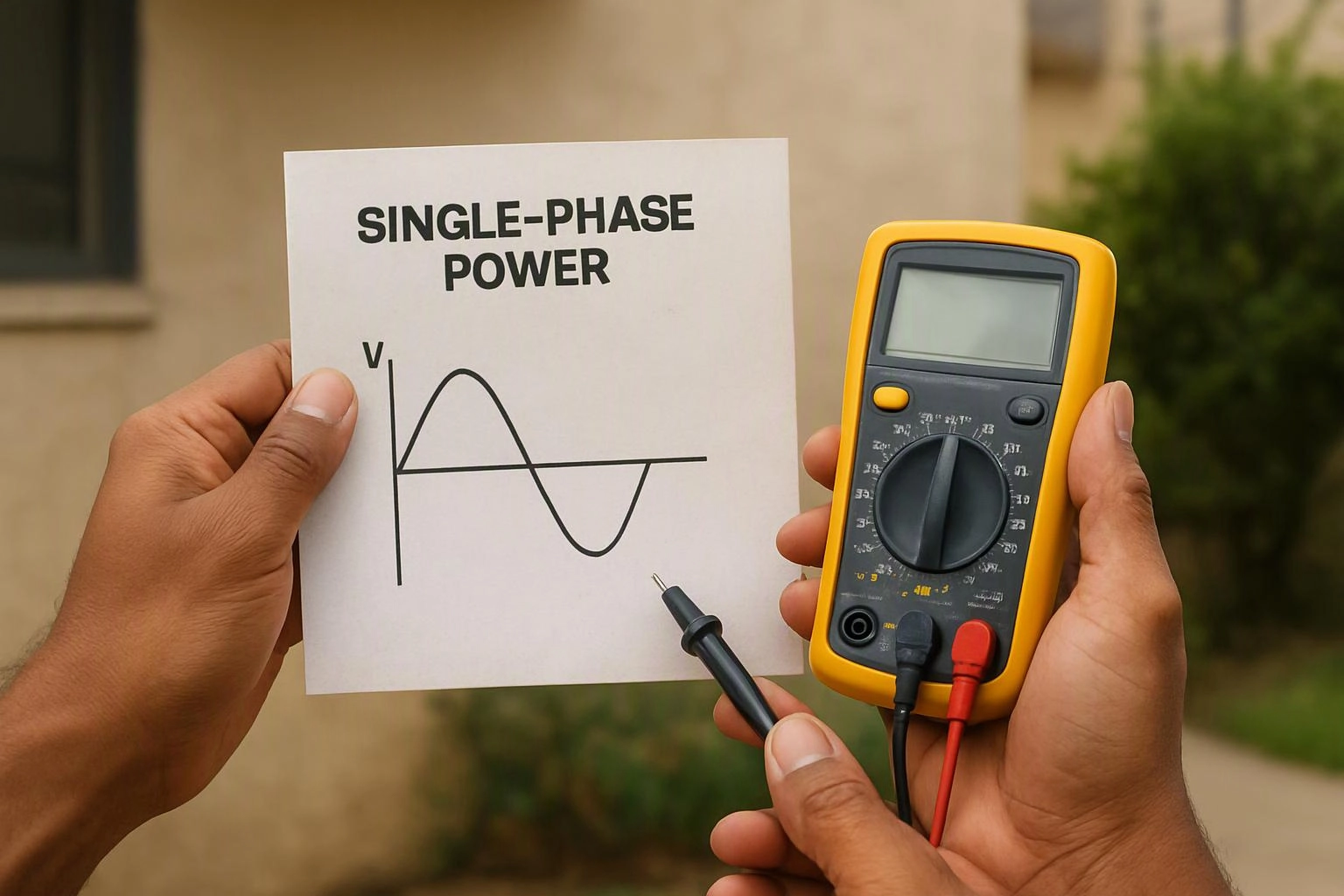
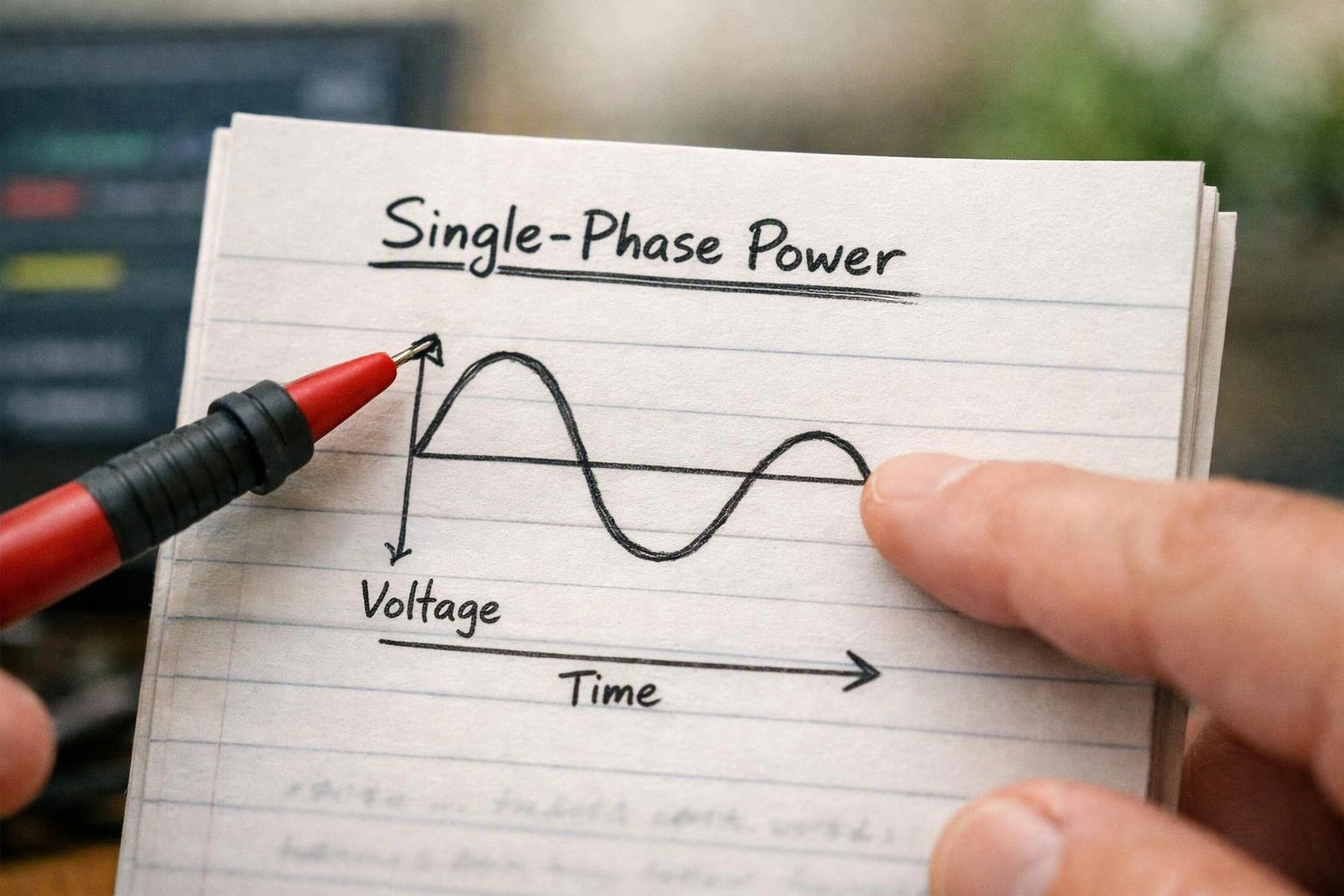
Single-Phase Power moves alternating current through a repeating voltage cycle. An energized conductor carries electricity toward the load, while a neutral conductor provides the return path in many circuits. The electrical panel separates these circuits so lights, receptacles, appliances, and equipment can receive power through their assigned branch circuits.
Related glossary terms: Electrical Load, Line Voltage, Neutral Wire.
Single-phase service suits many residential loads, but equipment compatibility depends on the connection type, rated voltage, and available service capacity. An EV charger connected to single-phase power may need a dedicated circuit and suitable panel capacity. A qualified inspection checks the service equipment, conductors, grounding, and charger requirements before installation.
From the Santa Ana Electrician team
When we assess single-phase power for EV charger installation, we inspect the service equipment, panel capacity, circuit path, and grounding. We then compare the charger requirements with the available electrical supply so the connection matches the equipment and the existing installation.
Single-Phase Power in Practice: A Real-World Example
An EV charger installation at a Santa Ana home may connect to the existing single-phase service through a properly sized branch circuit. The electrician checks the panel and wiring path before selecting the connection method.
Related Services
Related Terms
Electrical Load
Electrical Load is the amount of electrical power that connected equipment draws from a circuit or…
Line Voltage
Line Voltage is the electrical potential supplied directly by a building’s power system to operate equipment…
Neutral Wire
A Neutral Wire is a current-carrying conductor that normally completes the electrical path from a load…
Voltage
Voltage is the electrical potential difference that pushes electric charge through a circuit. Voltage provides the…
Santa Ana Electrician
Have Questions About Single-Phase Power?
Contact Santa Ana Electrician for practical guidance on Single-Phase Power and related 24 hour electrician work in Santa Ana.