
What Is a Transformer?
A transformer is an electrical device that transfers alternating-current energy between circuits while changing voltage levels. Transformers use magnetic coupling between windings to raise voltage, lower voltage, or provide electrical isolation. The device supports safe and useful power distribution for equipment such as panels, chargers, lighting systems, and control circuits.
Quick Facts About Transformer
Category
Power conversion device
Used for
Changing AC voltage
Common confusion
Often confused with a transfer switch
Often discussed with
Bidirectional EV Charging System Installation
Key Takeaways About Transformer
- Magnetic coupling transfers energy without a direct conductive connection.
- Voltage changes depend on the relationship between winding turns.
- A transformer is not the same as a transfer switch.
How Transformer Works
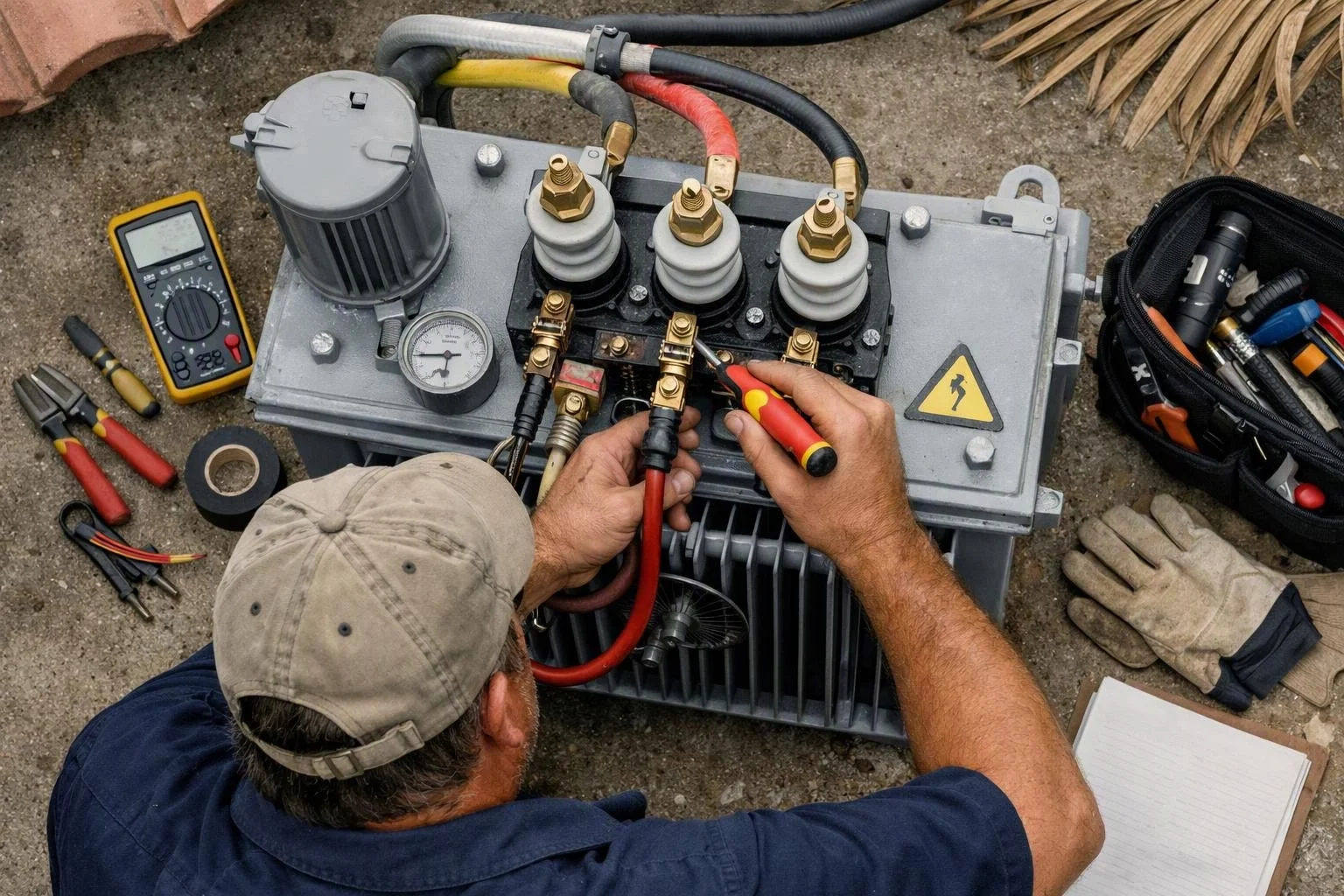
A transformer moves electrical energy between separate circuits through a magnetic field. Alternating current flows through the primary winding and creates a changing magnetic field in the core. That field induces voltage in the secondary winding. The winding relationship determines whether the output voltage rises or falls.
Related glossary terms: Voltage, Line Voltage, Electrical Load.
Transformer selection depends on the source voltage, required output voltage, connected load, and installation conditions. In a bidirectional EV charging system, a transformer may support voltage conversion or isolation between the charger, building wiring, and vehicle-side equipment. A transfer switch performs a different task because it changes a circuit's power source. The electrical load still needs review so the transformer operates within its intended capacity.
From the Santa Ana Electrician team
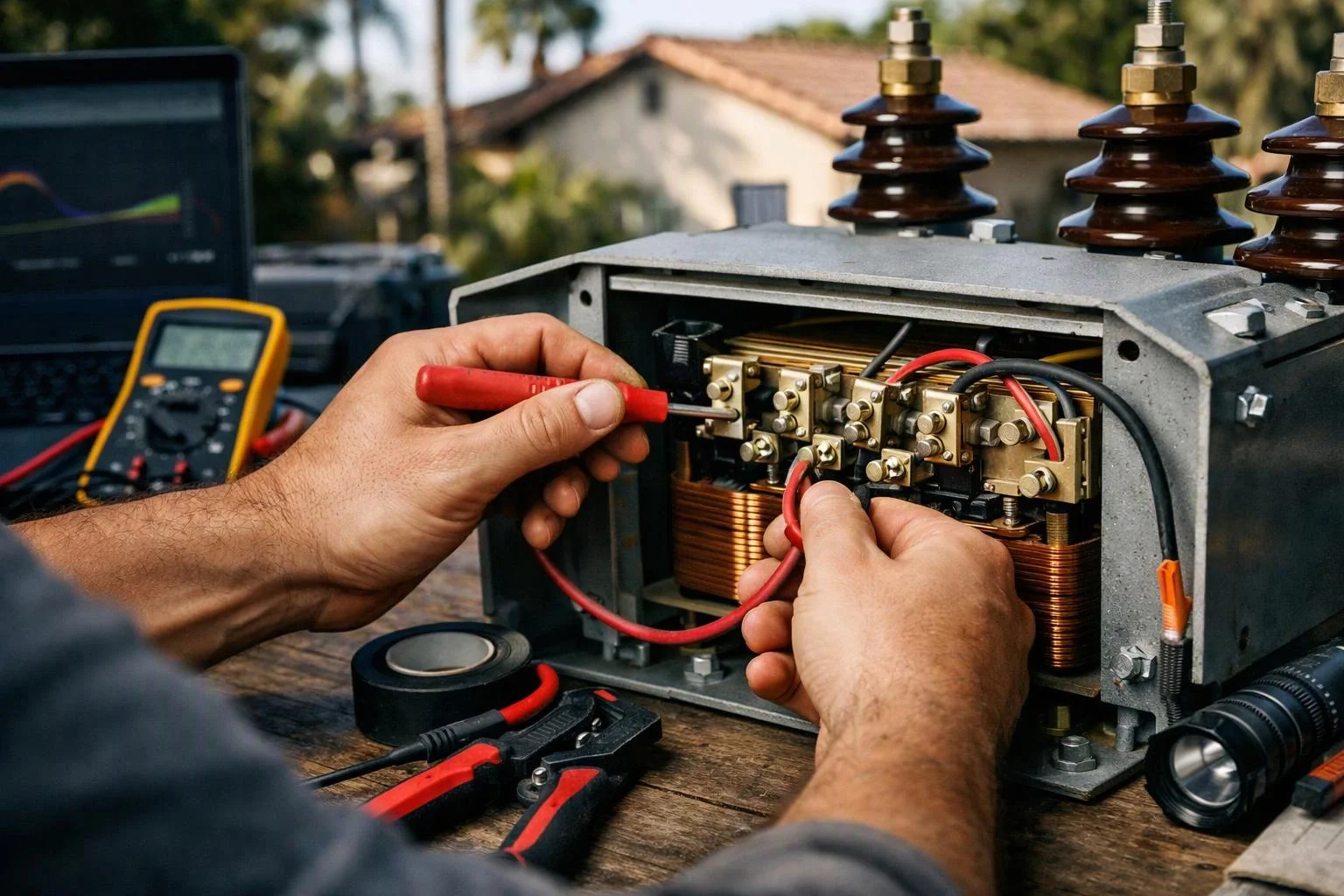
When we work on bidirectional EV charging systems, we check the transformer’s voltage relationship, connection points, grounding path, and physical condition. We also compare the transformer’s intended duty with the charger and building load. These checks help us identify mismatched equipment, loose connections, and heat-related concerns before completing the installation.
Transformer in Practice: A Real-World Example
A bidirectional EV charging system may use a transformer to adapt power between the vehicle charger and a building’s electrical system. The installation plan must match the transformer with the available voltage, charger equipment, and connected building load.
Related Services
Related Terms
Voltage
Voltage is the electrical potential difference that pushes electric charge through a circuit. Voltage provides the…
Line Voltage
Line Voltage is the electrical potential supplied directly by a building’s power system to operate equipment…
Electrical Load
Electrical Load is the amount of electrical power that connected equipment draws from a circuit or…
Transfer Switch
A Transfer Switch is an electrical switching device that moves selected circuits between utility power and…
Santa Ana Electrician
Have Questions About Transformer?
Contact Santa Ana Electrician for practical guidance on Transformer and related 24 hour electrician work in Santa Ana.