Bidirectional EV Charging for Vehicle-to-Home and Vehicle-to-Building Power
Bidirectional EV charging installation connects a compatible electric vehicle, charger, electrical panel and energy controls so the vehicle can support a home or building when the system is designed for that use. Santa Ana Electrician evaluates compatibility, load capacity, transfer equipment, circuit requirements and safe power restoration before installing the system.
Get a Free Estimate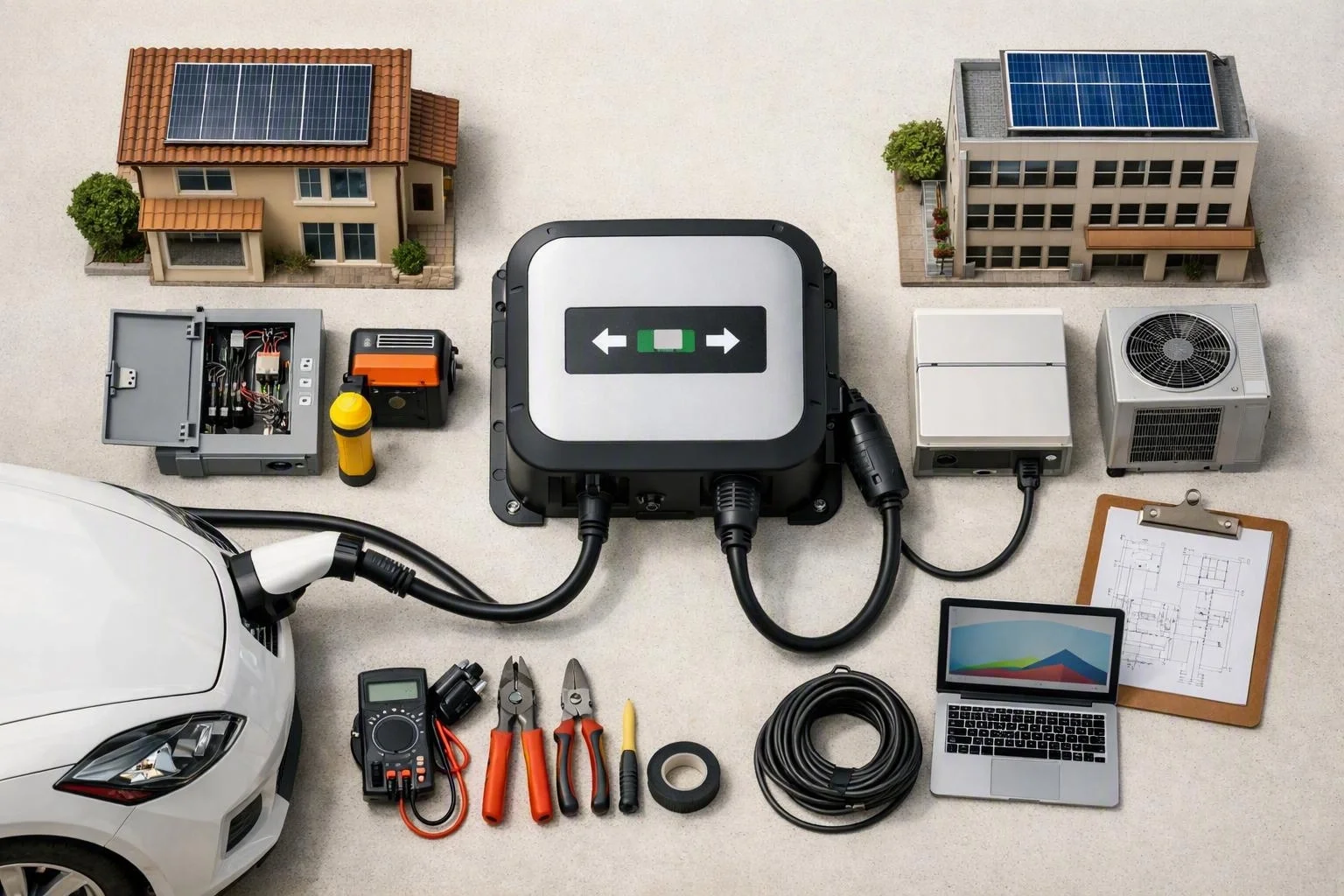
What Is Bidirectional EV Charging?
Bidirectional EV charging is a two-way power system that allows energy to move between an electric vehicle and connected electrical equipment.
A standard charger sends power to the EV battery. A bidirectional EV charger can also send stored energy from the battery back to a home or building when the vehicle, charger, controls and electrical system support that function.
Vehicle-to-home systems support selected household loads. Vehicle-to-building systems connect the electric vehicle with a larger commercial electrical system and coordinated load management. We review the complete system so power can flow safely without exposing the utility grid to an unintended connection.
Why Homeowners Need Vehicle-to-Home Installation
Vehicle-to-home installation helps a homeowner use a compatible EV as part of a managed backup power system. We design the connection around the home’s electrical panel and the loads that matter most during a power outage.
Homeowners commonly need this service for the following reasons:
Our team connects the vehicle-to-home system to the right panel and transfer equipment. We also explain which circuits the system can support under the planned operating conditions.
How Home and Building Applications Differ
Vehicle-to-home and vehicle-to-building systems use the same basic idea of two-way power flow, but their electrical demands differ. We match the design to the property type, load profile and control requirements.
| What is being compared | Homeowners | Building owners and other customers |
|---|---|---|
| Primary use | Vehicle-to-home backup for selected household circuits | Vehicle-to-building integration for managed building loads |
| Load management | Prioritizes critical household loads | Coordinates larger and changing commercial loads |
| Electrical connection | Usually centers on the home electrical panel and backup circuits | Must suit the commercial electrical system and building distribution |
| Controls | Manages backup loads and household energy use | Coordinates building demand, equipment and operating schedules |
| Planning focus | Comfort, safety and essential home functions | Continuity, power quality and controlled building operation |
Building owners may need broader load management and coordination with existing electrical equipment. We assess those controls before connecting a vehicle-to-building system.
What a Bidirectional EV Charger Installation Includes
Bidirectional EV charger installation includes a site assessment, equipment review and electrical design for the intended power flow. We inspect the compatible EV, charger location, electrical panel, transfer equipment and available service capacity.
Our installation plan can include a dedicated circuit, conduit, overcurrent protection, grounding and bonding, and an energy management system. We connect the equipment only after confirming that the charger communication and control functions work together.
For a home project, our Bidirectional EV charger and vehicle-to-home installation service can be planned around a critical loads panel. For a building, we coordinate the charger with the commercial electrical system and its load controls.
Vehicle and Charger Compatibility
Vehicle and charger compatibility determines whether bidirectional charging can operate as intended. We check EV manufacturer compatibility, the bidirectional charging standard, charger communication and the charging connector.
Energy management controls must also recognize the EV and charger. Our team confirms the control path before installation so the system does not rely on unsupported equipment functions.
Electrical Panel and Dedicated Circuit Requirements
The electrical panel must have suitable capacity and protection for the planned equipment. We complete a load calculation, assess the main service panel and design a dedicated circuit with proper overcurrent protection.
Conduit routing, grounding and bonding affect the installation design. We address these details with the transfer equipment so the system can separate supported loads from the utility grid when required.
Which Features Matter for Home and Building Power?
Features for home and building power should support safe control, clear monitoring and dependable separation from the utility grid. We select and configure features according to the property’s loads and the compatible EV system.
Important features include:
We verify that the controls work together before commissioning. This helps the system respond correctly when utility power changes.
What Challenges Can Affect Bidirectional Charging?
Bidirectional charging can be affected by equipment limits, electrical capacity and approval requirements. We identify these conditions before selecting equipment or starting installation.
Common challenges include:
Our team explains which condition affects the design and what work the property needs. We do not treat bidirectional charging as a standard EV charger installation.
Can an EV Power a Home During an Outage?
Yes, a compatible EV can support selected home loads during an outage when the bidirectional charger, transfer equipment, controls and electrical system are designed to isolate the property from the utility grid.
A vehicle-to-home system uses islanding protection and a transfer switch to disconnect supported circuits from utility power. A critical loads panel can then supply selected equipment from the EV battery.
We confirm the transfer sequence and supported loads before commissioning. The system must keep the utility grid isolated until normal power is available and safe power restoration is completed.
How We Plan a Bidirectional EV Charger Installation
Our installation process connects the vehicle, charger and property in a controlled sequence. We document the electrical conditions before we install or energize the equipment.
We provide Free Estimates Available after reviewing the property and equipment needs. Our estimate explains the planned work, equipment requirements and factors that affect the installation.
What Changes the Cost of This Installation?
The cost of bidirectional EV charger installation changes with equipment compatibility, panel capacity, circuit routing, transfer controls, service upgrades and the requirements of the property.
A bidirectional charger may require different work from a standard charger because the system must manage two-way power flow. We review the electrical panel upgrade needs, service capacity, dedicated circuit, conduit routing, transfer equipment and permitting before preparing an exact quote.
To obtain a quote, contact us with the EV details, charger information and property electrical details that you have available. We use the site assessment and load calculation to define what the quote includes.
How We Verify Safe Power Restoration
Power restoration verification confirms that the property can move between utility power and backup operation without an unsafe connection. We test the transfer switch, islanding protection and control sequence during commissioning.
Our team performs load testing on the supported circuits and checks that the energy management system responds to changing conditions. We also review the electrical inspection requirements for the completed work.
We restore utility power in a controlled sequence and confirm that backup loads return to the intended source. The final review shows how the vehicle-to-home or vehicle-to-building system operates during normal service and a power outage.
Questions About Bidirectional EV Home and Building Power
Do all electric vehicles support bidirectional charging?
Not all electric vehicles support bidirectional charging. Santa Ana Electrician reviews the EV manufacturer requirements, charging connector, charging standard and charger communication before planning the installation.
What electrical panel is needed for vehicle-to-home charging?
Vehicle-to-home charging needs an electrical panel with suitable service capacity, protection and space for the planned equipment. We complete a load calculation and determine whether the existing panel, a critical loads panel or an electrical panel upgrade fits the design.
Does vehicle-to-building charging require a dedicated circuit?
Vehicle-to-building charging generally requires a dedicated circuit designed for the compatible charger and the building’s electrical system. We determine the circuit, conduit, protection and transfer equipment through the load calculation and site assessment.
Can a bidirectional EV charger work with an existing solar system?
A bidirectional EV charger can work with an existing solar system when the equipment, controls, panel capacity and interconnection design are compatible. We review the solar equipment and energy management system before combining the systems.
What loads should a home or building keep powered during an outage?
Homes and buildings should prioritize essential backup loads that fit the available EV power and system design. We review the property’s needs and identify suitable circuits for the critical loads panel or managed building load system.
Contact Santa Ana Electrician to review your compatible EV, electrical panel, backup goals and building load requirements.
Get a Free EstimateRelated Resources
How Long Does a 24 Hour Electrician Take to Arrive in Santa Ana, CA?
How Long It TakesHow Long Does an Electrical Panel Upgrade Take in Santa Ana, CA?
How Long It TakesHow Long Does EV Charger Installation Take in Santa Ana, CA?
How Long It TakesGenerator Installation Timeline: How Long It Takes in Santa Ana, CA