Whole-House Surge Protection: How It Works and What to Consider
Whole-house surge protection uses a surge protective device at the electrical panel to divert excess voltage away from household circuits and connected equipment. Santa Ana Electrician checks the panel, grounding path, service configuration, and device compatibility before completing the installation.
Get a Free Estimate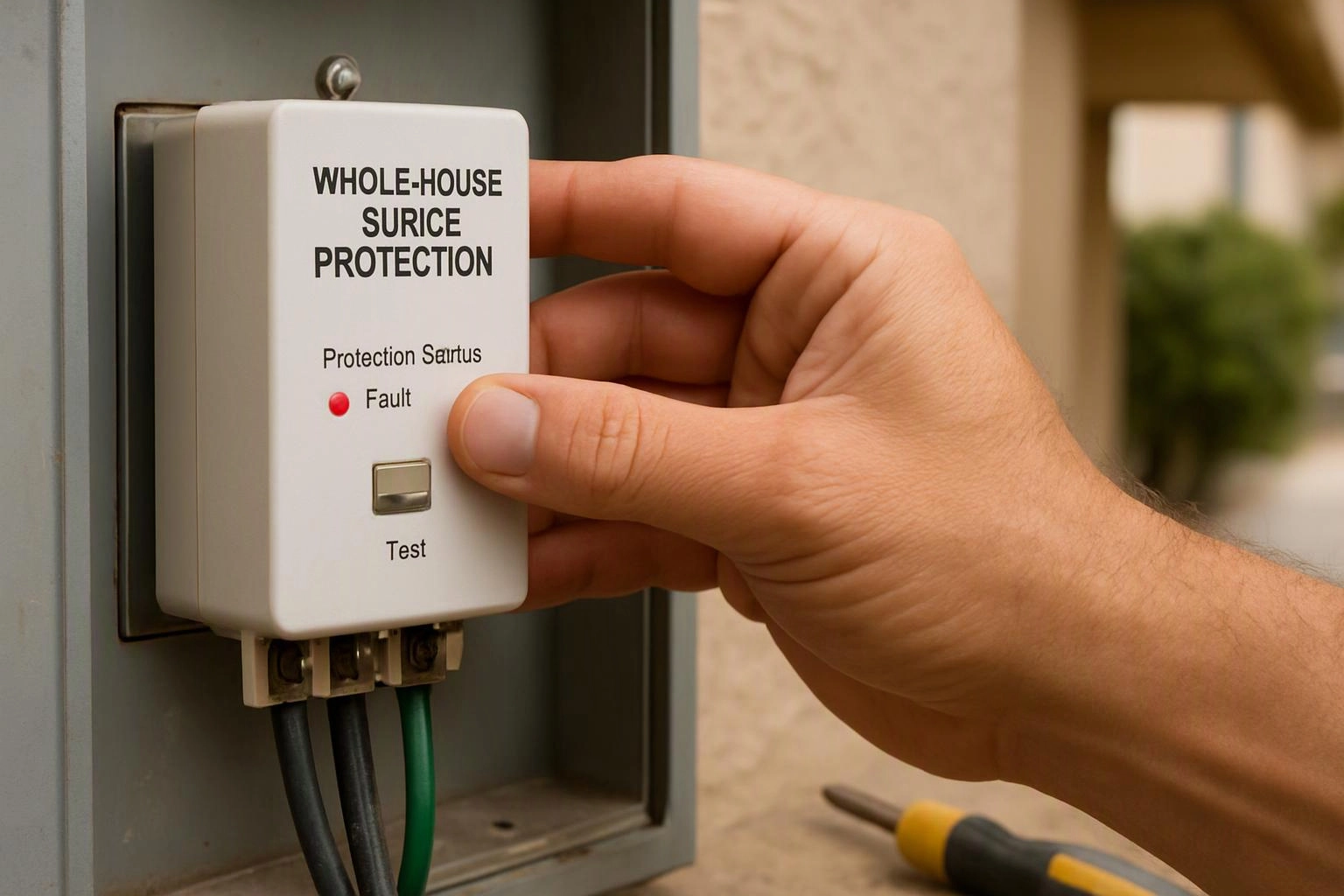
How Does Whole-House Surge Protection Work?
Whole-house surge protection works by directing excess electrical energy away from branch circuits and connected equipment through a device installed at or near the electrical panel.
A surge protective device detects a rapid rise in transient voltage and creates a controlled path for that energy. The path leads through the grounding system, where the electrical system can carry the unwanted energy away from household circuits.
Our team checks the electrical panel, grounding path, and bonding connections before we select the protection equipment. This assessment helps us confirm that the surge suppression system matches the electrical service and can work as intended.
What Happens During a Surge Protection Installation?
A whole-house surge protection installation starts with a panel and grounding assessment, continues with compatible device placement and wiring, and ends with operational checks.
Panel compatibility can affect the installation scope because available breaker space, service configuration, and grounding condition vary by property. We identify those factors before completing the work so the planned installation fits the existing electrical system.
When Do Surge Protection and Electrical System Checks Belong Together?
Whole-house surge protection and electrical system checks belong together when the condition of the panel or grounding system may affect protection performance. We use the installation assessment to identify related electrical concerns before connecting the device.
These conditions do not automatically mean the electrical system needs major changes. Our team checks the specific installation and explains which work supports the surge protection plan.
How Do Surge Protection and Electrical Checks Work Together?
Surge protection and electrical checks work together as a planned sequence that connects the device choice to the condition of the existing system. We use the findings from each step to define a clear service scope.
Bundling related checks can make the work more efficient when the panel or grounding system needs attention at the same visit. We explain the recommended sequence and the cost drivers before work begins.
What Should You Consider Before Choosing a Whole-House Surge Protector?
The main considerations are electrical service compatibility, panel space, grounding condition, connected equipment, device specifications, and the installation environment.
Service compatibility matters because the surge protective device must match the service voltage and electrical panel configuration. We review the panel and service before choosing a panel-mounted surge protector.
Grounding and bonding also affect the protection path. Our team checks the grounding system and bonding connections so the device has a suitable route for diverted energy.
Connected loads help guide the protection plan. Sensitive electronics, household appliances, and equipment with electronic controls may have different protection needs, so we consider how the property uses power.
We follow the manufacturer specifications for device selection, wiring, clearances, and installation conditions. We also check the replacement indicator so you know how the device signals that it may need service or replacement.
What Whole-House Surge Protection Does Not Cover
Whole-house surge protection reduces the effect of many transient overvoltage events, but it cannot prevent every form of electrical damage or replace safe wiring and equipment practices.
A utility surge, lightning-related surge, or internal switching surge can vary in strength and path. A direct lightning strike can also exceed the protection limits of a residential system.
Surge protection does not keep power available during a power outage. Our team explains the difference between surge suppression and backup power so you can choose the right protection approach for your needs.
Proper installation can reduce risk, but no device guarantees that every connected item will avoid damage. We review the grounding path, panel condition, and equipment limits so the protection plan reflects realistic performance.
How We Plan a Whole-House Surge Protection Installation
Santa Ana Electrician plans the installation around the electrical panel, grounding path, service configuration, and protection needs, and we provide Free Estimates Available for the planned work.
We begin by reviewing the electrical service panel and identifying the correct installation location. Our team then checks the grounding and bonding path, confirms device compatibility, and defines the work included in the installation scope.
We explain the selected surge protective device, its status indicator, and its protection limits before completing the work. If the system needs related electrical attention, we describe the reason and include it clearly in the service quote.
For a tailored assessment, contact us about Whole-House Surge Protector Installation.
Free Estimates Available
Questions About Whole-House Surge Protection
Does whole-house surge protection protect against every power surge?
Santa Ana Electrician explains that whole-house surge protection does not protect against every power surge. The device can reduce the effect of many transient events, but utility surges, lightning-related surges, internal switching surges, direct lightning strikes, and other events can exceed system limits.
Can whole-house surge protection work without a proper grounding system?
No. Whole-house surge protection depends on a suitable grounding path to divert excess electrical energy. We check the grounding system and bonding connections before installation and explain any condition that affects the protection plan.
Do plug-in surge protectors replace whole-house surge protection?
No. Plug-in surge protectors and a panel-mounted surge protector serve different points in the electrical system. Plug-in units protect equipment at an outlet, while whole-house protection works at the electrical panel for a broader protection path.
Which appliances benefit from whole-house surge protection?
Appliances with electronic controls can benefit from whole-house surge protection because they may be affected by transient voltage. We consider connected equipment such as appliances, home electronics, and other sensitive loads when planning the installation.
Related Resources
Preparing for Home Generator Installation and Backup Power
What Goes With ItCommercial Electrical Emergency Response for Businesses
What Goes With ItPlanning Safe Residential Lighting and Ceiling Fan Installation
What Goes With ItPlanning Smoke and Carbon Monoxide Detector Installation