Planning Safe Residential Lighting and Ceiling Fan Installation
Recessed lighting planning requires checking room purpose, ceiling structure, light placement, insulation, circuit capacity, controls, and safe access; Santa Ana Electrician handles the assessment, installation, and related ceiling fan work.
Get a Free EstimateWhat Should You Consider When Planning Recessed Lighting?
Recessed lighting planning should begin with room use, ceiling structure, desired light distribution, trim style, and access for safe wiring.
Room function guides the lighting layout. A kitchen may need clear work lighting, while a bedroom may need softer light with better glare control. We review the room layout and ceiling height before choosing fixture locations.
Beam spread affects how light reaches floors, counters, walls, and furniture. We consider beam angle, fixture position, trim, and glare direction so the light supports the room without creating harsh reflections.
How We Check the Electrical and Ceiling Conditions
Our inspection connects the electrical circuit to the ceiling conditions before we recommend fixture locations. We also review existing wiring and the available switch box space.
These checks help us plan safe ceiling access and reduce changes during installation. We explain structural or wiring conditions that affect the project scope before work begins.
When Do Recessed Lighting and Ceiling Fan Installation Belong in the Same Project?
Recessed lighting installation and ceiling fan installation fit the same project when both services depend on shared ceiling access or related electrical work.
Combining related work can help us plan the wiring route and switch controls as one system. The right sequence depends on the ceiling condition, room renovation work, and electrical circuit.
Our team reviews both services together when their work areas overlap. This helps keep the project scope clear and supports a safe wiring sequence.
How Recessed Lighting and Ceiling Fans Work Together
A ceiling fan and recessed light can share a room while using separate controls and the correct support equipment. We plan the arrangement so airflow, light placement, and wiring do not conflict.
Recessed light placement also matters around fan blades and moving shadows. We review the room layout before setting fixture positions and controls.
How to Plan Light Switches and Controls
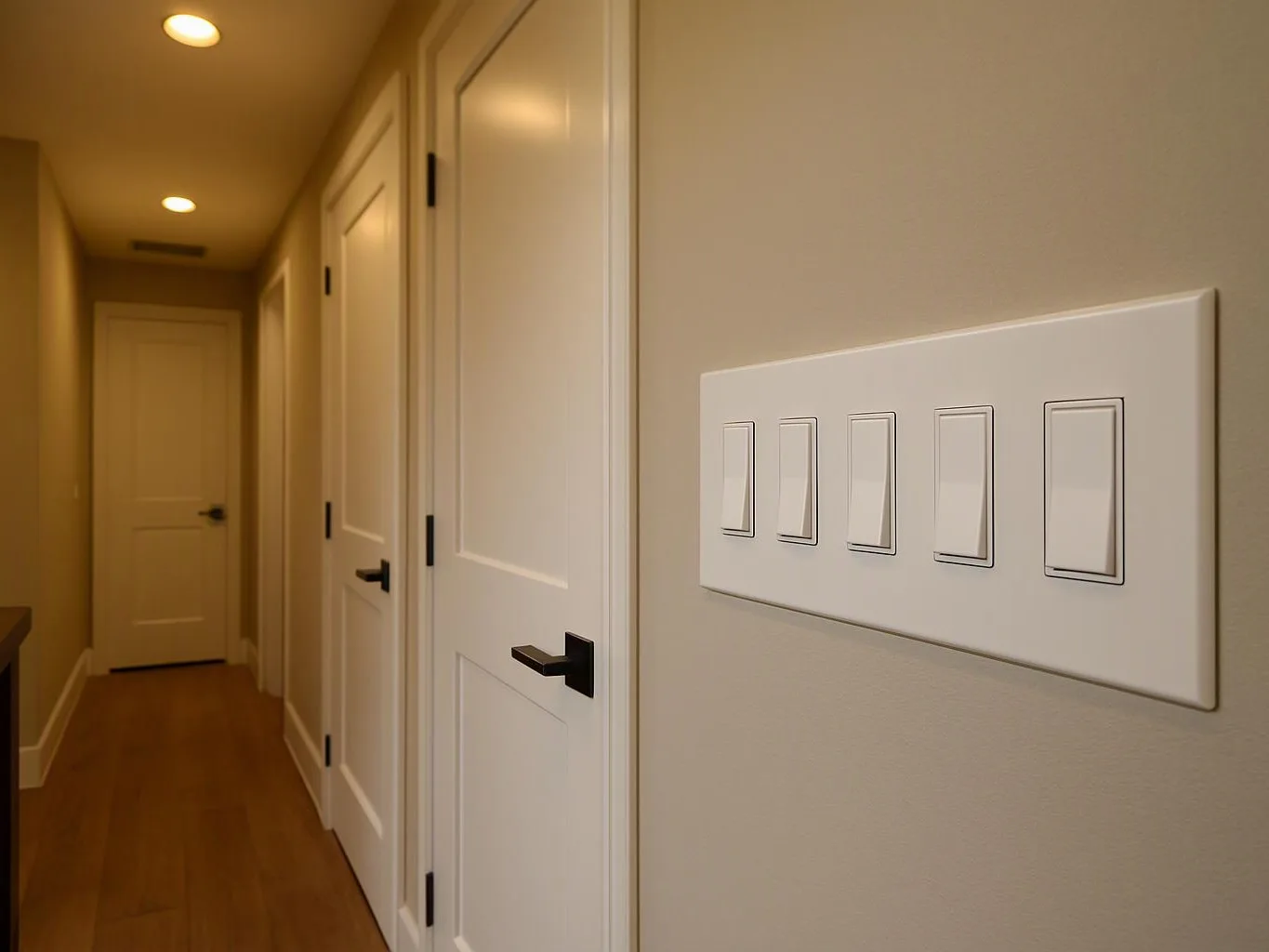
Light switch planning should separate lighting zones from fan operation and match the controls to the fixtures and circuit design.
A dimmer switch can support adjustable light levels when the fixture and lamp are compatible. We confirm dimmer compatibility before installing the control.
A three-way switch can control a lighting zone from more than one location. We also plan a fan control that matches the ceiling fan and keeps fan operation separate from the light switch.
The switch box must have room for the selected controls and properly arranged conductors. We can also complete Light Switch Repair when an existing switch has unsafe or unreliable symptoms.
What Safety Checks Matter During Ceiling Fan Installation?
Ceiling fan installation requires secure structural support, a fan-rated electrical box, proper grounding, compatible controls, and safe wiring.
Fan-rated box support is different from support intended only for a light fixture. We verify the box, mounting hardware, ceiling support, and connection to the structure before attaching the fan.
Grounding connects exposed metal parts to a safe fault path. We check the ground wire, branch circuit, wall control, and circuit breaker before testing the completed installation.
Blade clearance affects safe operation and room use. We review the ceiling layout and mounting position so the fan operates without contacting nearby surfaces or fixtures.
How to Plan Outdoor and Security Lighting Safely
Outdoor and security lighting plans should account for weather exposure, protected wiring, glare direction, switching, sensors, and safe power isolation.
We select a weather-resistant fixture for the location and check how exterior wiring is protected from moisture and physical damage. Ground-fault protection may be needed for outdoor electrical equipment based on the installation conditions.
Security lighting should direct light toward entry points, paths, and other areas that need visibility without creating glare for residents or neighbors. We place a motion sensor for useful motion detection and may use a photocell when dusk-to-dawn operation fits the project.
Our crew isolates power before working on exterior wiring and verifies the circuit before restoring service. We also check the controls, fixture mounting, and final light direction during the electrical inspection.
When Does a Light Switch Need Repair?
A light switch needs repair when the switch feels warm, sounds abnormal, sparks, feels loose, or operates a flickering light.
A loose switch, warm switch plate, buzzing switch, or flickering light can point to a loose connection, worn component, or other wiring concern. We inspect the switch, wiring, and circuit breaker before deciding on repair.
Electrical arcing can damage the switch and create a safety risk. Stop using the switch if it sparks, smells hot, or shows visible damage, and contact us for Light Switch Installation or repair guidance.
What We Include in a Recessed Lighting Installation Quote
Our recessed lighting estimate accounts for fixture selection, ceiling access, wiring, controls, structural conditions, and the work needed to complete the installation safely.
We review the fixture type, trim, housing, room layout, and desired light distribution. We then assess the wiring route, electrical circuit, switch controls, ceiling joists, insulation, and available access.
Ceiling patching needs can affect the work when openings must be adjusted or existing surfaces need repair. We explain the installation scope, related fan work, control choices, and electrical inspection needs before proceeding.
Free Estimates Available. Contact us with the room details and the changes you want so our team can prepare an exact quote based on the actual conditions.
Questions About Residential Lighting and Ceiling Fan Planning
Can recessed lights and a ceiling fan share a switch?
Yes, recessed lights and a ceiling fan can share a switch only when the circuit, wiring, controls, and fixture requirements support that arrangement. Santa Ana Electrician plans independent controls when separate fan and light operation is safer or more useful.
Should recessed lights be installed before or after a ceiling fan?
Recessed lights should be installed in the sequence that provides safe ceiling access and protects the fan support and wiring. We set the order after reviewing the ceiling structure, fixture locations, and project scope.
Can recessed lighting be installed in an insulated ceiling?
Yes, recessed lighting can be installed in an insulated ceiling when the housing is suitable for the insulation conditions and the wiring remains safe. We check insulation contact, ceiling access, joists, and the fixture requirements before installation.
What should I do if a light switch feels warm?
A warm light switch should be taken out of use until the switch and circuit are inspected. Turn off the circuit breaker only if you can do so safely, and contact us when the switch is loose, buzzing, sparking, or operating a flickering light.
What controls work best for outdoor security lighting?
Motion sensors work well for light that activates when movement is detected, while photocells support automatic operation based on available daylight. We match the control to the security goal, weather exposure, fixture, and safe outdoor wiring plan.
Safe residential lighting installation starts with the room, ceiling, circuit, controls, and access conditions. Santa Ana Electrician reviews those factors and explains the work needed for recessed lighting, ceiling fans, switch repairs, outdoor lighting, and security lighting.
Related Resources
How Long Does Ceiling Fan Installation Take?
What It CostsOutlet, GFCI, and Light Switch Repair Costs: What to Expect
How It WorksWhat to Expect When Installing Lights, Recessed Lighting, or a Ceiling Fan
Compared ToOutdoor, Landscape, and Security Lighting: Choosing the Right Installation