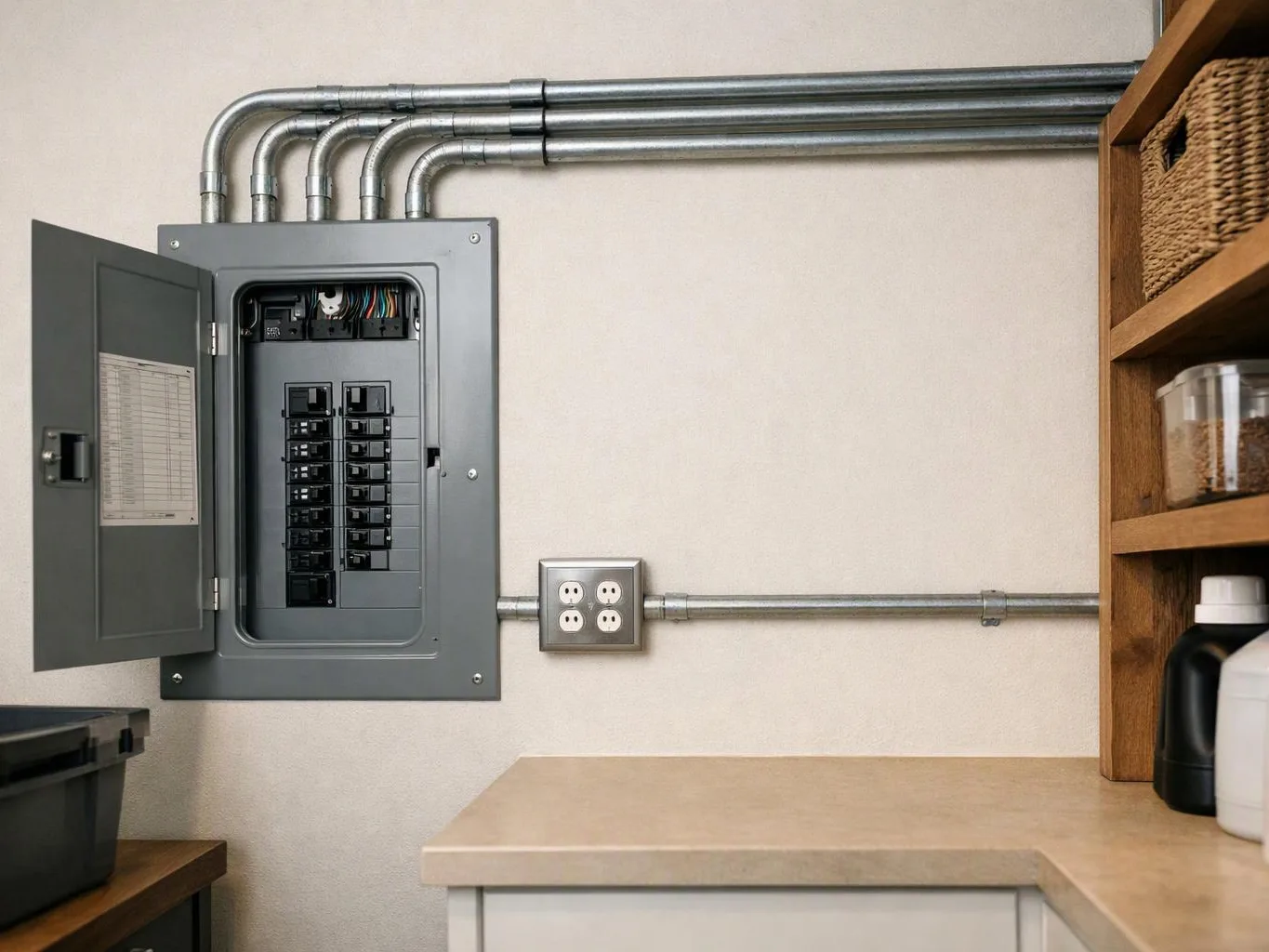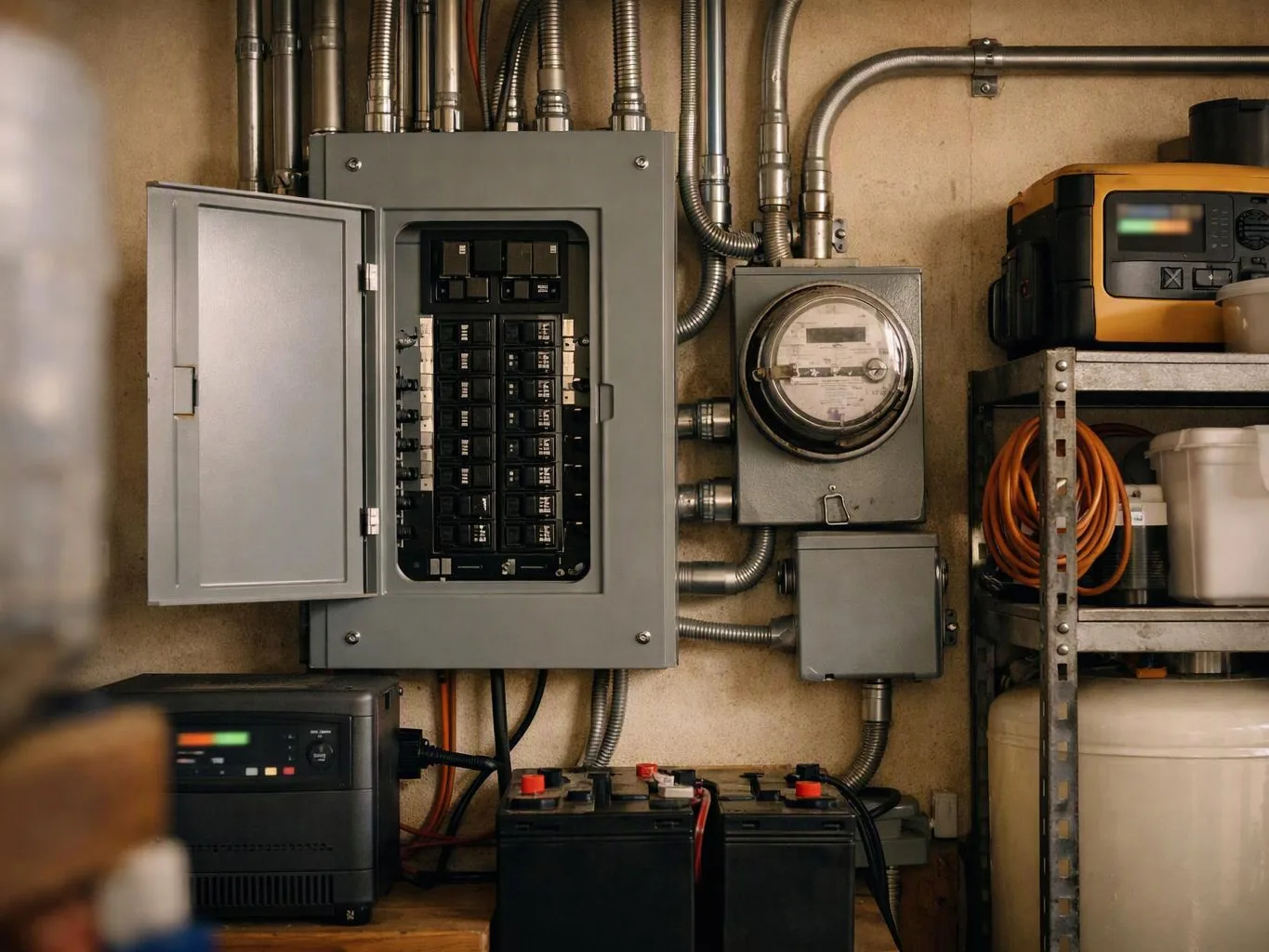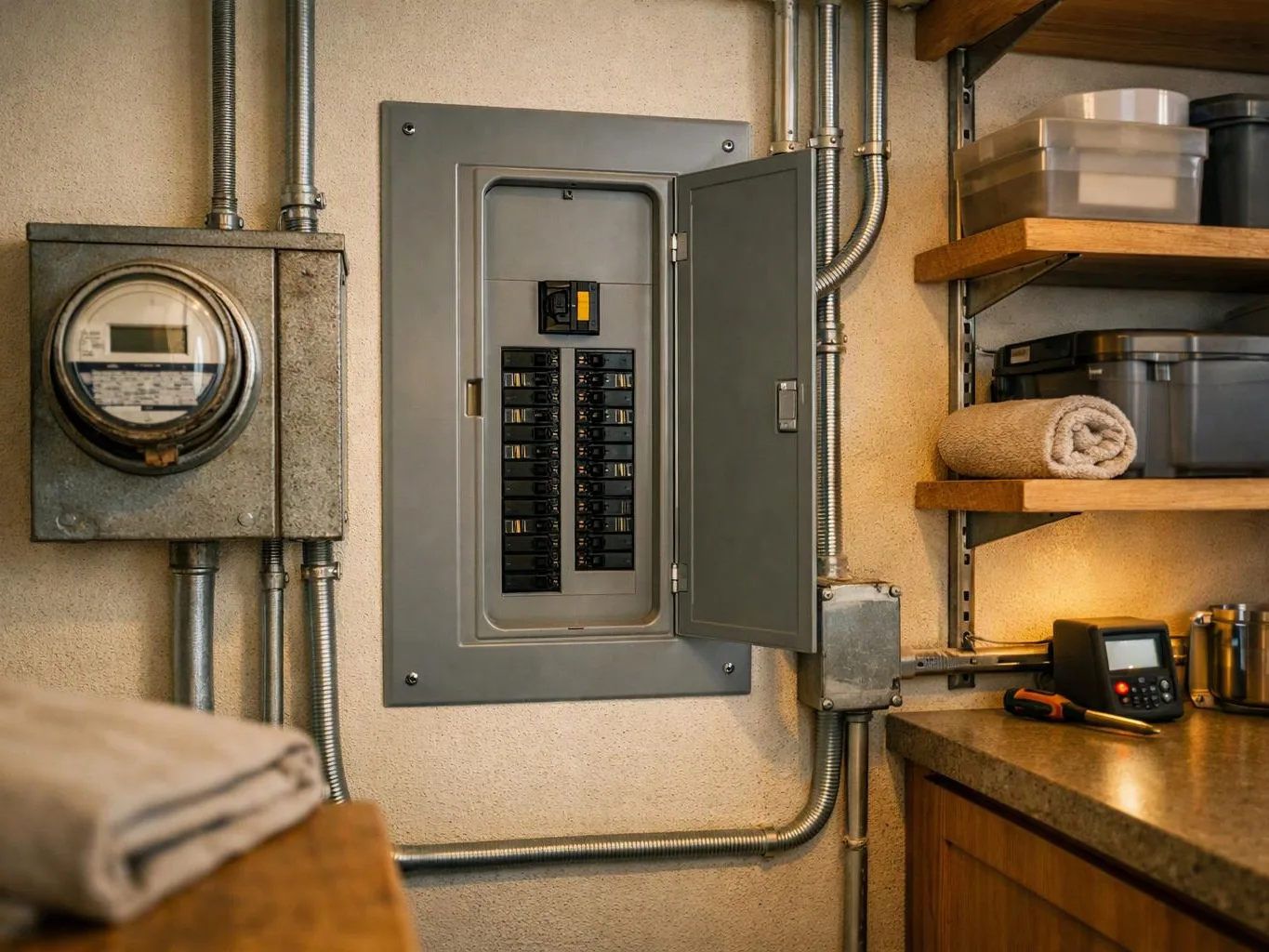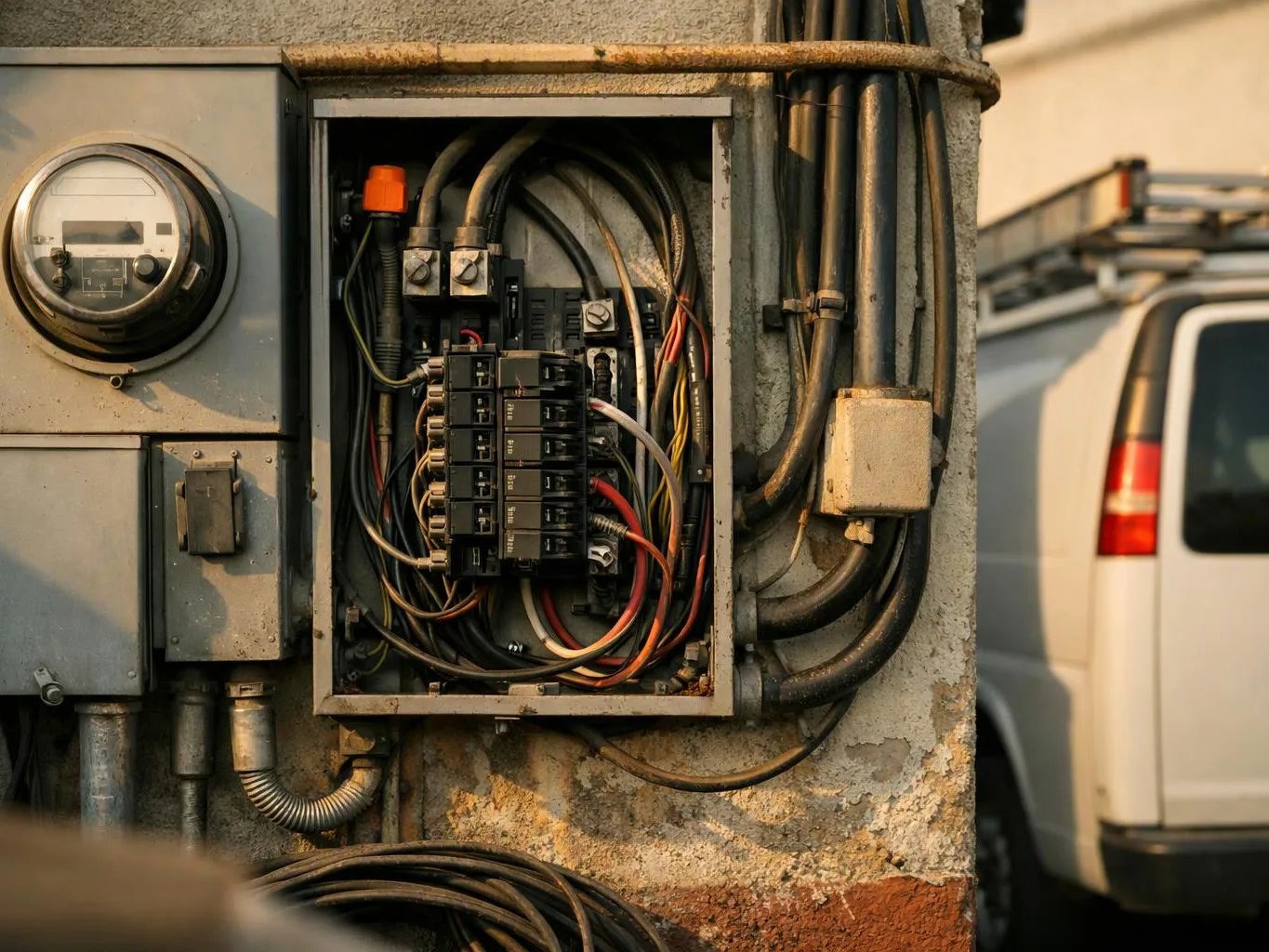
Warning Signs Your Electrical Panel Needs Immediate Attention
Electrical panel buzzing or overheating can signal a loose connection, overloaded circuit, failing breaker, or unsafe internal condition. Santa Ana Electrician checks the panel, breakers, wiring, and signs of heat damage to determine whether repair, breaker replacement, or an electrical panel upgrade is needed.
Get a Free Estimate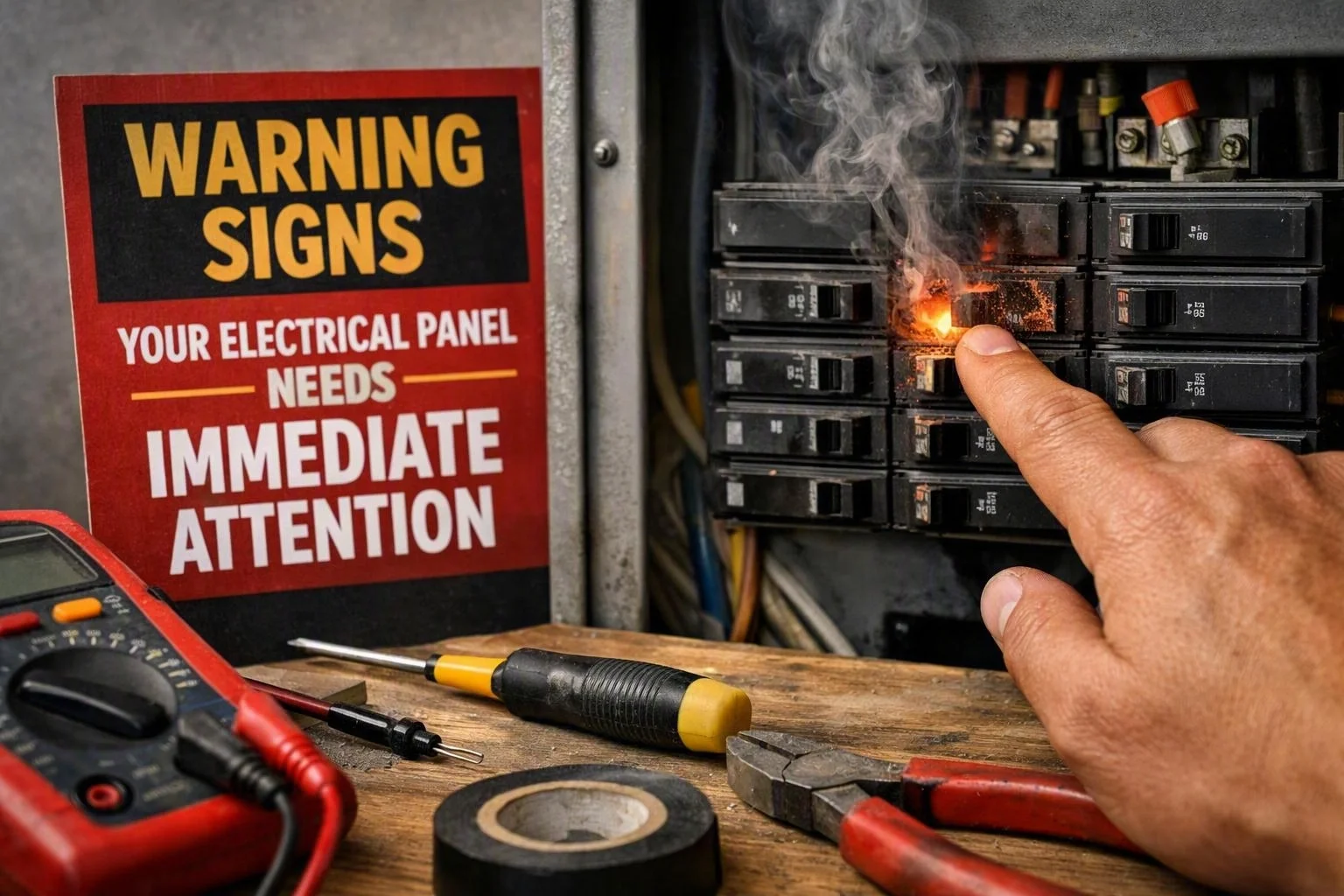
What Warning Signs Mean Your Electrical Panel Needs Attention?
Electrical panels need immediate attention when they produce unusual sounds, excessive heat, burning odors, visible damage, or repeated circuit interruptions. These signs can point to an electrical hazard inside the panel or in the connected wiring.
Our team checks the panel condition and traces the symptom to its source before recommending electrical panel repair or another service.
Why Is an Electrical Panel Buzzing or Overheating?
Electrical panel buzzing or overheating usually points to an electrical connection, breaker, load, or component problem that requires inspection.
A loose electrical connection can vibrate under load and create a crackling sound. A damaged circuit breaker can develop poor contact and produce heat. An overloaded circuit can also push more current through a branch circuit than its components can safely carry.
Electrical arcing occurs when current jumps across an unwanted gap. Arcing near a terminal or bus bar can damage the panel and surrounding wiring. Our team looks for heat damage, discoloration, loose terminals, and signs that the enclosure or internal parts have been stressed.
What Common Problems Cause Electrical Panel Warning Signs?
Electrical panel warning signs commonly come from connection problems, breaker failures, excessive circuit demand, or aging equipment. We identify the actual cause before choosing a repair or replacement path.
We inspect the breaker box, wiring, terminals, bus bar, and enclosure together. This helps us separate a local breaker problem from a wider building electrical system concern.
What Should You Do When an Electrical Panel Is Hot or Buzzing?
A hot or buzzing electrical panel should be treated as a safety concern; keep clear of the panel, avoid removing its cover, and arrange an electrical safety inspection.
Do not touch scorched areas, exposed wiring, or a damaged enclosure. Our team can assess the condition and explain the safest next step.
Can a Tripping Breaker Mean You Need a Panel Upgrade?
No, a tripping circuit breaker does not automatically mean an electrical panel upgrade is needed because the cause may be a circuit fault, appliance problem, overloaded circuit, or failing breaker.
A short circuit can trip a breaker when conductors contact in an unsafe way. A ground fault can also interrupt power when current travels along an unintended path. Our team tests the affected circuit and checks the breaker before deciding whether the problem is local or related to electrical panel capacity.
An upgrade may be appropriate when the panel cannot support the building’s power demand, has widespread heat damage, or lacks suitable space and protection for planned electrical work. A single breaker trip may only require diagnosis, circuit repair, or circuit breaker repair.
How Can You Prevent Electrical Panel Problems?
Electrical panel problems are easier to address when you watch for changes in sound, heat, light operation, and breaker behavior. We use an electrical safety inspection to find developing concerns before they cause broader damage.
Our team can review circuit breaker operation and wiring condition during the inspection. We also explain which changes may reduce strain on the building electrical system.
How We Determine Whether You Need Repair or an Upgrade
Santa Ana Electrician determines the appropriate service by inspecting the panel condition, breaker operation, wiring, heat damage, and electrical demand.
We begin by identifying the reported symptom and checking for immediate hazards. We then examine the enclosure, panel cover, terminals, bus bar, branch circuit breakers, and connected wiring.
A load assessment helps us understand whether the existing electrical panel can support current and planned demand. When the issue is isolated, electrical panel repair or circuit breaker repair may resolve it. When the equipment is damaged or lacks suitable capacity, an electrical panel upgrade may be the safer long-term choice.
Our team explains what the inspection found, what work the estimate covers, and why the recommended service fits the condition of the building electrical system. Electrical Panel Repair can address localized damage when the panel remains suitable for continued use.
Questions About Electrical Panel Warning Signs
Is a buzzing electrical panel dangerous?
A buzzing electrical panel can be dangerous because the sound may come from a loose connection, failing breaker, or electrical arcing. Santa Ana Electrician checks the panel and wiring to locate the source before recommending safe corrective work.
Should I turn off the main breaker if the panel is hot?
Turn off the main breaker only when it can be reached without approaching smoke, exposed wiring, active arcing, or a damaged panel. Keep clear of an unsafe panel and contact our team for an electrical safety inspection.
Can a bad circuit breaker cause an electrical panel to overheat?
Yes, a bad circuit breaker can cause an electrical panel to overheat when its internal contacts or terminal connection no longer carry current properly. We test the breaker and inspect nearby components for heat damage before completing circuit breaker repair or recommending replacement.
What does a burning smell from an electrical panel mean?
A burning smell from an electrical panel can mean that insulation, a terminal, a breaker, or another component is overheating. Keep clear of the panel, avoid opening the cover, and arrange an inspection so we can identify the source safely.
Electrical panel warning signs deserve careful attention because heat, odor, noise, and repeated interruptions can worsen when the underlying fault remains active. Santa Ana Electrician can inspect the panel, explain the condition, and provide the next service step.
Contact us for an electrical safety inspection when your panel is hot, buzzing, damaged, or repeatedly tripping.
Related Resources
How Long Does a 24 Hour Electrician Take to Arrive in Santa Ana, CA?
How Long It TakesHow Long Does an Electrical Panel Upgrade Take in Santa Ana, CA?
How Long It TakesHow Long Does a Residential Electrical Inspection Take?
What It CostsHow Much Does Home EV Charger Installation Cost in California?