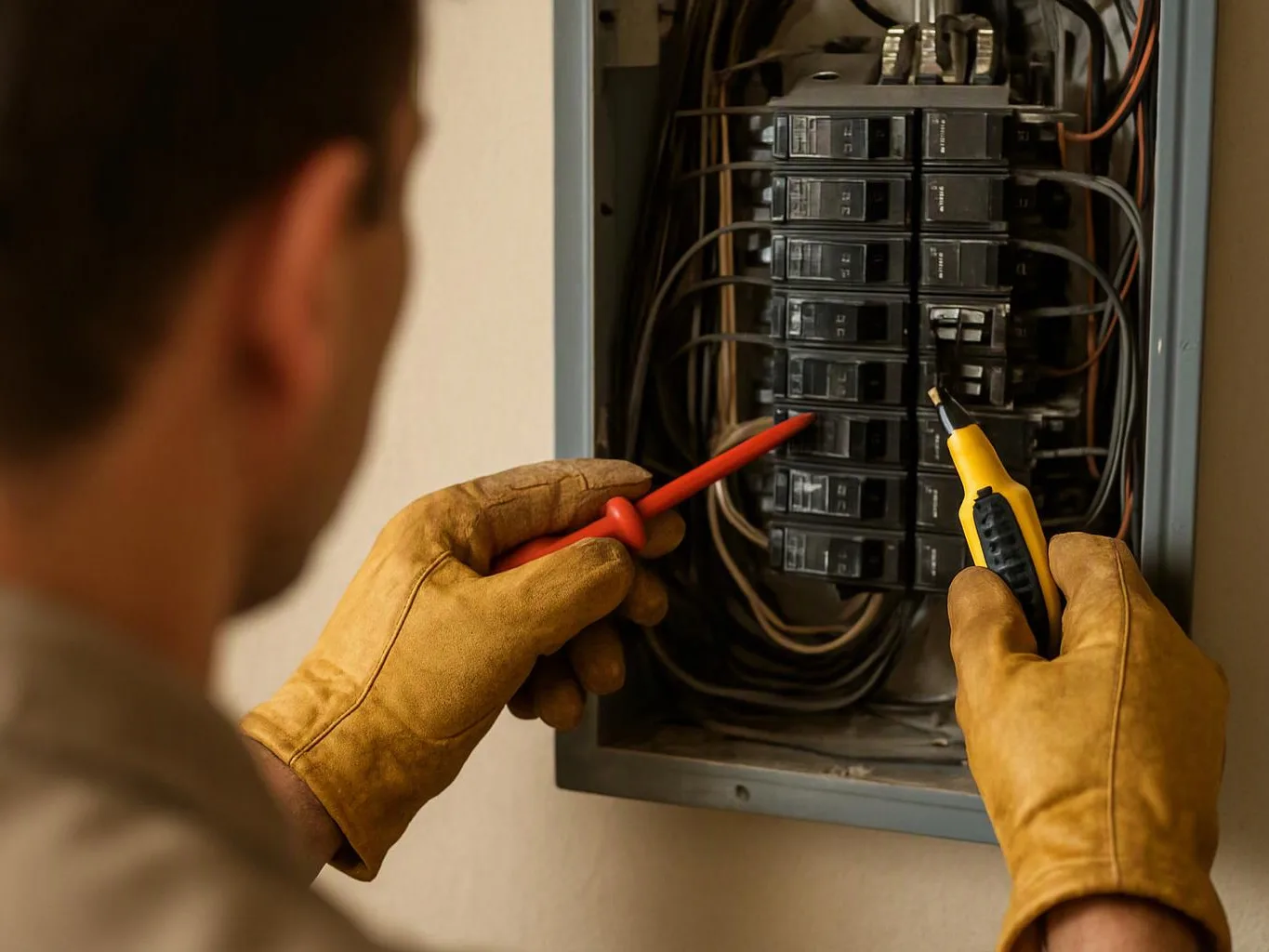
What to Do About Exposed or Damaged Electrical Wiring
Exposed or damaged electrical wiring should be treated as a safety hazard: keep people away, avoid touching or taping it, shut off power only if safe, and contact Santa Ana Electrician for inspection, repair, or rewiring.
Get a Free EstimateWhat Should You Do About Exposed or Damaged Electrical Wiring?
Exposed electrical wiring requires immediate separation from the hazard, safe power isolation when possible, and professional electrical assessment from Santa Ana Electrician.
Damaged electrical wiring can cause electrical shock or an electrical fire even when no sparks are visible. We use safe power isolation and testing to determine whether the circuit remains energized.
Signs That Electrical Wiring Needs Immediate Attention
Several visible or sensory warning signs point to a dangerous wiring problem. We inspect the related circuit when any of these conditions appear.
Stop using the affected circuit when these signs occur. Our team checks for heat damage, loose connections, overloaded circuits, and hidden conductor damage.
Why Electrical Wires Become Exposed or Damaged
Wiring problems develop when the cable, insulation, or connection can no longer protect the electrical conductors. We identify the cause so the repair addresses more than the visible damage.
Repeated overheating may point to a circuit overload or a connection that needs correction. We trace the circuit and inspect nearby components before choosing wire repair or replacement.
Is Exposed Electrical Wiring an Emergency?
Exposed electrical wiring is an emergency when it is energized, sparking, smoking, hot, wet, or associated with a burning smell.
Active arcing can ignite nearby materials and cause an electrical fire. Smoke, heat, or a strong burning odor means you should stay away and leave the area if needed.
Water and electricity create an especially dangerous condition. Do not enter standing water to reach a circuit breaker; call Santa Ana Electrician for emergency electrical troubleshooting and safe power isolation.
Can You Tape Exposed Electrical Wires?
No, electrical tape is not a complete repair for exposed or damaged wiring because it does not correct damaged conductors, unsafe connections, or missing enclosure protection.
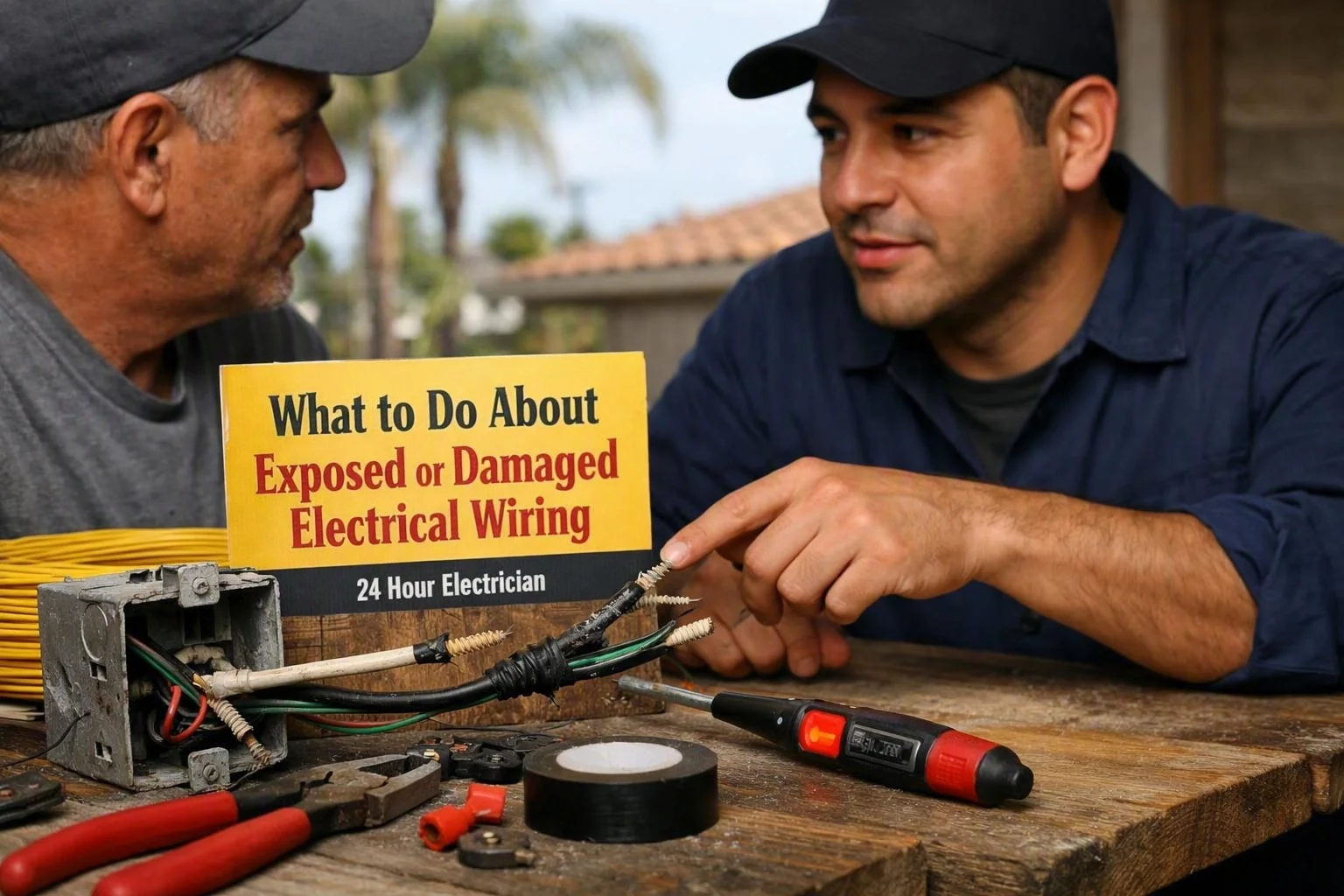
Electrical tape may cover a small area temporarily, but it does not restore damaged wire insulation or confirm that the circuit is safe. We inspect the live wire, connection, and cable route to determine the correct repair.
A safe enclosure may require an approved junction box, suitable wire connectors, and properly secured wiring. We do not treat tape as a substitute for electrical wiring repair.
How We Inspect and Repair Damaged Wiring
Our electrical inspection starts with a visual review and safe voltage testing at the affected circuit. We use circuit tracing to identify the power source, connected devices, and location of the wiring problem.
We examine wire insulation, electrical conductors, wire connectors, and junction boxes for heat damage, corrosion, loose connections, and unsafe enclosure conditions. We also check whether water damage, rodent damage, or overheating affected nearby wiring.
For localized damage, our crew completes electrical wiring repair with suitable wire replacement, secure connectors, and protected routing. When the damage extends through the route or affects circuit safety, we explain the electrical rewiring needed to restore the system.
When Does Damaged Wiring Need Rewiring?
Damaged wiring needs rewiring when the affected conductors, insulation, circuit capacity, or wiring route cannot be made safe with a localized repair.
Electrical rewiring may be appropriate for repeated wiring damage, brittle insulation, an overloaded circuit, or wiring that cannot be safely reached. We assess the route and circuit capacity before recommending a broader replacement.
Inaccessible wiring can make a small repair unreliable when damage continues behind a wall or ceiling. Our team explains the access requirements and plans a code-compliant repair that protects the electrical system.
How to Prevent Exposed or Damaged Wiring
Basic electrical safety helps protect wire insulation, cable sheaths, and connections from common sources of damage. We can also identify weak points during an inspection and recommend practical protection.
Do not hide damaged wires behind a cover or wall material. We inspect the wiring problem first so the protection method matches the electrical hazard.
What a Wiring Repair Quote Should Cover
The cost of damaged-wiring work depends on the fault, wiring access, affected circuit, repair method, and whether rewiring is required; Santa Ana Electrician provides Free Estimates Available after assessing the work.
A clear electrical wiring repair quote should describe the inspection findings and the proposed repair scope. We explain which conductors, connectors, enclosures, and replacement materials are included.
The quote should also identify access requirements and whether electrical rewiring is needed. We review the work with you before starting so the recommended repair matches the condition of the circuit.
To arrange an assessment, contact Santa Ana Electrician and describe the visible damage, burning smell, sparking, smoke, or other warning signs.
Questions About Exposed or Damaged Wiring
What should I do if a wire is exposed but not sparking?
Exposed wiring that is not sparking still requires separation from the hazard, safe power isolation when possible, and inspection by Santa Ana Electrician. Do not touch the wire or cover it with tape while waiting for an assessment.
Should I turn off the breaker when electrical wiring is damaged?
Turn off the circuit breaker only when you can reach it without touching the damage or entering a wet or unsafe area. Leave the area and call us when the panel or path to it may be dangerous.
Can damaged electrical wiring cause a fire?
Yes, damaged electrical wiring can cause a fire when exposed conductors, arcing, overheating, or loose connections ignite nearby materials. We inspect the affected circuit and repair the underlying fault.
How do I know whether wiring damage is behind a wall?
Wiring damage behind a wall may show through warm surfaces, burn marks, unusual odors, buzzing, flickering, or a tripping circuit breaker. We use visual checks, voltage testing, and circuit tracing to assess concealed wiring safely.
What should I do if exposed wiring is near water?
Exposed wiring near water requires immediate separation from the area and safe power isolation only when the breaker can be reached without contact with water. Do not touch the wiring or enter standing water; call us for emergency electrical troubleshooting.
Related Resources
How Long Does a 24 Hour Electrician Take to Arrive in Santa Ana, CA?
How Long It TakesHow Long Does It Take to Rewire a House?
What It CostsHome Generator Installation: Cost, Timeline, and What the Electrician Handles
How to HireHow to Choose an Emergency Electrician: Questions to Ask Before Hiring