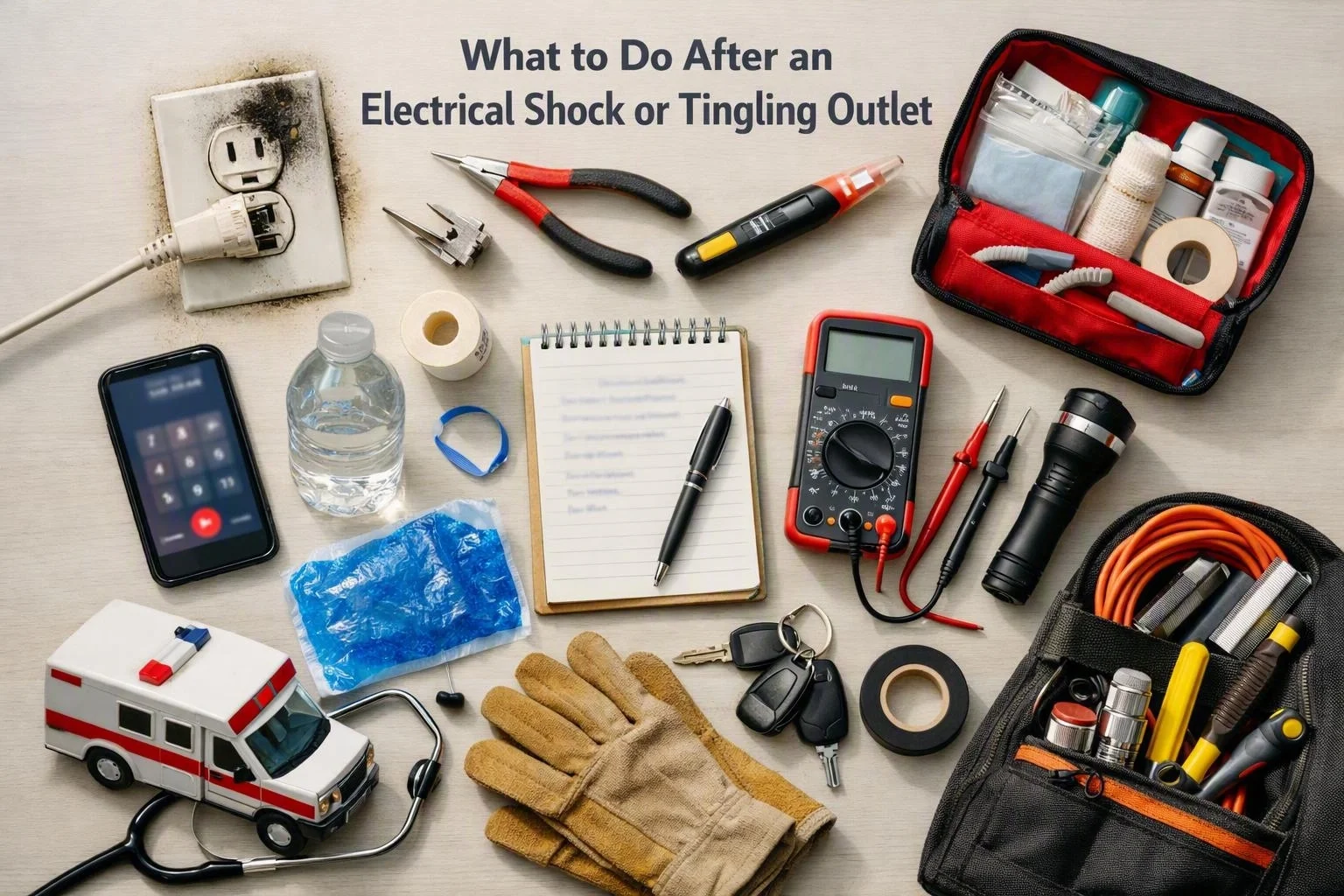
What to Do After an Electrical Shock or Tingling Outlet
An electrical shock from an outlet or appliance requires immediate distance from the electrical source, safe power isolation, and attention to warning signs; Santa Ana Electrician checks the circuit, outlet, wiring, grounding, and protective devices to identify and repair the fault.
Get a Free EstimateWhat Should You Do Immediately After an Electrical Shock?
An electrical shock requires you to move away from the source, avoid touching an energized person or device, isolate power only when safe, and seek urgent medical help for serious symptoms. Santa Ana Electrician can trace the electrical fault after the immediate danger has passed.
Do not touch an energized outlet, appliance, exposed wire, or person who may still be in contact with the source. Move away without creating another contact path, and keep other people away from the area.
What Signs and Symptoms Can Follow an Electrical Shock?
Electrical shock symptoms can range from skin injury to effects involving the heart, breathing, or nervous system. We recommend urgent medical evaluation when symptoms are serious, appear after the event, or do not quickly settle.
Medical attention takes priority over electrical testing when symptoms suggest an injury. We can inspect the electrical source after the person is safe and the area can be approached without risk.
Why Did the Outlet or Appliance Shock You?
An outlet or appliance can shock you when fault current reaches an exposed surface because of damaged insulation, poor grounding, moisture, or a wiring defect. Our team tests the outlet, appliance connection, and circuit to locate the path that allowed current to reach you.
A ground fault can send current through an unintended path, including a person touching an electrical appliance. A damaged grounding system, moisture near the electrical outlet, or a faulty appliance can increase the shock hazard.
We check the electrical wiring and protective devices before recommending outlet repair or another corrective measure. The visible outlet may not be the only source of the problem.
Common Causes of Tingling From an Appliance or Outlet
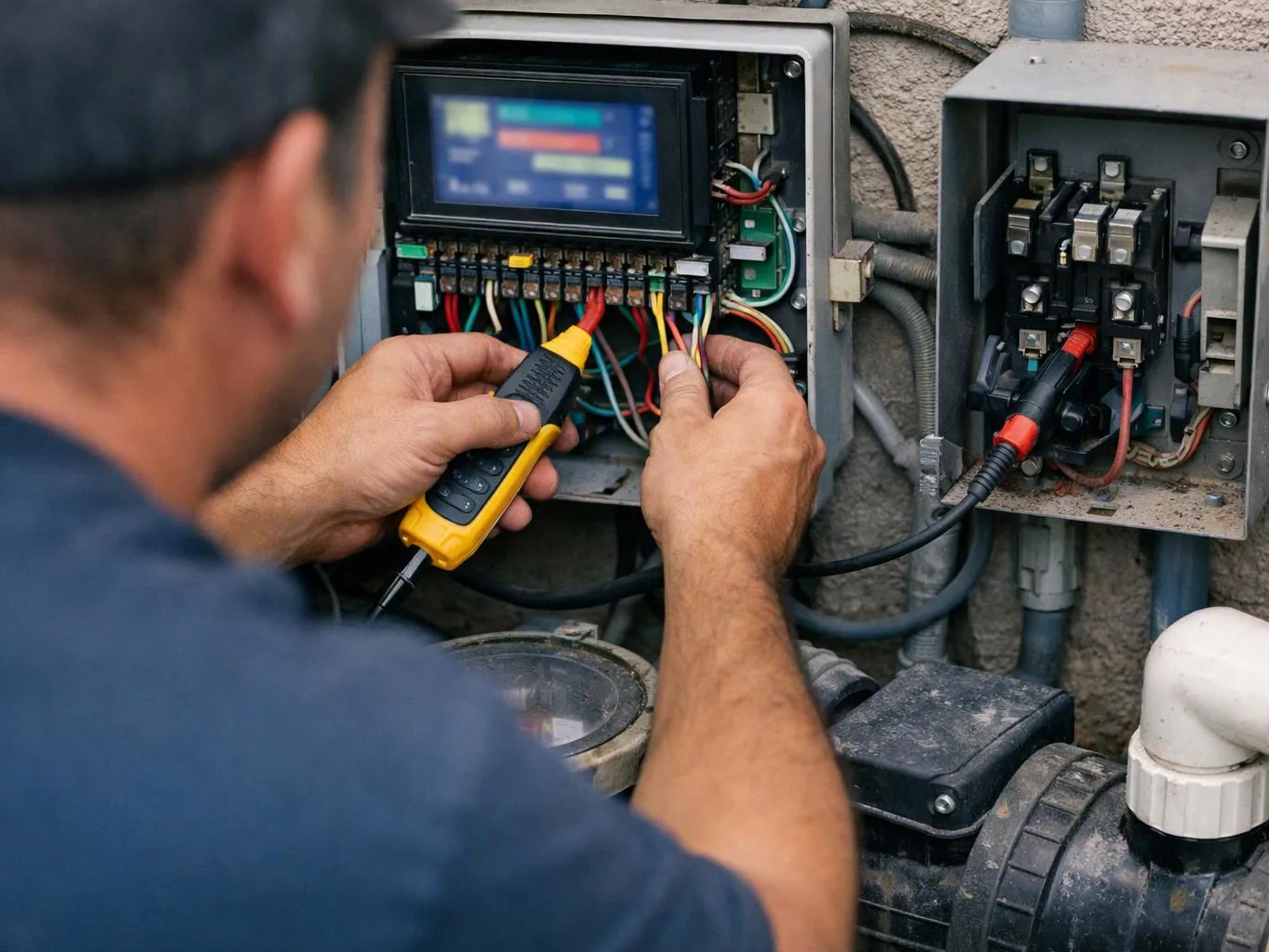
A tingling outlet or appliance can result from a fault that is not visible during a casual inspection. Our crew uses testing to separate an appliance problem from a wiring or grounding problem.
- Damaged power cord with broken insulation or an exposed conductor
- Reversed wiring or incorrect polarity at the outlet
- Loose wiring or a loose connection behind the receptacle
- Missing ground path or a damaged ground wire
Is a Small Electrical Shock Dangerous?
Yes, a small electrical shock can be dangerous because injury severity depends on the current path, contact conditions, source, and the person’s symptoms. A mild electrical shock that feels brief can still involve a path near the heart or leave a burn.
Wet skin can reduce resistance, while the contact path through the body can affect shock severity. We advise medical evaluation when symptoms occur, even if the electrical jolt seemed minor.
Our team then checks the source so the same electrical fault does not create another safety incident.
How Can You Prevent Another Tingling Outlet or Appliance Shock?
Prevention starts with keeping damaged equipment, moisture, and unsafe connections away from energized circuits. We can complete an electrical safety inspection when the cause is unclear or more than one outlet shows a problem.
GFCI protection can disconnect power when it detects an imbalance, but it does not replace sound grounding and wiring. We test circuit protection as part of the inspection.
What Do We Check After an Outlet or Appliance Shock?
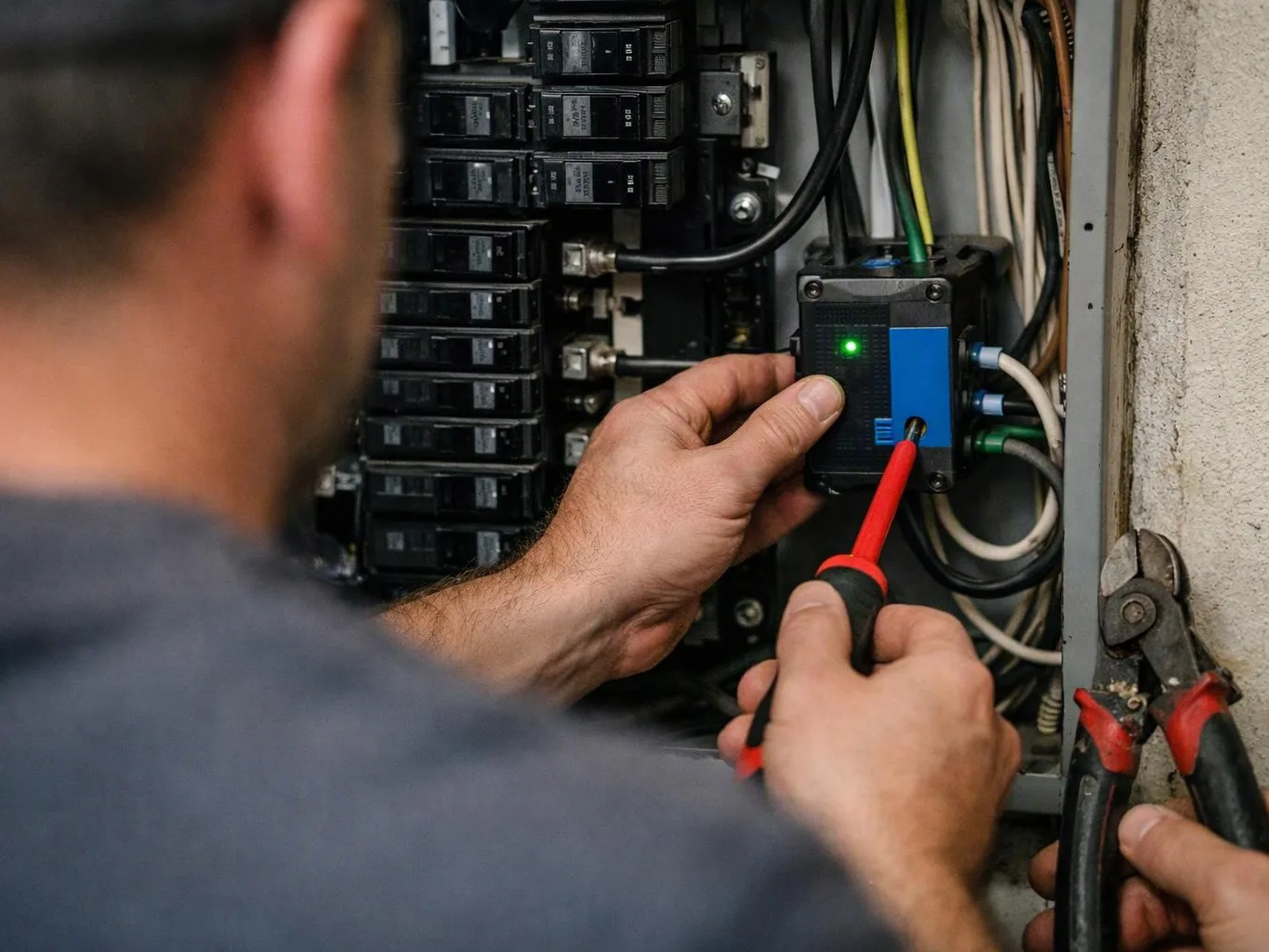
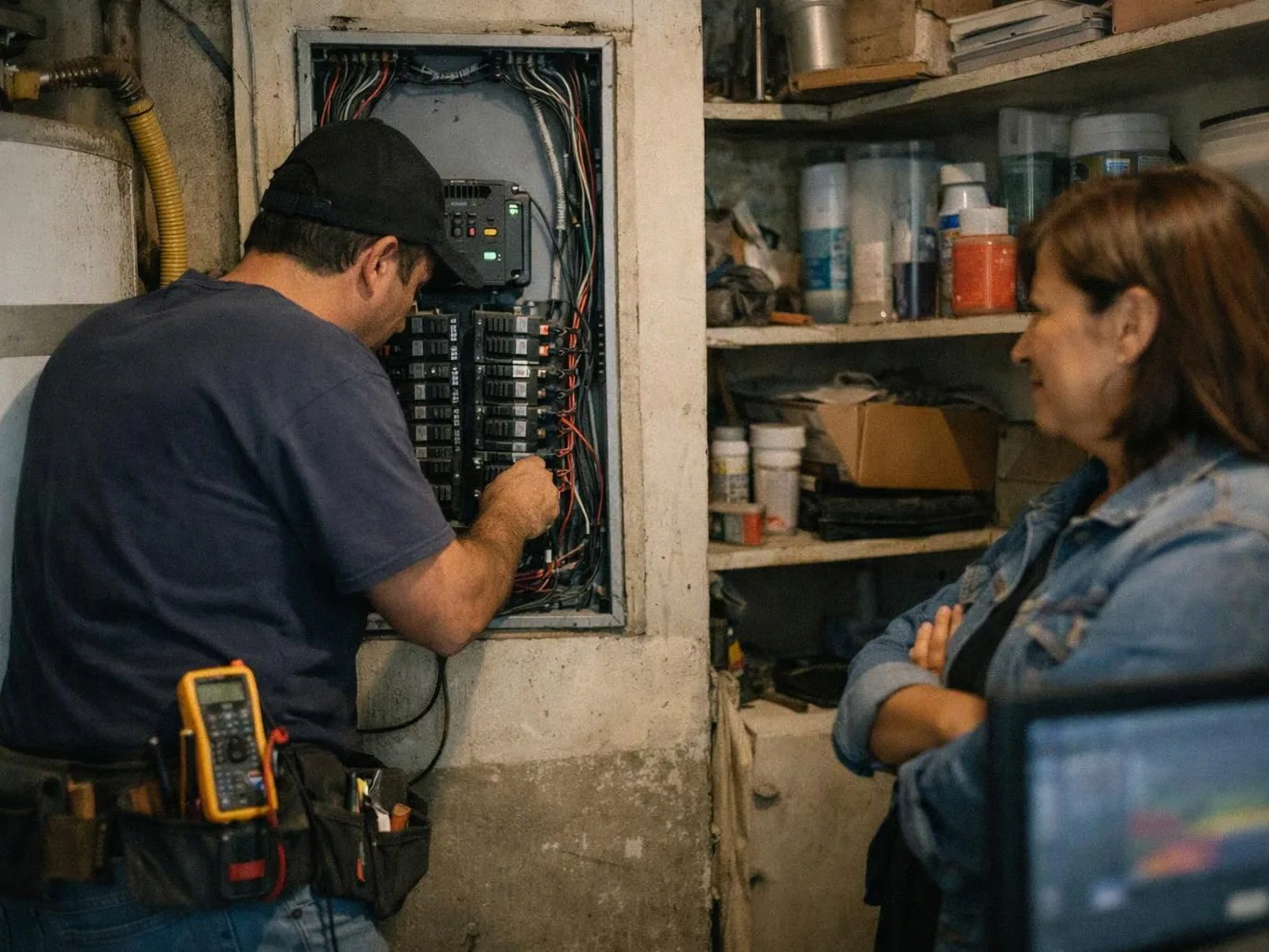
Santa Ana Electrician checks the affected outlet, connected appliance, circuit wiring, grounding path, breaker, and GFCI protection to locate the source of the shock before repair. We begin by making the area safe and identifying whether the fault follows the appliance or remains with the circuit.
Our team examines the outlet wiring, branch circuit, grounding conductor, and electrical panel. We also test the appliance connection and protective devices for a condition that could allow leakage current or a ground fault.
For a service overview, contact our team about Emergency Electrical Troubleshooting.
When Should You Stop Using the Outlet or Appliance?
You should stop using an outlet or appliance immediately when it shocks, sparks, smells burned, feels hot, buzzes, or repeatedly trips a protective device. These signs can point to an electrical fire risk or an active wiring fault.
Do not cover burn marks, continue using a warm outlet, or keep resetting a tripped breaker to restore power. We isolate the affected circuit when safe and inspect the source before recommending continued use.
How Do We Repair the Electrical Fault Safely?
Safe electrical repair begins with controlled testing and power isolation, not with replacing the visible outlet without finding the cause. Our team matches the repair to the fault found in the outlet, appliance connection, circuit, or protective device.
What Does an Electrical Shock Repair Quote Include?
An electrical shock repair quote depends on the fault location, affected components, wiring access, protective-device needs, and the repairs required after testing; we explain the work included before proceeding. The quote may address fault diagnosis, outlet replacement, wiring repair, GFCI protection, and an electrical inspection.
Our team identifies which components require attention and explains why each repair is needed. To obtain an exact repair estimate, contact us with the outlet or appliance symptoms and any breaker or GFCI activity you observed.
When Should You Call Santa Ana Electrician?
You should call Santa Ana Electrician when an outlet or appliance gives you a shock, tingles repeatedly, shows heat or damage, or leaves the cause unclear. We provide emergency electrical troubleshooting, GFCI outlet repair, electrical wiring repair, and electrical safety inspection services.
Leave the affected equipment unused and tell us what happened, including any sparks, burning smell, buzzing, exposed wire, or tripped breaker. Our team uses that information to plan safe testing and explain the repair path.
Contact us for an electrical safety inspection when you want the source of a recurring tingling sensation identified before it becomes a more serious fault.
Questions About Electrical Shocks and Tingling Outlets
Can an appliance cause a tingling sensation without a visible fault?
Yes, an appliance can cause a tingling sensation without visible damage when leakage current, a damaged internal connection, or a grounding problem is present. Santa Ana Electrician tests the appliance connection and circuit to identify the source safely.
Should I reset the breaker after an electrical shock?
No, you should reset the breaker only when you can reach it without entering a wet area or touching damaged equipment. Leave the breaker off when the source remains unclear, and let our team test the circuit before restoring power.
Can a GFCI outlet prevent an electrical shock?
A GFCI outlet can reduce shock risk by disconnecting power when it detects an imbalance, but it cannot correct every wiring, grounding, or appliance fault. We test the GFCI device and the circuit so protection works with the rest of the electrical system.
Why does only one outlet in the room feel like it is shocking me?
One outlet may feel shocking because its wiring, connection, grounding path, or connected appliance has a fault that does not affect other receptacles. We test that outlet and the branch circuit to determine whether the problem is local or connected to an upstream device.