What to Do When a Circuit Breaker Keeps Tripping or Won’t Reset
A circuit breaker that keeps tripping or will not reset needs safe isolation and diagnosis because the cause may be an overload, short circuit, ground fault, or failed breaker; Santa Ana Electrician checks the circuit, panel, wiring, and connected equipment to identify the repair.
Get a Free EstimateWhat Does a Tripping Circuit Breaker Mean?
A circuit breaker is an electrical protection device that interrupts an electrical circuit when it detects a dangerous condition. A tripping circuit breaker means the protective device has interrupted power after detecting an electrical condition that could damage wiring or equipment.
An overload can occur when connected equipment draws more current than the circuit can safely carry. A short circuit or ground fault can create a much faster and more serious fault path. We identify which condition is present before recommending circuit breaker repair.
Signs the Breaker Problem Needs Attention
These signs show that a tripped breaker may involve more than a temporary overload. Stop using the affected circuit when any sign suggests heat, arcing, or equipment damage.
Our team uses these symptoms to guide safe isolation before testing the electrical panel or connected circuit.
Why Does the Circuit Breaker Keep Tripping?
A circuit breaker keeps tripping when an overload, short circuit, ground fault, connected appliance, wiring problem, or failed breaker continues to create an unsafe condition.
Common causes include the following:
We separate appliance faults from wiring problems through appliance isolation and circuit testing. That process helps us decide whether the repair belongs at the outlet, in the wiring, at the electrical panel, or in the connected equipment.
What to Do Before Resetting the Breaker
Before resetting a circuit breaker, turn off or unplug accessible devices on the affected circuit and stop if you notice heat, smoke, burning odors, water, or visible damage.
Use these homeowner-safe checks only when the panel and surrounding area are dry, cool, and free from visible damage.
Do not open the electrical panel or work on the load terminal, bus bar, or circuit wiring. We handle panel access and fault testing when a reset does not restore safe, stable power.
Why Won’t the Circuit Breaker Reset?
A circuit breaker will not reset when the fault remains active, the reset sequence is incomplete, the connected equipment is still causing the problem, or the breaker itself has failed.
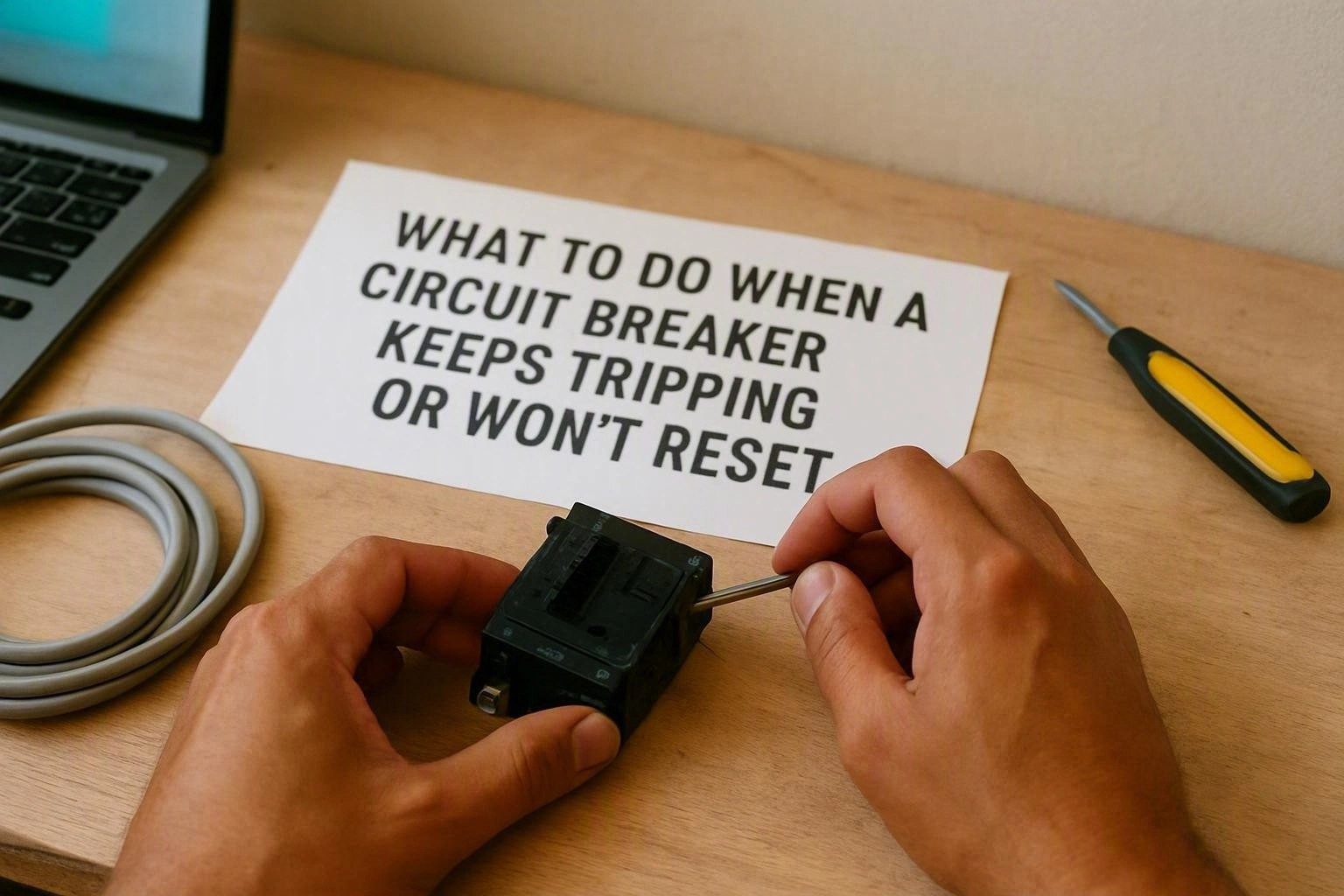
A breaker may need to move fully to the trip position before it can be switched on. If it trips immediately after the correct reset sequence, a short circuit, ground-fault circuit interrupter issue, arc-fault circuit interrupter issue, or damaged breaker may be involved.
We test the affected circuit and isolate connected loads to determine whether the problem is in an appliance, outlet, wiring, or panel component. A breaker replacement only solves repeated tripping when the breaker is the actual cause.
When Should You Stop Resetting the Breaker?
You should stop resetting the breaker when it trips again, will not hold, or shows heat, smoke, sparking, burning odor, water exposure, or visible damage.
Repeated resets can leave an electrical fault active and increase electrical fire risk or electric shock risk. Keep away from wet equipment and do not touch a panel, outlet, or appliance affected by water.
We provide emergency electrical troubleshooting for conditions that require prompt isolation and diagnosis. If smoke or fire is present, leave the area and contact emergency services before arranging electrical work.
How We Diagnose a Breaker That Keeps Tripping
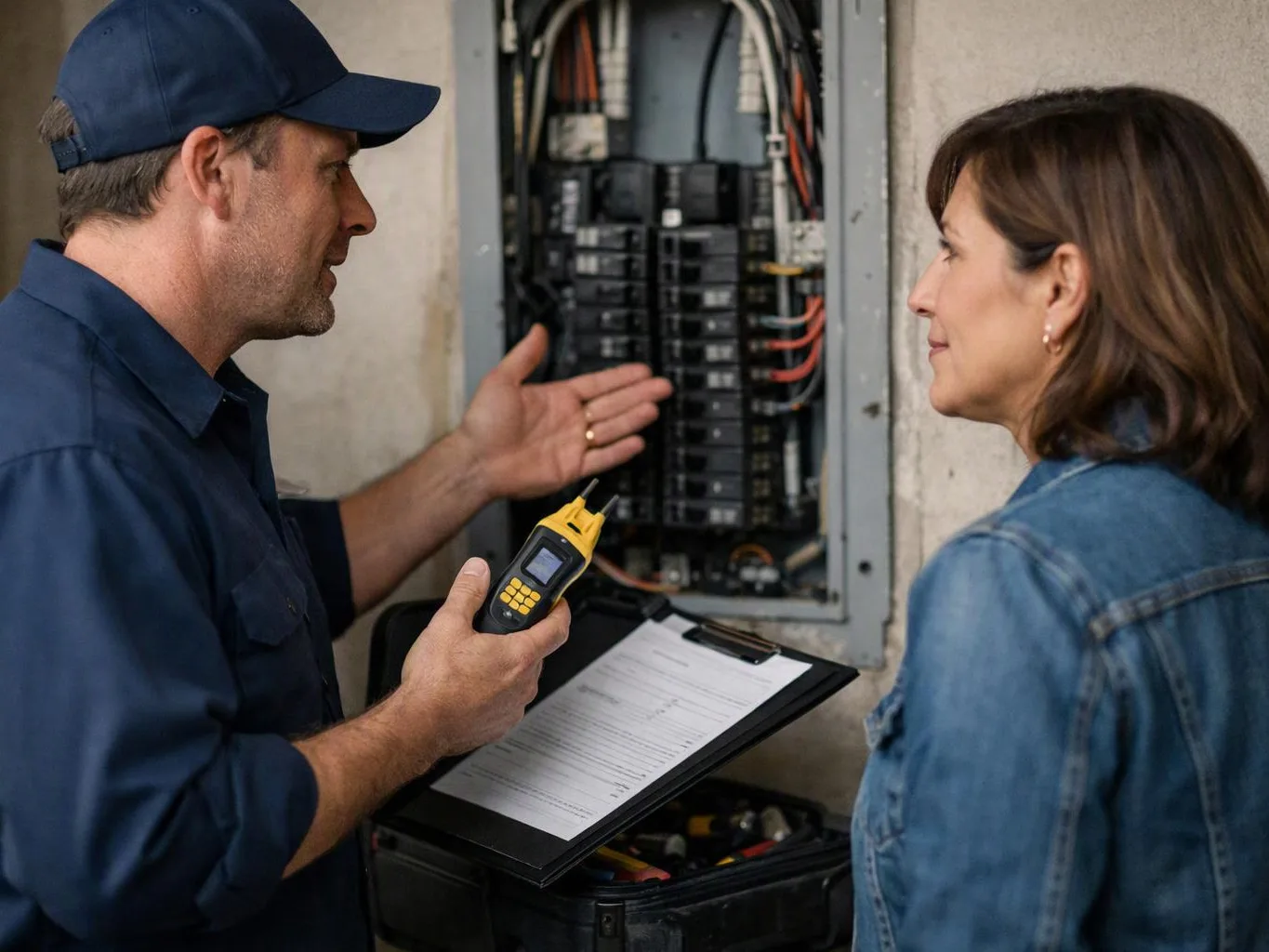
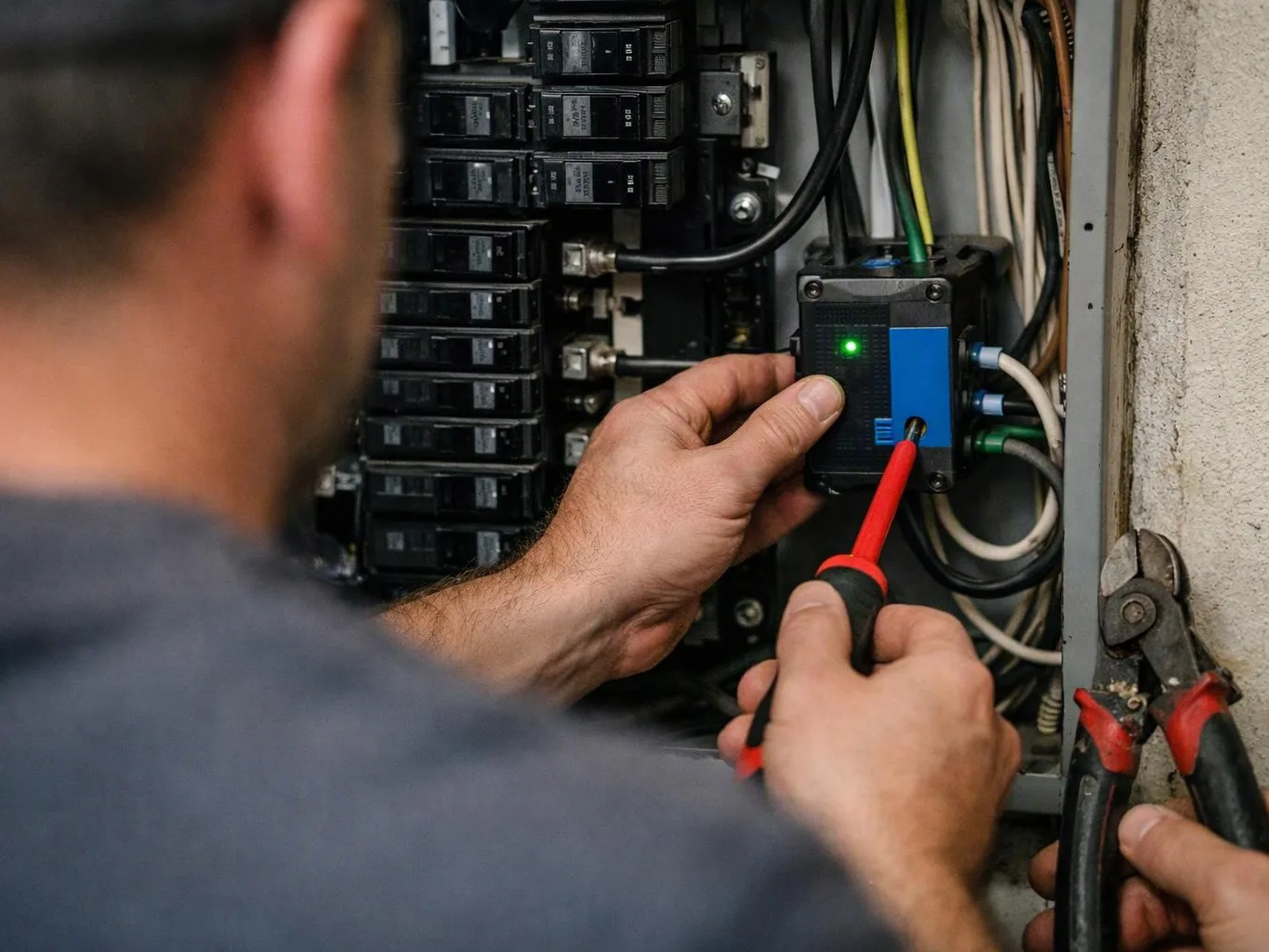
Santa Ana Electrician diagnoses repeated breaker trips by identifying the affected circuit, checking connected loads, testing for faults, inspecting wiring and panel components, and determining whether repair or replacement is needed.
We begin with the reported power loss and the breaker position. Our team then checks the circuit load, isolates appliances when appropriate, and looks for signs of a loose connection, damaged wiring, or a faulty breaker.
Our inspection may lead to Circuit Breaker Repair, electrical panel repair, wiring repair, appliance isolation, or breaker replacement. We explain the finding before repair work begins.
How to Prevent Repeated Breaker Trips
Preventing repeated trips starts with managing circuit demand and correcting small warning signs before they become faults. Our team can inspect the circuit when normal use continues to cause power loss.
Use these prevention steps:
What a Breaker Repair Quote Should Cover
A breaker repair quote should identify the fault, the affected circuit or panel component, the recommended repair, and any wiring or equipment issue that must be corrected; Free Estimates Available.
Our quote explains whether the work involves circuit breaker repair, electrical panel repair, fault diagnosis, wiring repair, or breaker replacement. The cost depends on the fault location, access, affected equipment, and extent of wiring or panel work.
We provide the exact quote after examining the affected circuit and explaining the recommended repair. Free Estimates Available.
Use the contact option below to request an assessment from Santa Ana Electrician.
Questions About Tripping Circuit Breakers
Can a bad appliance cause a circuit breaker to keep tripping?
Yes, a damaged appliance can cause a circuit breaker to keep tripping when it develops an internal short, ground fault, or excessive electrical demand. Santa Ana Electrician isolates connected equipment and tests the circuit to separate an appliance problem from a wiring or breaker fault.
Is it safe to leave a circuit breaker that will not reset?
No, a circuit breaker that will not reset should remain off until the cause is diagnosed. A persistent electrical fault can create shock or fire risk, especially when heat, smoke, burning odor, water, or visible damage is present.
Can replacing the breaker fix repeated tripping?
Sometimes, breaker replacement fixes repeated tripping when testing confirms that the breaker has failed. Replacement will not correct an overload, short circuit, ground fault, damaged appliance, loose connection, or wiring problem.
Should I unplug everything before resetting a tripped breaker?
Yes, unplug accessible devices on the affected circuit before attempting a reset, provided there is no heat, smoke, water, burning odor, sparking, or visible damage.
Related Resources
How Long Does a 24 Hour Electrician Take to Arrive in Santa Ana, CA?
How to HireHow to Choose an Emergency Electrician: Questions to Ask Before Hiring
How It WorksWhat Happens When You Call an Emergency Electrician?
Compared ToCircuit Breaker Repair, Replacement, or Fuse Replacement: Which Do You Need?