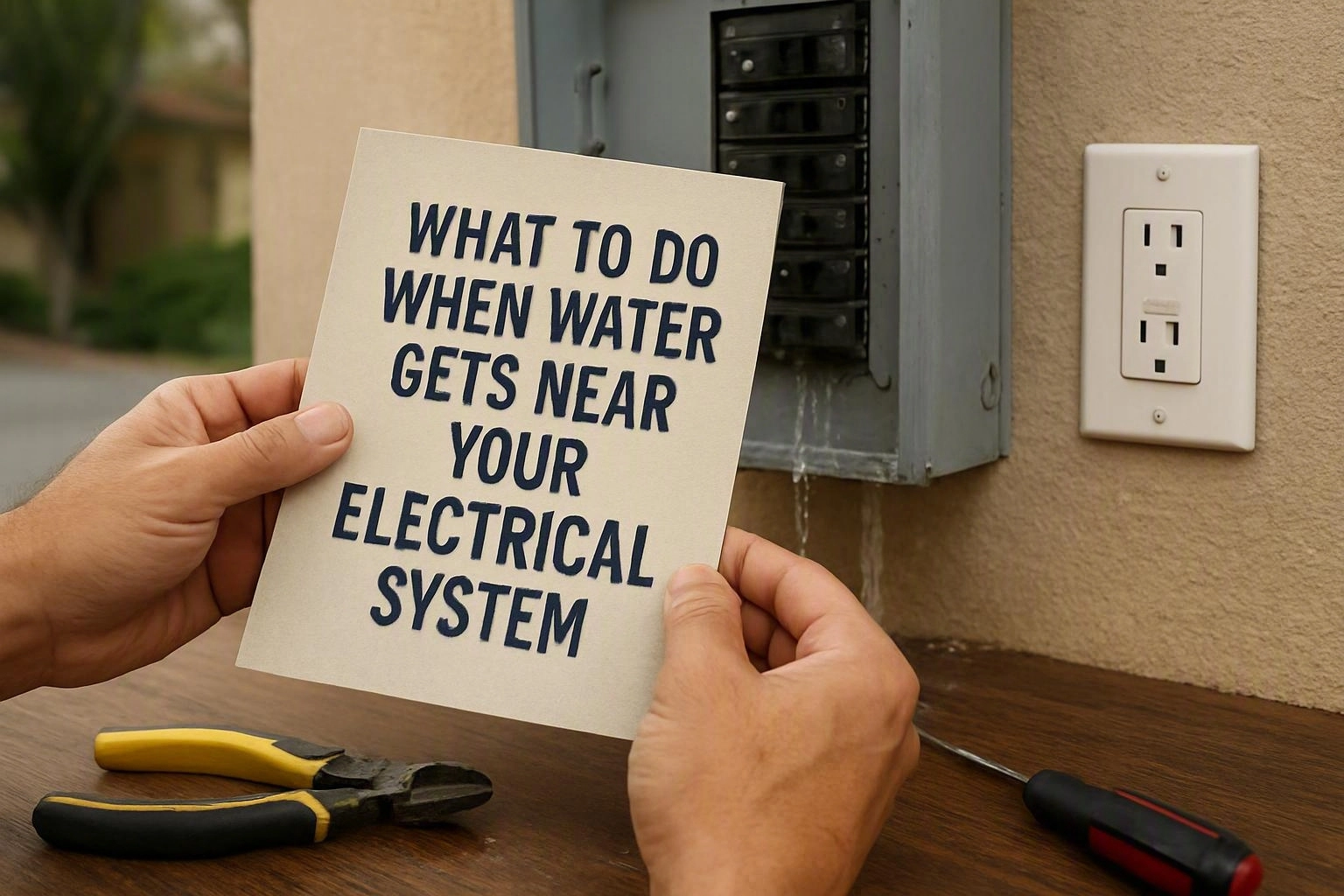
What to Do When Water Gets Near Your Electrical System
Water near an electrical panel or outlet is a serious shock and fire hazard. Keep away from the wet area, avoid touching electrical equipment, do not restore power, and call Santa Ana Electrician for emergency troubleshooting, inspection, or repair.
Get a Free EstimateWhat Should You Do First When Water Reaches an Electrical Panel or Outlet?
Water near an electrical panel or outlet requires immediate distance from the area, avoidance of wet electrical equipment, and professional inspection before power is restored. Santa Ana Electrician provides Emergency Electrical Troubleshooting for water-related electrical hazards.
What Makes a Wet Electrical System Dangerous?
A wet electrical system is dangerous because water can conduct current, damage insulation, and create short circuits or arcing. We inspect the affected system before anyone attempts power restoration.
An electric shock can occur when a person touches energized wiring, a wet outlet, or water that has contacted live equipment. A ground fault can also send current along an unintended path.
Water can create a short circuit between conductors. Damaged insulation may allow an arc fault or arc flash, which can produce heat and start an electrical fire. We look for hidden moisture and insulation damage during an electrical safety inspection.
Signs That Water Has Damaged Electrical Equipment
Water damage may show through changes in power, sound, smell, or the condition of electrical parts. These signs mean you should stay away from the affected equipment and arrange an inspection.
We trace these symptoms to the affected circuit and check for damage that may not be visible from outside an outlet or panel.
Common Causes of Water Near Electrical Panels and Outlets
Water reaches electrical components through leaks, surface water, moisture buildup, or failing appliances. Identifying the source helps us decide what must be isolated, dried, replaced, or repaired.
We inspect the electrical equipment after the water source is controlled. Stopping the leak does not by itself make wet wiring safe.
Can You Turn the Power Back On After Electrical Water Damage?
No, you should not turn the power back on after electrical water damage until Santa Ana Electrician has inspected the affected equipment and confirmed that restoration is safe.
A circuit breaker or fuse may stop current without removing moisture, corrosion, or insulation damage. We examine the circuit breaker, fuse, wet wiring, connections, and other exposed components before recommending safe power restoration.
Do not reset a tripped breaker repeatedly. Repeated resets can energize damaged wiring and increase the risk of shock, a short circuit, an arc fault, or an electrical fire.
When Should an Electrician Inspect the Electrical System?
An electrician should inspect the electrical system whenever water reaches an electrical panel, outlet, junction box, appliance connection, or concealed wiring. We complete the electrical safety inspection before power restoration.
Call us after flooding, a ceiling leak, a plumbing failure, or any event that leaves electrical equipment wet or surrounded by standing water. We also inspect when you notice a tripped breaker, burning odor, flickering lights, heat, buzzing, or corrosion.
Water can travel through walls and along electrical wiring. Visible dryness does not prove that wiring inside a wall is safe, so we assess the affected circuit and recommend electrical wiring repair when needed.
How We Check and Repair Water-Affected Electrical Equipment
Santa Ana Electrician uses emergency electrical troubleshooting and an electrical safety inspection to isolate hazards, identify affected components, and plan repairs. Our process focuses on preventing contact with energized or water-damaged equipment.
We begin by confirming the water source and isolating the affected area. We then inspect the panel, circuit paths, outlet receptacles, junction boxes, grounding conductors, and visible wire insulation.
Our team performs circuit testing when conditions are safe. We check for unwanted continuity, ground faults, damaged connections, corrosion, and signs of heat or arcing.
Repairs may include outlet replacement, replacement of damaged protective devices, removal of compromised wiring, or electrical wiring repair. We explain the work included in our quote before repair begins, and Free Estimates Available.
Power restoration happens only after the affected equipment passes our safety checks and the system is ready to operate safely.
How to Prevent Water From Reaching Electrical Components
Water prevention protects electrical components from corrosion, insulation damage, and unexpected power faults. We can identify electrical risks during an inspection, while plumbing and building leaks also need prompt attention.
What Information Helps Us Assess Water-Related Electrical Damage?
The source of water, the affected electrical equipment, and the current power status help us assess water-related electrical damage safely. Share only what you can observe without entering a wet area or touching equipment.
Tell us whether the water came from plumbing, a roof, flooding, condensation, an appliance, or storm water. Note which outlet, electrical panel, appliance connection, or room appears affected.
Tell us whether the circuit breaker tripped, whether the power is off, and whether you noticed burning smells, buzzing, flickering lights, heat, discoloration, or visible corrosion. Photos taken from a dry, safe position can also help us prepare for the electrical inspection.
Do not reset a breaker or handle wet equipment to gather information. Our team can determine the safest next step through emergency electrical troubleshooting.
Questions About Water Near Electrical Systems
Is a wet electrical outlet dangerous?
Yes, a wet electrical outlet is dangerous because moisture can create a ground fault, electric shock, short circuit, or arc fault. Santa Ana Electrician isolates the affected circuit and checks the outlet, wiring, and nearby connections before recommending replacement or power restoration.
What should I do if water is dripping onto my breaker panel?
Move away from the panel, keep others away, and do not touch the panel door or nearby water. We inspect the panel and connected circuits after the leak is controlled, and we do not recommend power restoration until the equipment is safe.
Can water damage electrical wiring inside a wall?
Yes, water can damage electrical wiring inside a wall by affecting insulation, connections, and metal conductors. We trace the affected circuit and determine whether electrical wiring repair or component replacement is needed.
Should I reset a tripped breaker after flooding?
No, you should not reset a tripped breaker after flooding until the affected electrical system has been inspected. A reset can energize wet wiring or damaged equipment, so we test the circuit before safe power restoration.
Water near electrical equipment needs careful isolation, testing, and repair before power returns. Contact Santa Ana Electrician for an electrical safety inspection, emergency electrical troubleshooting, or electrical wiring repair.
Get a Free Estimate