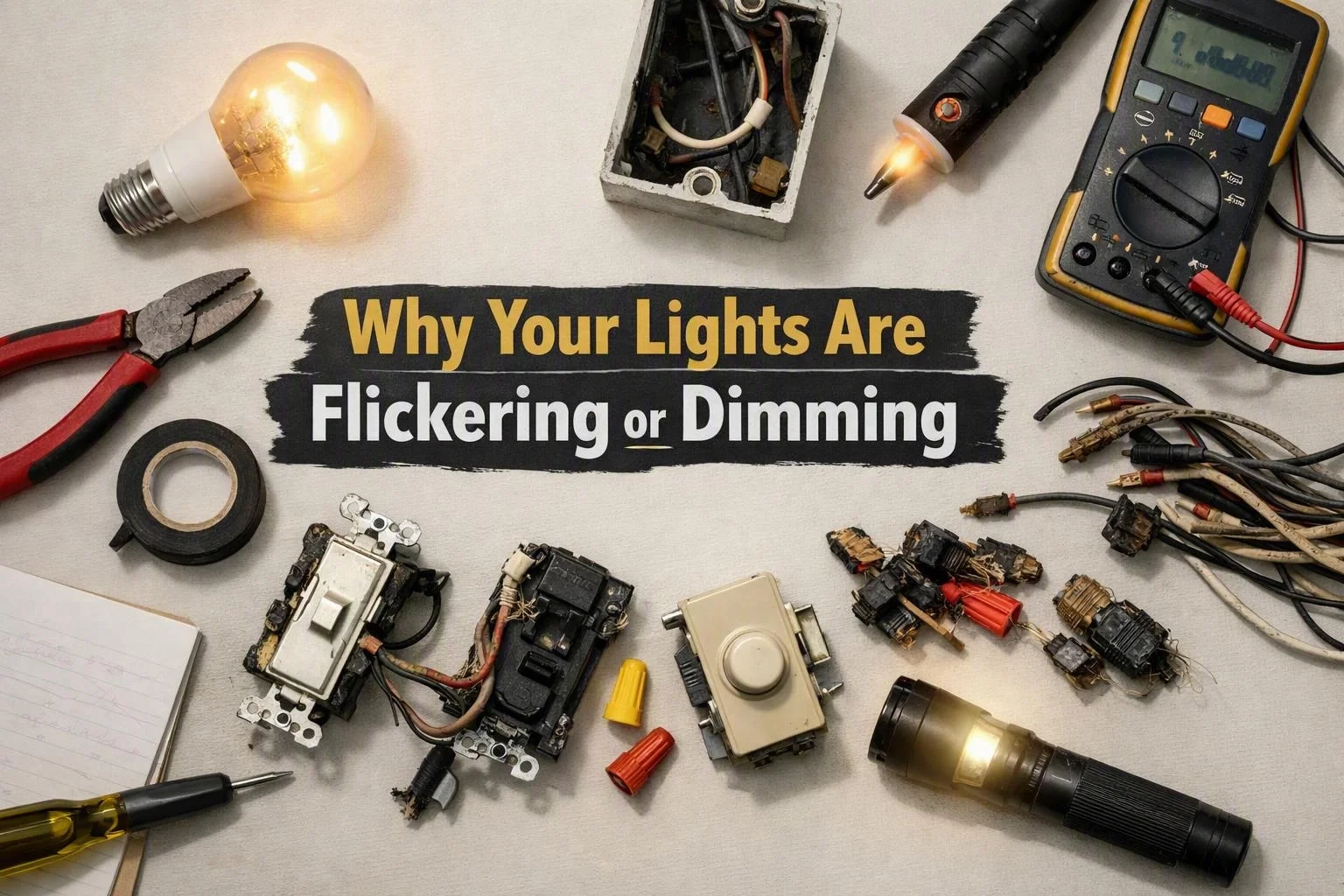
Why Your Lights Are Flickering or Dimming
Flickering or dimming lights can indicate a loose connection, overloaded circuit, failing lamp or fixture, voltage issue, or electrical service problem. Santa Ana Electrician checks the symptom, isolates the circuit, identifies the cause, and completes the appropriate electrical repair.
Get a Free EstimateWhat Flickering or Dimming Lights Can Mean
Flickering or dimming lights can mean that a lamp, light fixture, circuit connection, wiring section, or electrical supply has an intermittent or unstable connection. The pattern helps us determine whether the issue is limited to one light or involves a wider electrical circuit.
Flickering lights may come from a loose light bulb, a faulty light fixture, a failing light switch, or an electrical fault deeper in the lighting circuit. We trace the symptom to the part that needs attention before recommending a repair.
Signs That Flickering Lights Need Attention
Several signs show that flickering lights may involve more than a simple bulb problem. We use these details to decide how urgently the electrical circuit needs inspection.
Stop using a light that shows heat, sparks, or visible damage. Contact us for electrical troubleshooting when any of these signs appear:
Why Do Lights Flicker When Appliances Turn On?
Lights can flicker when an appliance starts because the appliance may draw a sudden load through a shared circuit, expose a weak connection, or reveal a circuit capacity problem. This starting current can create a temporary voltage drop that is visible at nearby lights.
When lights dim when appliances turn on, we check the shared circuit, circuit load, connections, and panel components. We also look for an overloaded circuit or damaged wiring that could make the voltage unstable.
Common Causes of Flickering or Dimming Lights
Common causes range from a loose lamp connection to a fault in the electrical panel. Our inspection focuses on the location and pattern of the flicker so we can avoid replacing parts that are not causing the problem.
How We Troubleshoot a Flickering Light
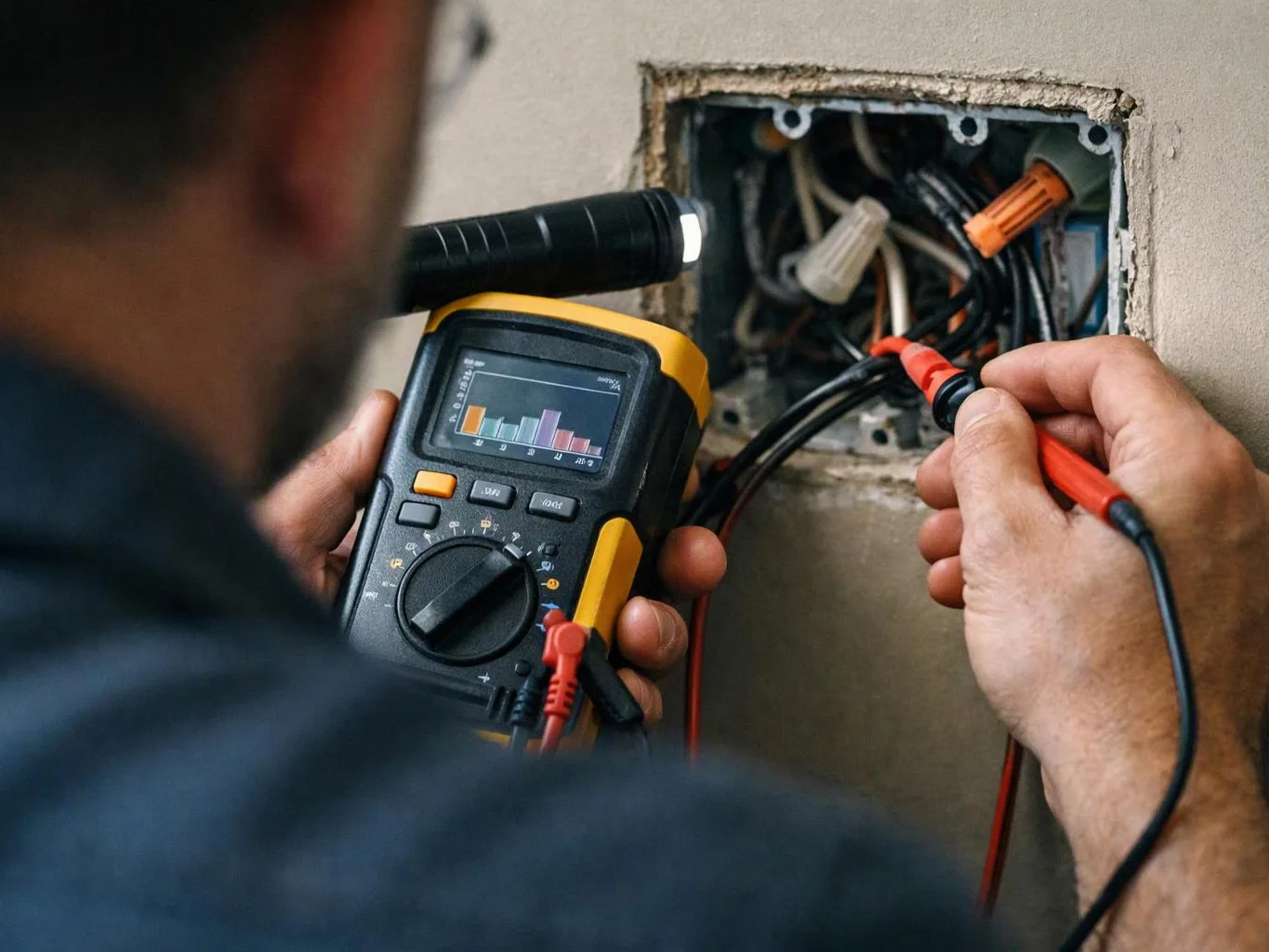
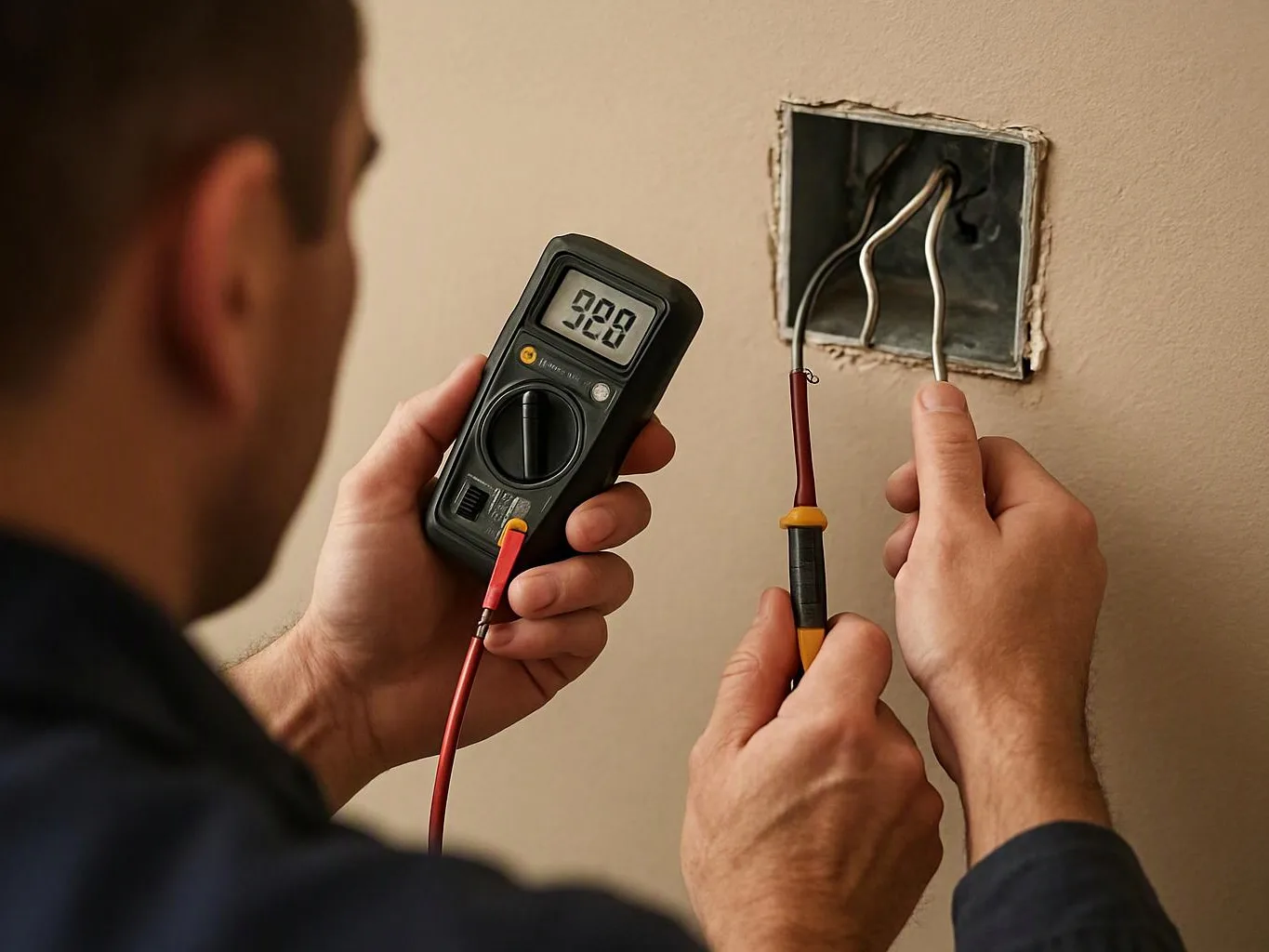
We troubleshoot flickering lights by identifying where the symptom occurs, checking the fixture and connections, testing the circuit, and tracing the fault to the relevant wiring or panel component.
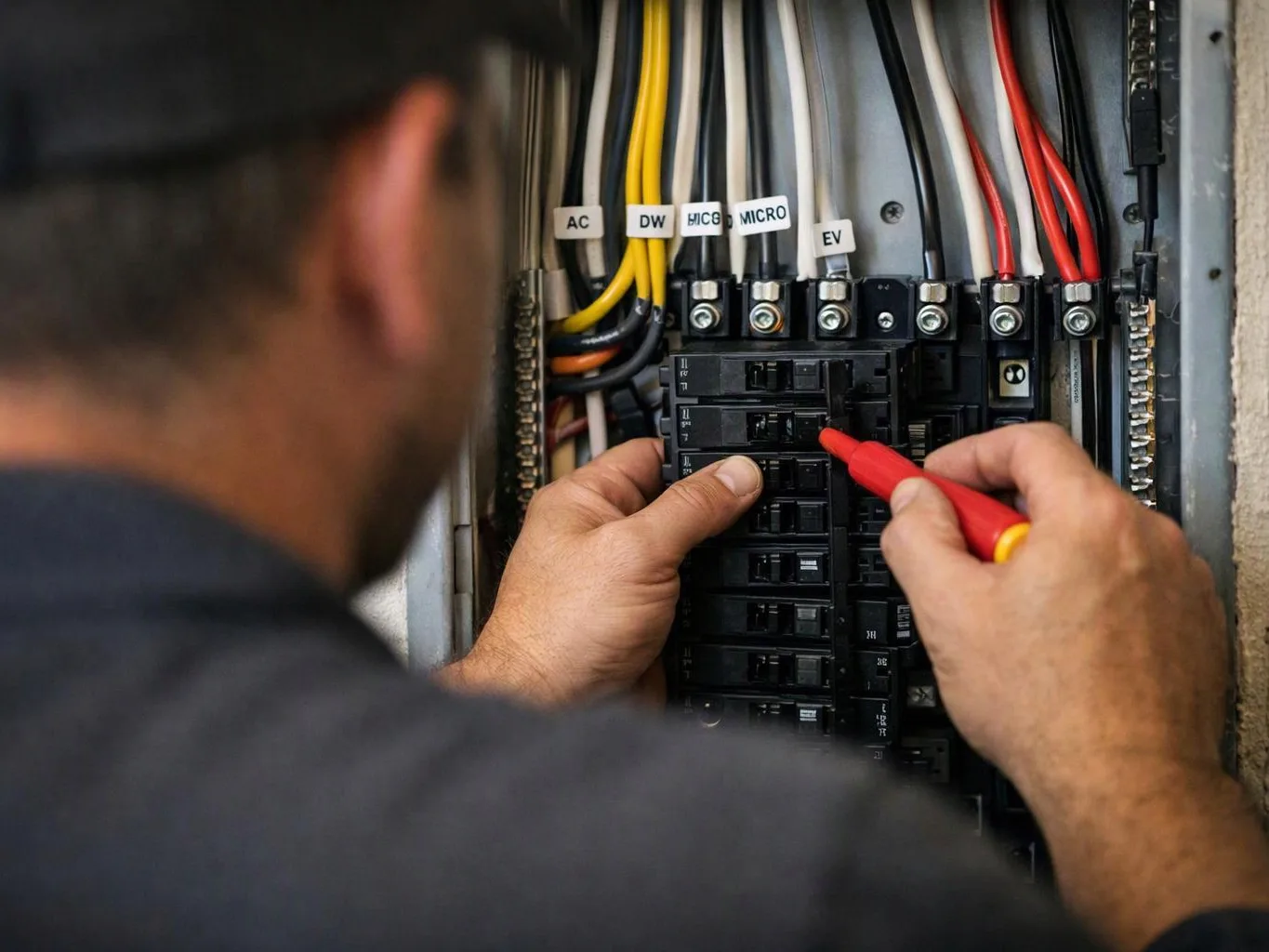
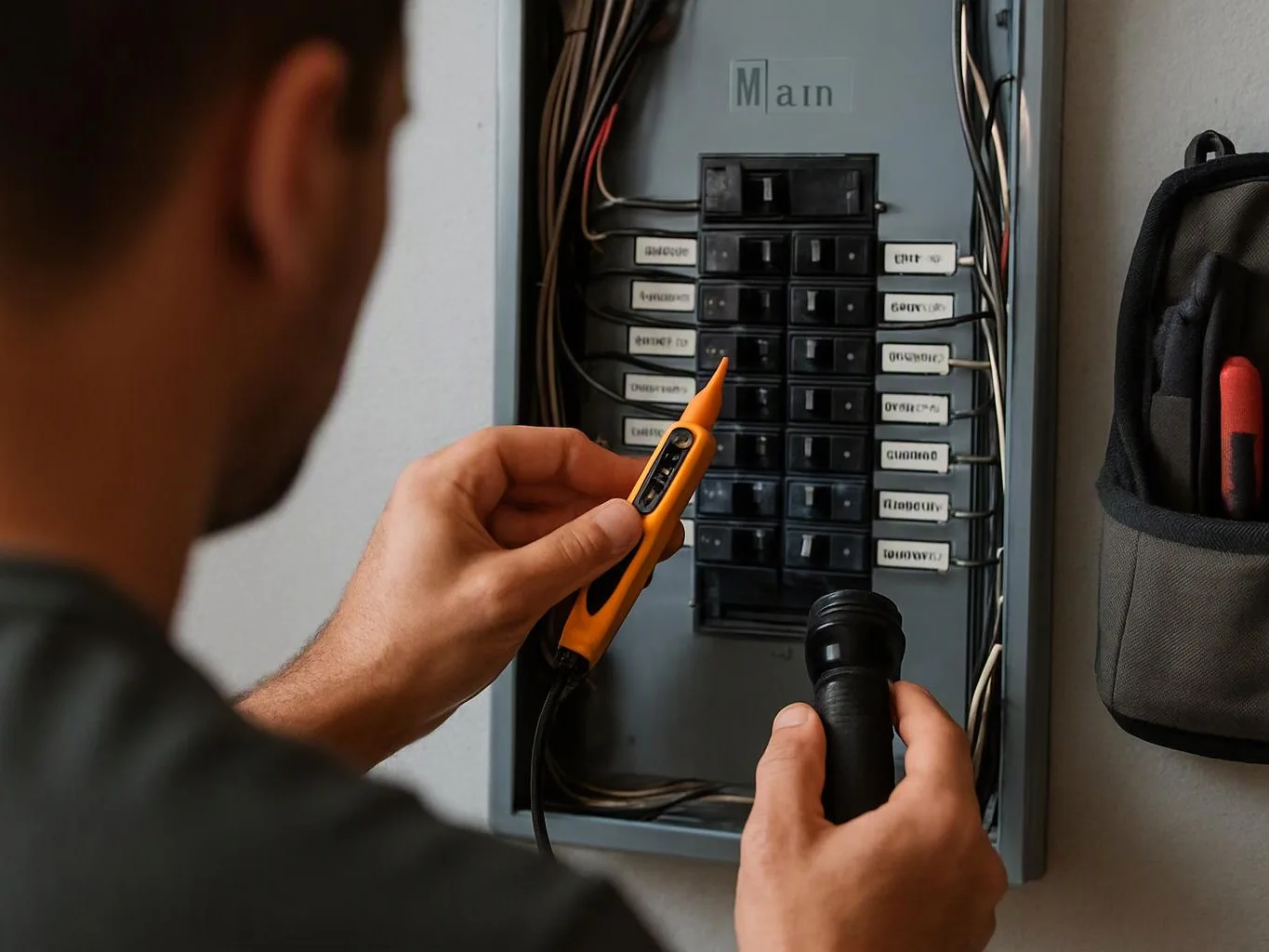
Our team begins with a light fixture inspection and switch inspection when the problem affects one location. We then use circuit testing to isolate the circuit, trace the fault, and determine whether the repair involves electrical wiring, a branch circuit, or the electrical panel.
When the fault is confirmed, we explain the repair scope before completing wiring repair, fixture repair, or electrical panel repair. For an urgent hazard, our Emergency Electrical Troubleshooting service helps address the unsafe condition.
What You Can Safely Check First
You can make a few safe observations before contacting us, but you should not remove covers or handle exposed electrical wiring. These checks help show whether the issue is limited to a lamp or may involve the circuit.
- Turn off the light and check whether the light bulb is fully seated and free from visible damage.
- Confirm that the lamp and bulb type are compatible, especially when a dimmer is installed.
- Operate the light switch normally and note whether movement causes flicker, heat, or buzzing.
- Look at the circuit breaker and note whether it has tripped, without repeatedly resetting it.
- Stop using the light if you see visible damage, smell burning, hear strong buzzing, or notice sparks.
How to Prevent Recurring Light Flicker
Recurring flicker is less likely when the lighting equipment and circuit are matched correctly. We check the cause of the original symptom so prevention addresses the electrical fault, not only the visible light.
Are Flickering Lights Dangerous?
Flickering lights can be dangerous when the cause is arcing, overheating, damaged wiring, or a failing connection, especially when flicker occurs with heat, odor, buzzing, sparks, or breaker trips.
Arcing can damage connections and increase electrical fire risk. We inspect the affected circuit and turn attention to the circuit breaker, wiring, and panel when the warning signs suggest overheating or an unstable electrical connection.
When Should You Call an Electrician for Flickering Lights?
Call Santa Ana Electrician when flickering continues after a safe bulb check, affects multiple fixtures, follows appliance use, or appears with heat, odor, buzzing, sparks, damaged wiring, or breaker trips.
We provide emergency electrical troubleshooting when the symptom suggests an immediate hazard. Our team also handles electrical wiring repair, light fixture repair, and electrical panel repair after we identify the source.
What Changes the Cost of Fixing Flickering Lights?
The cost of fixing flickering lights depends on whether the fault is in the bulb, fixture, switch, branch circuit, wiring, or electrical panel, along with the access and repair work required.
A light fixture repair may involve different work from circuit troubleshooting or an electrical panel repair. We assess the access to wiring, the number of affected components, and the repair scope before preparing the estimate.
How to Get an Exact Quote for Flickering Light Repair
Santa Ana Electrician can provide an exact quote after we identify the flicker source, explain the required repair, and define the work included in the estimate.
Our electrical inspection reviews the diagnostic findings and separates fixture, wiring, circuit, and panel work. We provide Free Estimates Available and explain the recommended repair before work begins.
Contact our team through our contact page to arrange the next step.
Questions About Flickering or Dimming Lights
Can a bad light bulb cause flickering?
Yes, a bad light bulb can cause flickering when its internal parts or socket contact are failing. Santa Ana Electrician checks the bulb and socket first, then tests the fixture and circuit if the flicker continues.
Why are all the lights in my house flickering?
All the lights in a house can flicker when the issue affects a shared supply connection, electrical panel, or multiple circuits. We inspect the pattern and test the relevant panel and wiring sections to locate the fault.
Can a loose outlet cause lights to flicker?
Yes, a loose outlet connection can cause lights to flicker when the outlet shares wiring with the lighting circuit. We inspect the outlet, connections, and circuit to determine whether the outlet is part of the fault.
Why do LED lights flicker with a dimmer switch?
LED lights can flicker with a dimmer switch when the dimmer and bulb are not compatible or when the circuit connection is unstable. We check the bulb, dimmer, fixture, and wiring to identify the cause.
Should I turn off the breaker if my lights are flickering?
Turn off the breaker when flickering occurs with sparks, burning odor, heat, buzzing, visible damage, or a repeated trip. Leave the circuit off and contact us for safe troubleshooting.
Flickering lights can point to a bulb issue, a fixture fault, a circuit problem, or an electrical panel connection. Santa Ana Electrician identifies the source and explains the repair needed to restore safe, stable lighting.
Related Resources
How Long Does a 24 Hour Electrician Take to Arrive in Santa Ana, CA?
How Long It TakesHow Long Does It Take to Rewire a House?
What It CostsHome Generator Installation: Cost, Timeline, and What the Electrician Handles
How to HireHow to Choose an Emergency Electrician: Questions to Ask Before Hiring