
What Is a Surge Protector?
A surge protector is an electrical protection device that limits brief increases in voltage and directs excess energy away from connected equipment. A whole-house surge protector installs at the electrical panel and helps protect circuits throughout a building. It does not regulate normal voltage or replace circuit breakers, grounding, or other protective devices. For more detail, see Whole-House Surge Protection: How It Works and What to Consider.
Quick Facts About Surge Protector
Category
Electrical protection device
Used for
Limiting transient voltage
Common confusion
Not a voltage regulator or circuit breaker
Also called
Surge suppressor, Surge Protection Device
Often discussed with
Whole-House Surge Protector Installation, Electrical Safety Inspection
Key Takeaways About Surge Protector
- Whole-house models connect at the electrical panel.
- Surge protection supports, but does not replace, circuit breakers.
- A power strip is not the same as panel-mounted protection.
How Surge Protector Works
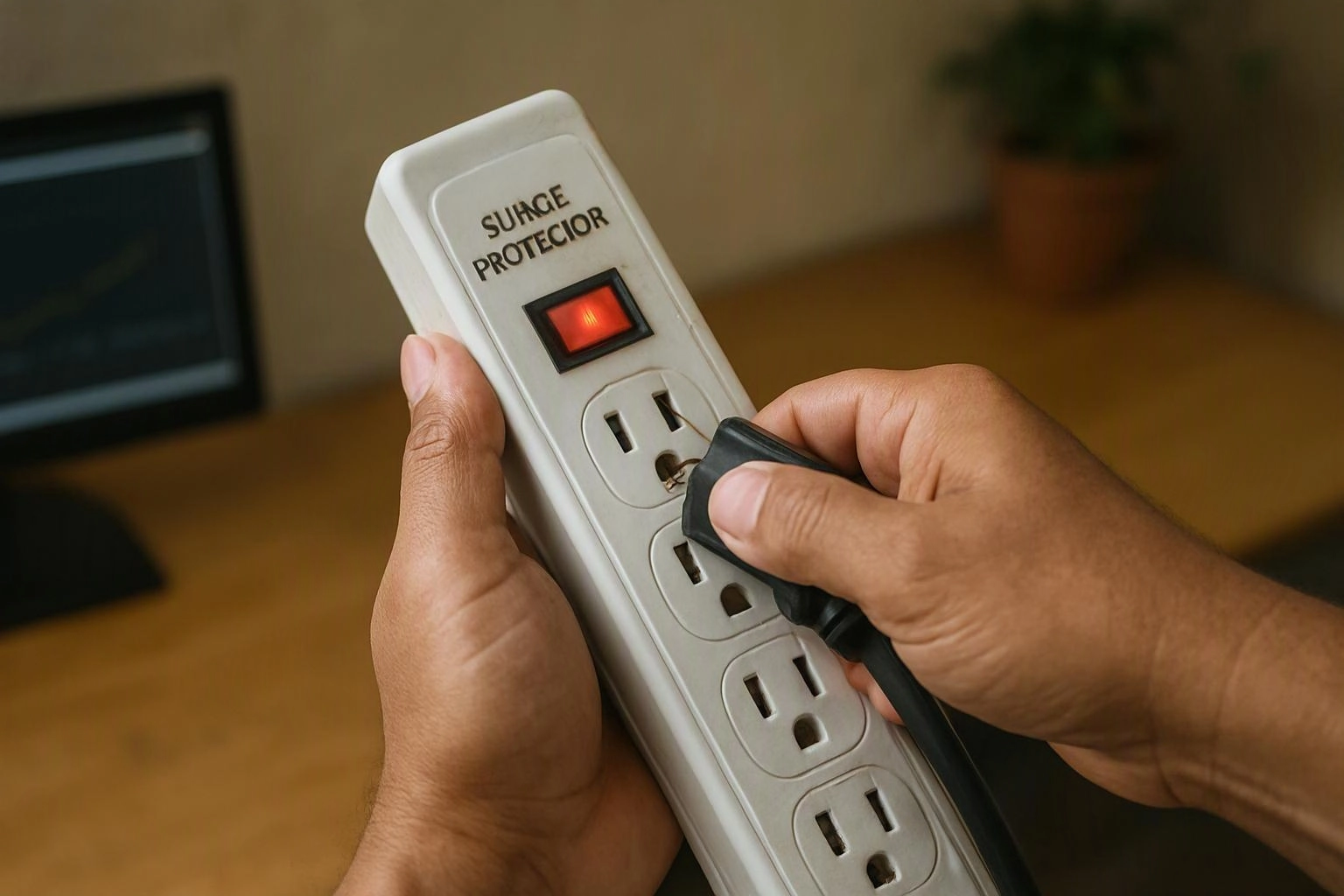
A surge protector detects a brief voltage rise and redirects excess electrical energy toward the grounding system. Many devices use metal-oxide varistors, which change their electrical behavior when voltage rises. The protector returns to its normal state after the event, although repeated surges can reduce its protective capacity.
Related glossary terms: Voltage, Grounding Electrode, Line Voltage.
A whole-house model connects near the service equipment, so protection applies across branch circuits. The installation must match the panel arrangement, grounding path, and available conductors. A circuit breaker responds to overloads and short circuits, while a surge protector responds to fast voltage disturbances. These devices perform different protective functions and work together within the electrical system.
From the Santa Ana Electrician team
When we handle whole-house surge protector installation, we inspect the electrical panel, grounding path, and available connection points before selecting an installation approach. We also check that the protective device fits the panel and that its status indicator remains visible after installation.
Surge Protector in Practice: A Real-World Example
A homeowner schedules whole-house surge protector installation during an electrical panel project. Our team connects the device at the panel, checks the grounding path, and confirms that the protector’s status indicator is visible.
Related Terms
Voltage
Voltage is the electrical potential difference that pushes electric charge through a circuit. Voltage provides the…
Grounding Electrode
A grounding electrode is a conductive object, such as a metal water pipe or grounding rod…
Line Voltage
Line Voltage is the electrical potential supplied directly by a building’s power system to operate equipment…
Santa Ana Electrician
Have Questions About Surge Protector?
Contact Santa Ana Electrician for practical guidance on Surge Protector and related 24 hour electrician work in Santa Ana.