CALGreen EV-Ready Electrical Infrastructure for New Construction
CALGreen EV-ready electrical infrastructure for new construction prepares parking spaces for future or installed EV charging through coordinated wiring pathways, panel capacity, dedicated circuits, and charger planning. Santa Ana Electrician reviews the plans, electrical load, raceway route, and installation requirements so the project can support compliant EV charging infrastructure.
Get a Free EstimateWhat CALGreen EV-Ready Infrastructure Means
CALGreen EV-ready infrastructure is electrical preparation that supports future or installed electric vehicle charging at a designated parking space. Santa Ana Electrician connects the construction documents to the wiring, pathway, panel, and charger decisions needed for the project.
EV-ready work can include a raceway, conduit, conductors, a dedicated circuit, or space for future electric vehicle supply equipment. The exact preparation depends on the building type, parking layout, electrical plans, and applicable project requirements.
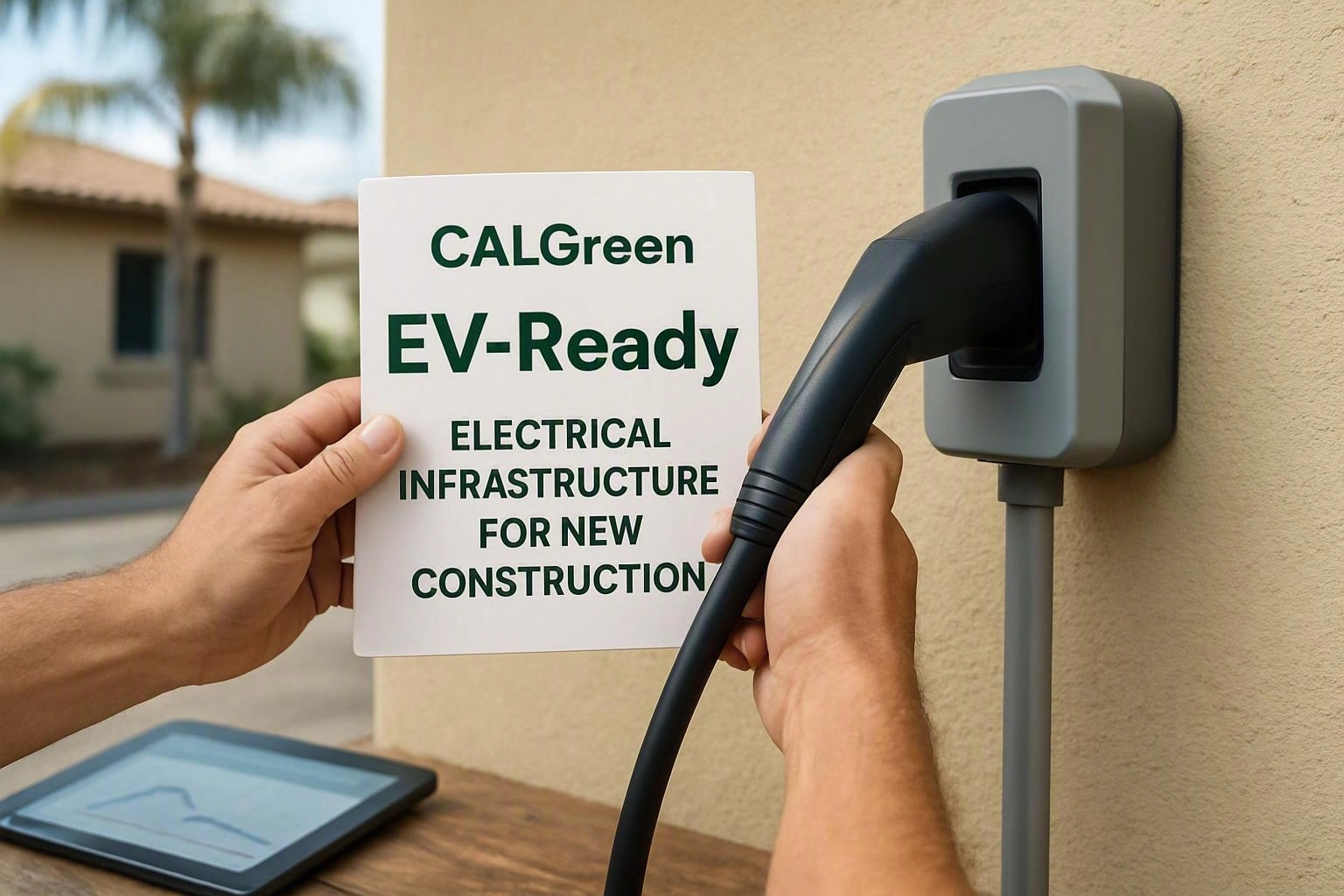
Why New Construction Needs EV Charging Preparation
New construction gives the electrical team access to walls, ceilings, slabs, panels, and parking areas before finishes are complete. We use that access to coordinate EV charging infrastructure with the building design.
Our team reviews the plans early because changes become harder after drywall, paving, or other finishes are installed.
How EV-Ready Requirements Differ by Project Audience
EV charging infrastructure serves different planning needs across residential and commercial projects. We match the electrical design to the audience, parking arrangement, and expected use of each space.
| What is being compared | New-construction developers | Other customers |
|---|---|---|
| Single-family homes | Plan a practical charger location near the home electrical panel and parking space. | Homeowners may need a later charger installation or electrical upgrade. |
| Multifamily housing | Coordinate shared parking, assigned spaces, service capacity, and future expansion. | Property owners may need phased charging for residents and common areas. |
| Commercial buildings | Coordinate employee, customer, or fleet parking with service equipment and load planning. | Commercial property owners may add charging based on operations and parking demand. |
| Parking spaces | Show the pathway and equipment location in the construction documents. | Existing properties may face access, trenching, and finished-surface limits. |
| EV charging infrastructure | Build readiness into the electrical installation before the project is complete. | Property owners may need to adapt existing panels and wiring. |
We coordinate with the project team so the electrical work supports the intended parking use and inspection path.
Which Electrical Features Matter for EV Readiness
EV-ready design depends on a complete path from the electrical service to the planned EV charger location. Our crew checks each part of that path before installation.
We document the route and equipment locations so the future charger installation does not depend on guesswork.
What Makes CALGreen EV Infrastructure Difficult to Install
CALGreen EV infrastructure becomes difficult when the electrical design, building structure, and parking plan do not align. We resolve those conflicts during plan review and construction coordination.
Our team compares the electrical plans with the site and building plans before rough-in work begins.
Does CALGreen Require a Charger or Only EV Preparation?
CALGreen requirements can distinguish between preparing a parking space for EV charging and installing the charging equipment itself, so the construction plans and applicable project requirements must be reviewed together.
An EV-ready parking space may include a raceway, conduit, dedicated circuit, or other electrical preparation without an installed EV charger. When the project calls for charging equipment, we coordinate the electric vehicle charger installation with the panel, branch circuit, disconnect, and inspection requirements.
We review the permit plans and project scope to identify whether the work is EV-capable, EV-ready, charger-ready, or a completed charging station.
How We Install EV-Ready Electrical Infrastructure
Our installation process follows the construction documents and the electrical needs of the planned parking spaces. We coordinate each stage so the pathway, circuit, panel, and inspection work together.
We provide Free Estimates Available for planned work after reviewing the project scope and installation conditions.
What Changes the Cost of a New-Construction EV Installation
The cost of a new-construction EV installation changes with the electrical service, panel work, circuit route, construction access, charger equipment, and project requirements; Santa Ana Electrician reviews those factors and provides a quote based on the planned work.
Our estimate considers whether the work is part of new-construction wiring, whether the conduit route is concealed or underground, and whether the project needs service or panel changes. The construction stage also affects access because open walls and unfinished site areas can change the installation approach.
We explain what the quote includes, such as wiring, raceway, circuit work, panel changes, charger equipment, and inspection coordination when those items apply.
Plan CALGreen EV Charging Infrastructure With Santa Ana Electrician
CALGreen EV charging infrastructure compliance installation connects code-oriented preparation with practical electrical construction. We coordinate new construction electrical wiring, panel capacity, dedicated circuit installation, raceway pathways, and electric vehicle charger installation as one project plan.
Our team reviews the electrical plans, load calculation, parking space locations, conduit route, and inspection needs before work begins. Contact Santa Ana Electrician for a project review and an estimate based on the planned installation.
Questions About CALGreen EV-Ready Infrastructure
What does EV-capable mean for a new construction project?
EV-capable means the electrical design includes preparation that can support future electric vehicle charging at a planned parking space. Santa Ana Electrician reviews the raceway, conduit, panel capacity, and electrical plans to match the required level of readiness.
What should construction plans show for CALGreen EV charging infrastructure?
Construction plans should show the parking space, charger location, electrical panel connection, load information, circuit path, and raceway or conduit route when those items apply. We use those details to coordinate new-construction wiring and inspection requirements.
Can an EV-ready raceway support a charger installation later?
Yes, an EV-ready raceway can support a later charger installation when its size, route, access, conductors, and electrical capacity match the planned equipment. We verify those conditions before treating the pathway as charger-ready.
What on a new-construction EV installation changes the price?
Electrical service, panel capacity, circuit length, conduit route, trenching, charger equipment, construction stage, and project plans change the price. We review those conditions and prepare a quote based on the actual work required.
How does panel capacity affect EV charging infrastructure?
Panel capacity affects whether the planned branch circuit and charging equipment can be added within the electrical load calculation. We review the panel, service capacity, and expected loads before selecting the circuit and equipment arrangement.