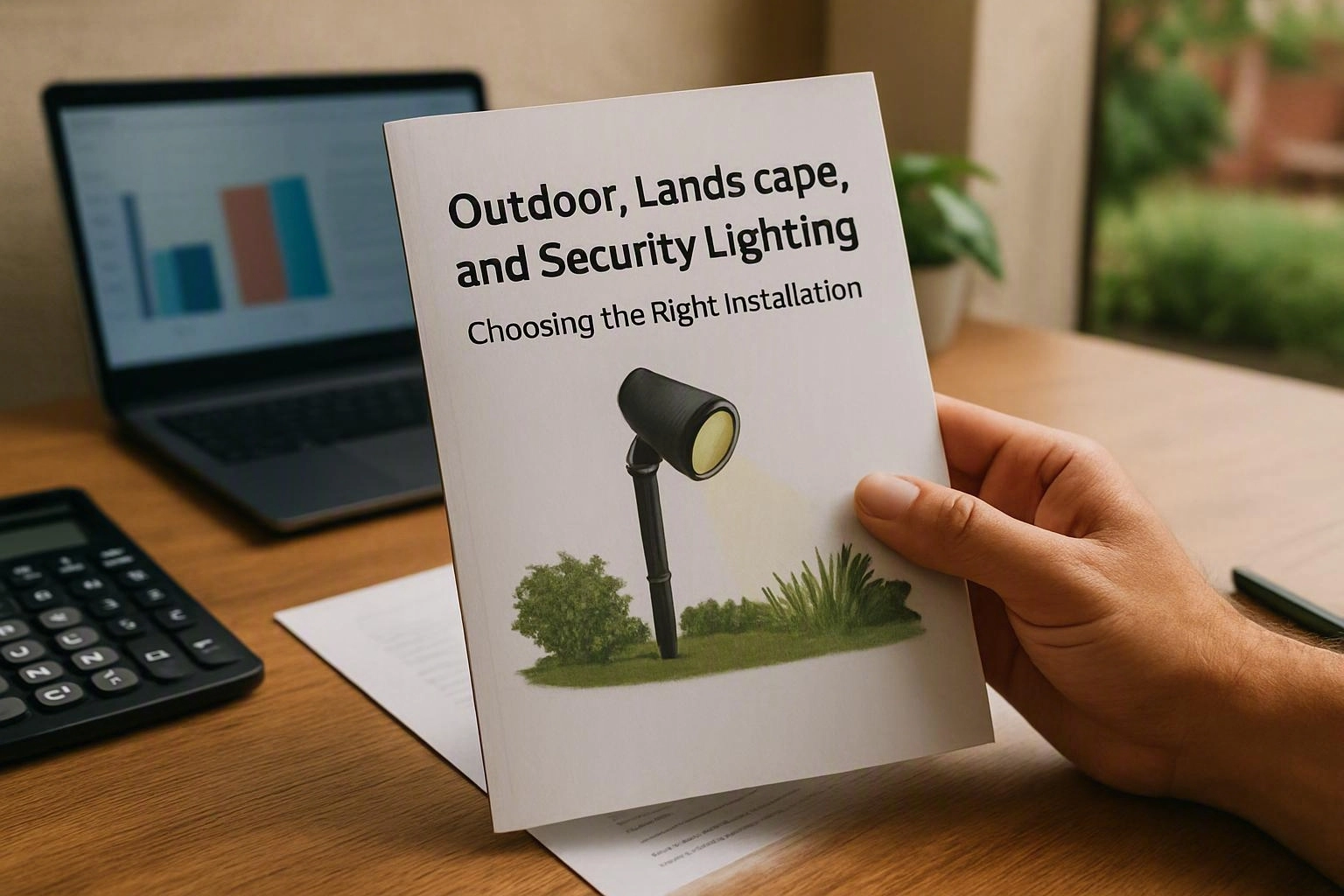
Outdoor, Landscape, and Security Lighting: Choosing the Right Installation — Santa Ana, California
Outdoor and landscape lighting installation costs depend on fixture selection, wiring, power requirements, access, controls, and site preparation; Santa Ana Electrician evaluates these factors and provides Free Estimates Available for the selected installation. We also compare the application, maintenance needs, and suitability of each lighting system for your property.
Get a Free EstimateOutdoor vs Landscape Lighting Installation at a Glance
Outdoor lighting installation is a broad category for exterior illumination, while landscape lighting installation focuses on gardens, paths, planting areas, and architectural features. The better fit depends on the area being lit and the wiring required.
| Factor | Outdoor and Security Lighting | Landscape Lighting | Best-Fit Application |
|---|---|---|---|
| Installation cost | Changes with circuit work, mounting, fixture type, and access. | Changes with layout, buried cable, transformer needs, and site preparation. | The system matching the lighting goal and wiring route. |
| Installation timeline | Depends on mounting height, circuit condition, controls, and testing. | Depends on trenching, fixture placement, buried cable, and access. | A layout with a clear route and suitable power source. |
| Maintenance | Includes checking exposed fixtures, sensors, connections, and enclosures. | Includes checking fixtures, buried cable, transformer operation, and light distribution. | A design that keeps maintenance access practical. |
Outdoor lighting generally serves broad illumination and security needs. Landscape lighting gives more control over glare, placement, and the way paths or planting areas appear after dark.
What Makes Outdoor Lighting Installation Cost More or Less?
Outdoor lighting installation cost changes with the fixture type, power source, circuit work, mounting surface, wiring route, controls, access, and condition of existing outdoor electrical equipment.
Exterior fixtures that connect to an existing electrical circuit may need different work from fixtures requiring a new circuit. We inspect switches, motion sensors, photocells, and circuit capacity before selecting the wiring method.
Surface mounting can limit access to wiring routes, while trenching adds site preparation when cable must cross soil or hardscape. We also check weather-resistant enclosures, junction boxes, and connections so the installation supports outdoor electrical safety.
The quote reflects the actual fixture layout, wiring route, mounting needs, controls, and condition of the electrical system. Outdoor Lighting Installation from our team starts with a site review so we can provide Free Estimates Available for the selected work.
When Is Landscape Lighting the Better Choice?
Landscape lighting is the better choice when the goal is to illuminate paths, planting areas, outdoor features, or architectural details with controlled, low-glare placement.
Path lighting supports navigation, while accent lighting directs attention toward trees, walls, or other features.
A low-voltage transformer commonly supplies distributed landscape fixtures through buried cable. We plan the lighting layout and account for voltage drop so light distribution remains suitable across the route.
Landscape Lighting Installation works well when fixture placement and landscape design matter as much as general brightness. Our team also considers maintenance access before placing fixtures or burying cable.
Advantages of Outdoor and Security Lighting
Best for: outdoor and security lighting is best for visibility, access, and general exterior illumination.
Advantages of Landscape Lighting
Landscape lighting creates focused illumination that follows the shape and use of the outdoor space.
Best for: landscape lighting is best for paths, gardens, architectural lighting, and controlled visual accents.
Which Lighting Voltage Is Right for the Installation?
Low-voltage lighting usually suits distributed landscape applications, while line-voltage lighting suits fixtures that require direct connection to the building electrical system or greater available power.
Low-voltage landscape lighting uses a transformer to supply fixtures along a planned route. We check voltage drop, cable placement, transformer capacity, and weather-resistant connections before completing the layout.
Line-voltage lighting connects to an electrical circuit and may require conduit, circuit protection, switches, or control changes. We inspect the circuit and include GFCI protection where the outdoor installation calls for it.
The right choice depends on fixture requirements, distance, power source, access, and the desired lighting distribution. We explain the wiring method in the estimate before work begins.
What Changes the Installation Time on This Lighting Job?
Lighting installation time changes with the site layout, wiring distance, trenching or surface routing, fixture access, circuit condition, control integration, and testing requirements.
A simple surface-mounted layout may involve different preparation from a design that crosses hardscape or requires buried cable. We review the wiring route and access before setting expectations for the work.
Fixture count, mounting height, motion sensors, photocells, and smart controls can add setup and testing steps. Our crew tests the system after installation and checks that each control operates as planned.
Inspection needs can also affect the sequence when circuit changes or new wiring are part of the job. We explain the expected work stages after the site assessment.
How Santa Ana Electrician Plans an Outdoor Lighting Installation
Outdoor lighting installation begins with a site assessment that connects your lighting goals to the property, power source, access, and wiring route.
Our process keeps the installation cost tied to visible work such as fixtures, wiring, access, circuit needs, and site preparation.
How Outdoor Lighting Conditions Affect Santa Ana Properties
Outdoor lighting in Santa Ana, California may need added attention to corrosion exposure at coastal properties and weathering of exposed equipment during prolonged dry conditions.
Coastal marine air can accelerate corrosion of exposed outdoor fixtures, electrical connections, and equipment at coastal properties. We consider fixture durability, enclosure condition, and connection protection when planning the installation.
A seasonally dry climate can contribute to weathering of exposed outdoor equipment and wiring. Our team checks exposed materials and uses weather-resistant enclosures and connections suited to the installation conditions.
These conditions make maintenance access and durable fixture placement important parts of the lighting layout. We include those considerations when reviewing outdoor electrical safety.
Which Lighting Installation Fits Your Property?
Security lighting fits visibility and access-control goals, landscape lighting fits appearance and navigation goals, and a combined design fits properties that need both.
We match the fixture type, voltage, circuit, controls, and wiring route to the way you use the property. A combined design can separate security brightness from lower-glare landscape accents.
Questions About Outdoor and Landscape Lighting
Can an electrician install outdoor security lighting?
Yes, Santa Ana Electrician installs outdoor security lighting and can evaluate fixtures, circuit capacity, mounting, motion sensors, photocells, controls, and weather-resistant connections.
What should an outdoor lighting installation quote include?
An outdoor lighting installation quote should identify the fixture type, power source, electrical circuit work, wiring route, mounting or trenching, controls, weather-resistant enclosures, testing, and site preparation included in the work.
Can landscape lighting connect to smart home controls?
Yes, landscape lighting can connect to smart home controls when the transformer, switching method, control equipment, and Smart Home Wiring support the planned system.
How does coastal exposure affect outdoor lighting fixtures?
Coastal exposure can accelerate corrosion on exposed outdoor fixtures, equipment, and electrical connections, so we consider fixture durability, enclosure condition, and connection protection during installation planning.
Plan Your Outdoor Lighting Installation
Santa Ana Electrician reviews your lighting goals, property access, wiring route, circuit needs, fixture selection, and control preferences before preparing the installation plan. Contact us for Free Estimates Available for the selected work.
Request an Outdoor Lighting Quote