Planning EV Charger and Bidirectional EV Charging Installation
EV charger and bidirectional EV charging installation requires checking the electrical service, available circuit capacity, equipment compatibility, mounting location, controls, safety requirements, and future charging needs; Santa Ana Electrician reviews these factors, plans the dedicated circuit when needed, and provides a project quote.
Get a Free EstimateWhat Should You Check Before Installing an EV Charger?
EV charger installation should begin with a review of the vehicle, charger requirements, electrical service, installation location, and expected charging use.
We check the electric vehicle connection, the EV charger model, and the available capacity at the service panel. We also review the charging location, vehicle compatibility, parking position, and vehicle charging schedule.
Home EV charging may use a Level 2 charger when the electrical system and vehicle support that equipment. Our team connects the planned equipment to the home electrical system in a way that supports safe charging and future electrical capacity.
EV Charger Installation includes planning the charger position, cable reach, circuit protection, and controls before work begins.
When Does an EV Charger Need a Dedicated Circuit?
A dedicated circuit may be needed when the charger's continuous electrical load cannot share safely with existing equipment or when the charger instructions require separate protection.
We complete a load calculation to review the service panel, branch circuit, circuit breaker, grounding, and available panel capacity. Continuous electrical load matters because charging can place a sustained demand on the electrical system.
Our crew selects overcurrent protection that matches the charger and circuit design. We also check conductor routing, connections, and electrical code requirements before installing the separate charging circuit.
Which Charging Setup Fits Your Electrical and Driving Needs?
Standard EV charging suits routine vehicle charging, while bidirectional EV charging suits compatible vehicles and electrical systems that need energy to flow between the vehicle and the property.
Unidirectional charging sends power from the electrical system to the vehicle. Bidirectional power flow can support vehicle-to-home or vehicle-to-grid functions when the vehicle, charger, controls, and utility connection all support the use case.
| Factor | Standard EV Charging | Bidirectional EV Charging |
|---|---|---|
| Project scope | Usually focuses on charging power flowing to the vehicle. | Adds equipment and controls for managed two-way power flow. |
| Timeline | Depends on the circuit route, panel work, and mounting location. | Depends on equipment compatibility, controls, transfer equipment, and utility requirements. |
| Maintenance | Focuses on the charger, connector, cable, and circuit protection. | May include the charger, inverter, energy management controls, and transfer equipment. |
| Best for | Routine home charging and predictable vehicle charging schedules. | Compatible systems that need backup power or managed energy storage. |
| Trade-off | Does not provide vehicle-to-home or vehicle-to-grid power flow. | Requires closer equipment compatibility and system planning. |
Standard charging has the simpler system scope when backup power is not part of the plan. Bidirectional charging has more planning requirements because the home electrical system must control power in both directions.
What Are the Advantages of Standard EV Charging?
Standard EV charging provides a direct way to charge an electric vehicle at home with controlled, unidirectional power flow.
Best for: standard EV charging is best for drivers who want routine home charging without using the vehicle as a property energy source.
What Are the Advantages of Bidirectional EV Charging?
Bidirectional EV charging can let a compatible electric vehicle exchange energy with a property or approved utility system.
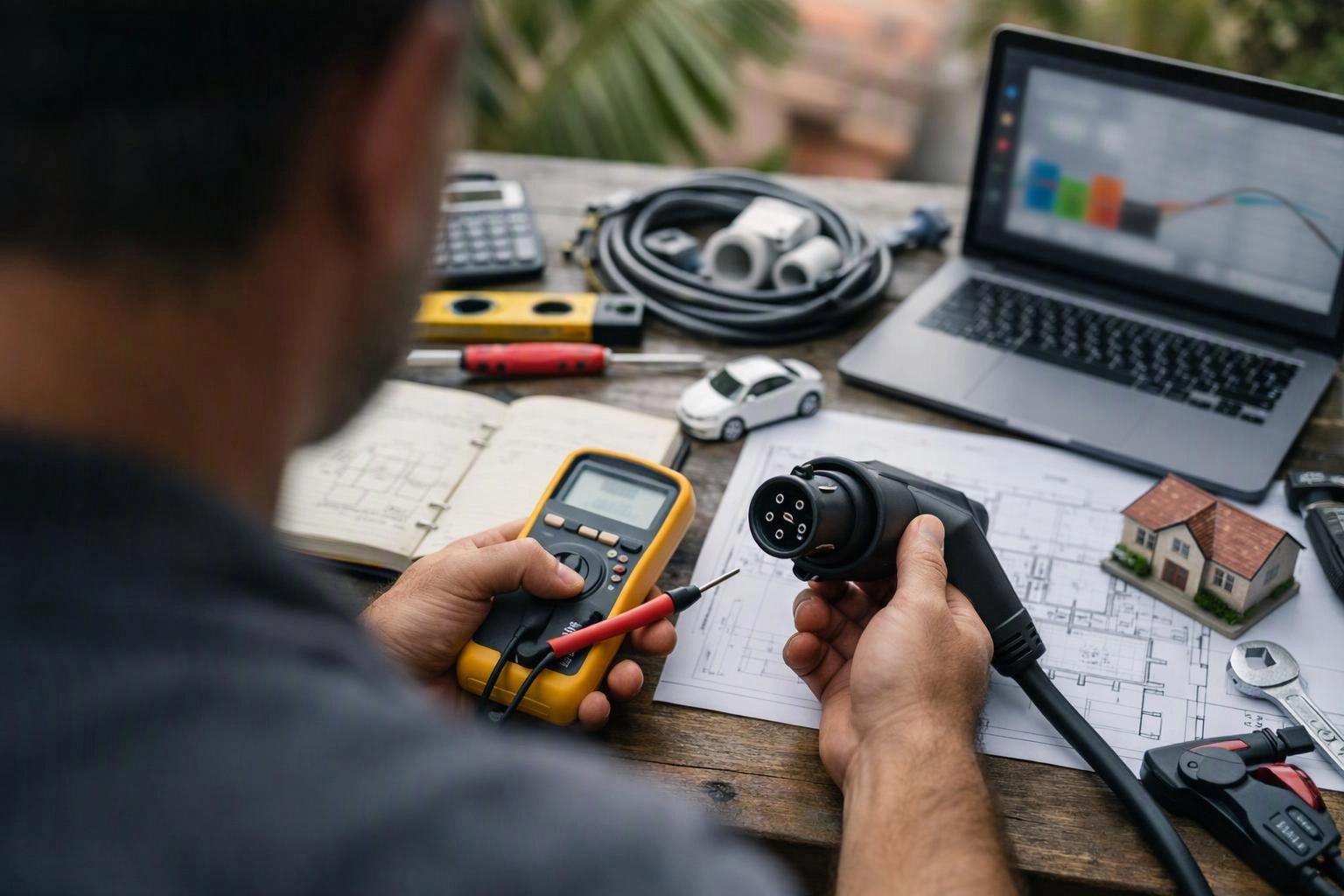
Best for: bidirectional charging is best for owners whose vehicle and home electrical system are designed for two-way energy use.
What Does a Bidirectional Charging Installation Need?
A bidirectional charging installation needs a compatible vehicle, compatible charging equipment, suitable transfer and control hardware, a planned connection to the electrical system, and controls that manage power flow safely.
We verify the bidirectional EV charger, electric vehicle, inverter, transfer equipment, and energy management system as one connected design. Equipment compatibility matters because not every vehicle or charger supports two-way operation.
Our team identifies backup loads and separates them from circuits that should not be powered during an outage. We also plan utility interconnection requirements and islanding protection so the system does not send power to the utility network when that connection is unavailable.
A bidirectional EV charging system installation may need more coordination than standard charger installation. We explain which controls and electrical connections belong in the project quote.
How Do We Plan the Electrical Circuit and Installation Location?
Santa Ana Electrician plans the circuit and installation location by matching the load calculation, service panel, charger position, cable routing, and safety equipment.
Our team also considers future electrical capacity when the property may add another charger, larger electrical loads, or energy management controls.
What Changes the Cost of This EV Charging Project?
The cost of an EV charging project changes with the charger type, electrical capacity, circuit route, installation location, panel work, equipment controls, and any bidirectional power requirements; we review those conditions before providing a quote.
Project scope can expand when the service panel needs work, the cable distance is longer, wall or surface access is difficult, or the circuit requires a more involved conduit route. Bidirectional controls, transfer equipment, backup loads, and utility interconnection can also change the work involved.
We provide Free Estimates Available after reviewing the installation conditions. The quote explains the selected equipment, circuit work, controls, installation location, and testing included in the project.
What Should You Confirm Before Installation Begins?
Before installation begins, confirm that the EV charger model, vehicle compatibility, electrical load, mounting location, and required controls match the planned use.
We use these confirmations to keep the installation scope clear before materials are selected and the work begins.
How We Turn Your Charging Plan Into an Installation
Santa Ana Electrician turns a charging plan into an installation through site assessment, electrical design, equipment selection, circuit installation, testing, and owner handover.
Our team assesses the service panel, electrical capacity, charging location, cable routing, and equipment compatibility. We then prepare the design for EV charger installation, bidirectional EV charging system installation, or dedicated circuit installation.
During commissioning, we check connections, controls, charging operation, grounding, protection, and any planned backup loads. We explain the equipment and controls during owner handover so you understand how the charging system is intended to operate.
Use our installation quote request to discuss the project scope. Get a Free Estimate
Questions About EV and Bidirectional Charging Installation
Can an EV charger share a circuit with other appliances?
Santa Ana Electrician determines whether an EV charger can share a circuit by reviewing its continuous electrical load, the existing branch circuit, circuit breaker, service panel, and charger instructions. A dedicated circuit may be required when shared operation would not provide suitable capacity or protection.
Can every electric vehicle use bidirectional charging?
No. Bidirectional charging requires vehicle compatibility, a compatible bidirectional charger, suitable controls, and an electrical system designed for two-way power flow.
Can bidirectional charging power an entire home?
Bidirectional charging may support selected backup loads, but powering an entire home depends on the vehicle, charger, transfer equipment, load calculation, energy management system, and available electrical capacity.
Does a bidirectional EV charger need different electrical equipment?
Yes. A bidirectional EV charger may need an inverter, transfer equipment, energy management controls, utility interconnection planning, and islanding protection in addition to the charging circuit.
What happens if the home does not have enough electrical capacity for an EV charger?
We review the load calculation, service panel, load management options, circuit design, and future electrical capacity. The project may need panel work, service changes, managed charging, or a different equipment plan.
Where should an EV charger be installed at home?
An EV charger should be installed where the cable reaches the vehicle parking position, the mounting surface is suitable, weather exposure is managed, and the circuit route remains practical. We assess the charging location, access, protection, and future use before selecting the final position.
Related Resources
How Long Does EV Charger Installation Take in Santa Ana, CA?
What It CostsHow Much Does Home EV Charger Installation Cost in California?
How It WorksHow Dedicated Circuit Installation Works and What It Costs
How It WorksPool and Hot Tub Electrical Installation: Process, Cost Factors, and Scheduling