Skip to content

Bidirectional EV Charging Installation in Newport Beach, California

Firmware errors can affect load control in Newport Beach. We check the charger, vehicle link, and electrical supply before recommending a safe repair or installation path.

Licensed & InsuredFree EstimatesWarranty AvailableSame-Day Service

Quick Summary: Bidirectional EV Charging System Installation in Newport Beach, California

Bidirectional EV Charging System Installation in Newport Beach is provided by Santa Ana Electrician for homes, businesses, landlords, and property managers. The work covers EV charging installation, circuit checks, load review, and testing across Newport Beach and nearby Orange County communities.

  • What we do: Santa Ana Electrician provides Bidirectional EV Charging System Installation for homes and businesses in Newport Beach, California, with circuit testing and electrical inspections.
  • What is included: Load review, EV charging installation, circuit tracing, grounding checks, panel assessment, and testing and verification.
  • What you get: The customer receives a tested charging system with a clear electrical scope and practical next steps.

What problems can occur with bidirectional EV charging systems?

Firmware errors, communication faults, overload conditions, grounding faults, and charging interruptions can affect bidirectional EV charging systems. Santa Ana Electrician checks the charger, vehicle connection, panel capacity, wiring, and grounding to identify the cause. The repair or installation scope follows those findings.
Bidirectional EV Charging System Installation in Newport Beach

Bidirectional charging needs more than a vehicle connection. The work may involve a dedicated circuit, panel capacity review, grounding checks, communication testing, and verification of how the system controls power flow.

Customers are deciding whether their property is ready for this type of charging or whether an electrical upgrade comes first. We inspect the existing wiring and panel, then explain whether the right next step is installation, repair, circuit work, or a broader panel upgrade.

This page focuses on fault prevention and system readiness. It helps buyers address firmware errors, communication faults, overload conditions, grounding faults, and charging interruptions before they affect daily use.

  • Confirm the vehicle and charging equipment are compatible with bidirectional operation.
  • Review panel capacity and the planned charging circuit.
  • Trace communication faults and inspect grounding.
  • Test charging and power-flow functions after electrical work.
  • Ask for a quote based on the property and equipment scope.
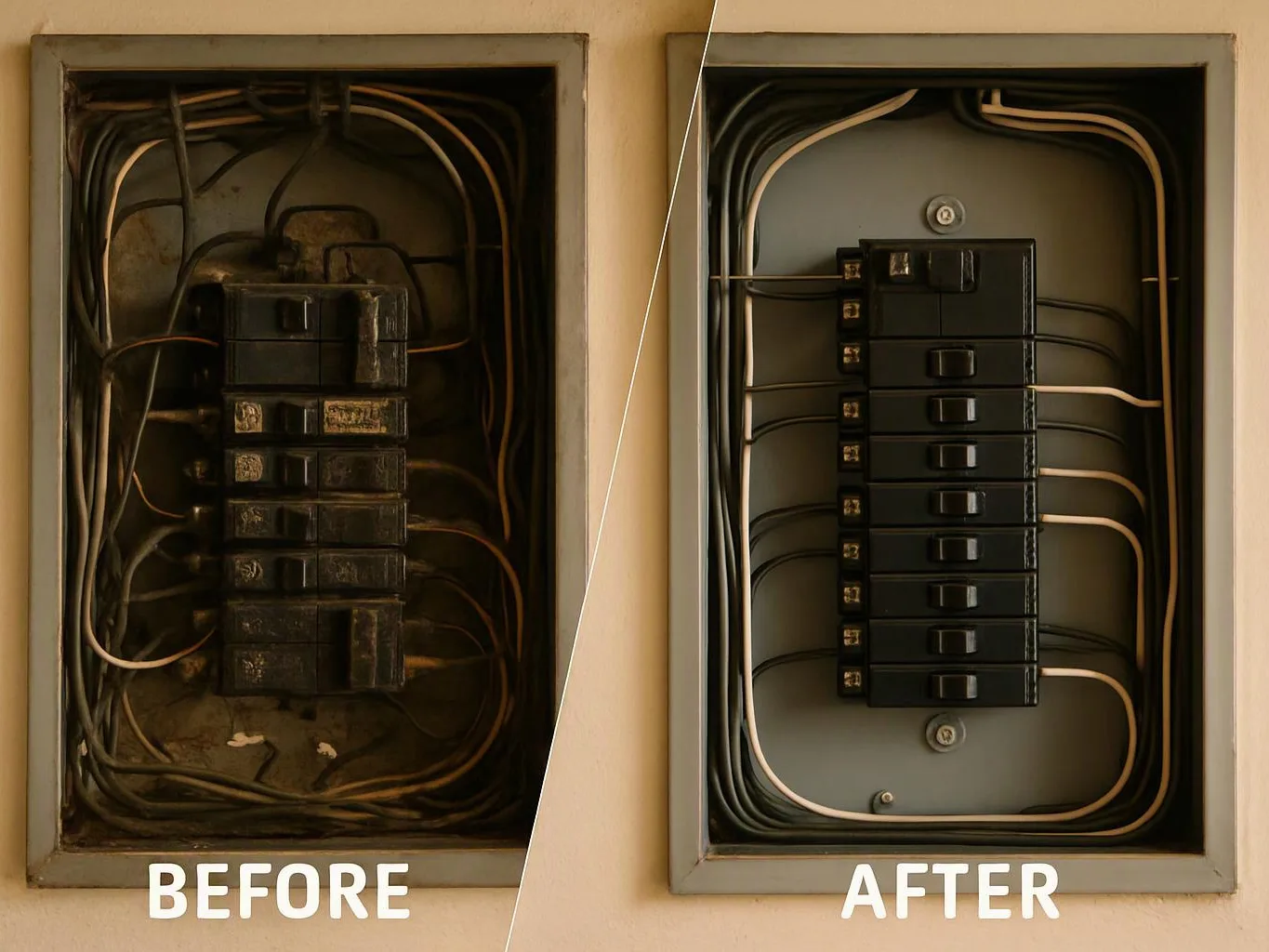
A split image shows a messy electrical breaker panel before and a neatly wired panel after inside a wall opening

Service Overview

Bidirectional EV Charging System Installation is an electrical service that connects compatible charging equipment so power can move between an EV and a property.

  • Bidirectional charging differs from standard EV charging because the system must manage power flowing into the vehicle and back to the property.
  • Santa Ana Electrician provides this service in Newport Beach for residential and commercial properties.
Process

How we complete bidirectional charging work

1

Review the charging plan

We discuss the vehicle, charging equipment, property type, and reason for the installation or repair.

2

Check the panel and circuit

We inspect the panel, review available capacity, and trace the proposed EV charging circuit.

3

Test faults and grounding

We check communication faults, overload conditions, grounding, wiring, and charging interruptions.

4

Set the electrical scope

We explain whether the work calls for installation, circuit repair, a panel upgrade, or another electrical service.

5

Verify the completed work

We test the charging circuit and review the results with the customer.

When this service is the right fit

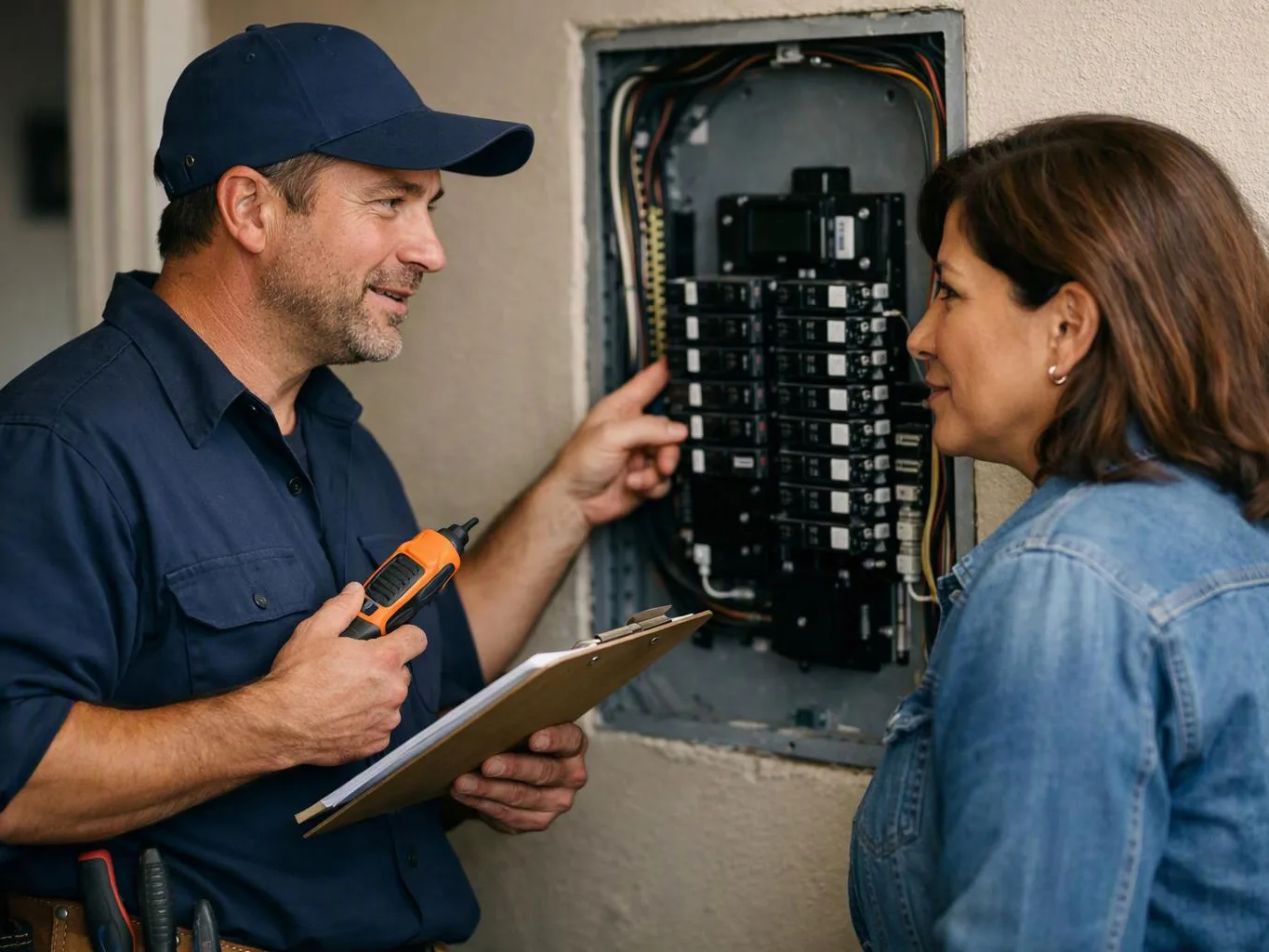
A property manager may need bidirectional charging reviewed before approving equipment for a tenant or business. We inspect the panel, trace the charging circuit, check grounding, and document the electrical scope before installation. If the existing service cannot support the planned load, we explain the needed upgrade instead of treating the charger as an isolated device.

What you get from this charging installation

Load and panel fit

The planned charger must fit the property’s available electrical capacity. We review the panel and circuit before setting the installation scope, and this service is the wrong job when the issue is only a utility outage outside the property.

Fault-focused testing

Charging interruptions need a cause, not a reset. We check communication paths, grounding, wiring, and control behavior so the recommendation matches the fault.

Plain repair choices

Customers receive practical options for circuit work, panel upgrades, or related electrical repairs. We explain what each option addresses before work begins.

What bidirectional charging installation includes

Santa Ana Electrician provides comprehensive Bidirectional EV Charging System Installation in Newport Beach. Here's what you get:

  • We review the planned EV charging installation and the property’s existing electrical service.
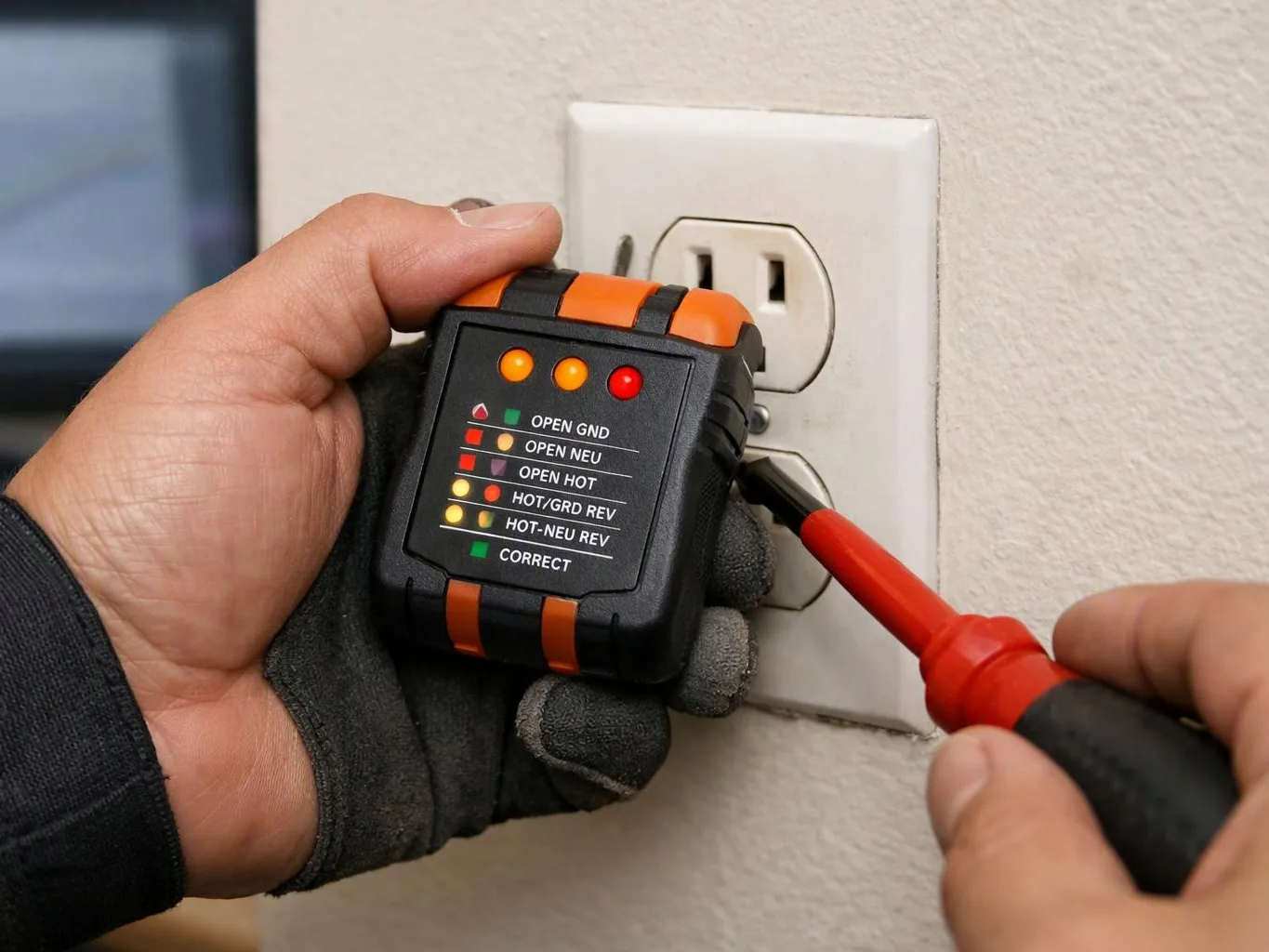
  • We check the panel, branch circuit, wiring, grounding, and connection points.
  • We trace communication faults between the vehicle, charger, and control equipment.
  • We identify overload conditions that could affect safe operation.
  • We test the charging circuit and verify the completed electrical work.
  • We explain recommended repairs, upgrades, or follow-up work in plain language.

What this charging work changes for you

A load review shows whether the existing electrical service fits the planned charging demand.

Testing helps separate a charging interruption from a panel, wiring, grounding, or communication fault.

Clear scope helps homeowners, landlords, and property managers decide between repair and upgrade work.

A documented check gives businesses a better basis for planning EV charging around normal operations.

Bidirectional charging repair decisions

These options compare the main electrical decisions that can arise during a bidirectional charging assessment.

Work optionWhen it fitsWhat we check
Charging installationThe panel and circuit support the planned equipment.Circuit path, grounding, connections, and testing.
Circuit repairA fault interrupts charging or power flow.Wiring, communication path, overload signs, and grounding.
Panel upgradeAvailable capacity does not fit the planned charging load.Panel condition, load calculation, and service scope.

The Santa Ana Electrician Standard

  • Initial Assessment
  • Systematic Troubleshooting
  • Safety-Minded Repairs
  • Clear Recommendations

Questions about bidirectional charging installation

What should be ready before bidirectional charging installation starts?

The vehicle, charging equipment details, panel access, and the planned installation location should be ready. Customers should also share any warning messages, charging interruptions, or recent electrical changes. We use that information with a panel review and circuit check to set the correct work scope.

Which property condition changes the installation work?

Available panel capacity changes the installation work when existing circuits already use much of the electrical service. We review the panel, perform a load calculation, trace the proposed circuit, and check grounding. The result may support the planned installation or point to circuit repair or a panel upgrade.

What should I ask before agreeing to this installation?

Ask which circuit will serve the charger, how panel capacity was checked, and what testing follows the installation. Customers should also ask whether grounding, communication faults, and overload conditions are included in the assessment. We explain the scope and quote before work begins.

How does a charging interruption get diagnosed?

A charging interruption is diagnosed by checking the charger, vehicle connection, circuit, communication path, and electrical supply. We trace the fault and test the charging circuit. A reset alone does not show whether the cause is wiring, grounding, overload, or equipment communication.

Why does grounding matter for bidirectional charging?

Grounding matters because the charging circuit needs a safe fault path and correct electrical reference. We inspect grounding connections and related wiring during the electrical review. If the grounding fault is outside the planned installation, we explain the related repair before continuing.

Which customers use this electrical service?

Homeowners, landlords, businesses, and property managers use this service for planned bidirectional EV charging work. Santa Ana Electrician reviews residential and commercial electrical conditions, including panel capacity, circuits, wiring, and grounding. The scope follows the property and equipment needs.
Contact

Request a Bidirectional EV Charging Installation Estimate

Get a quote for the electrical scope, and urgent requests get priority scheduling.

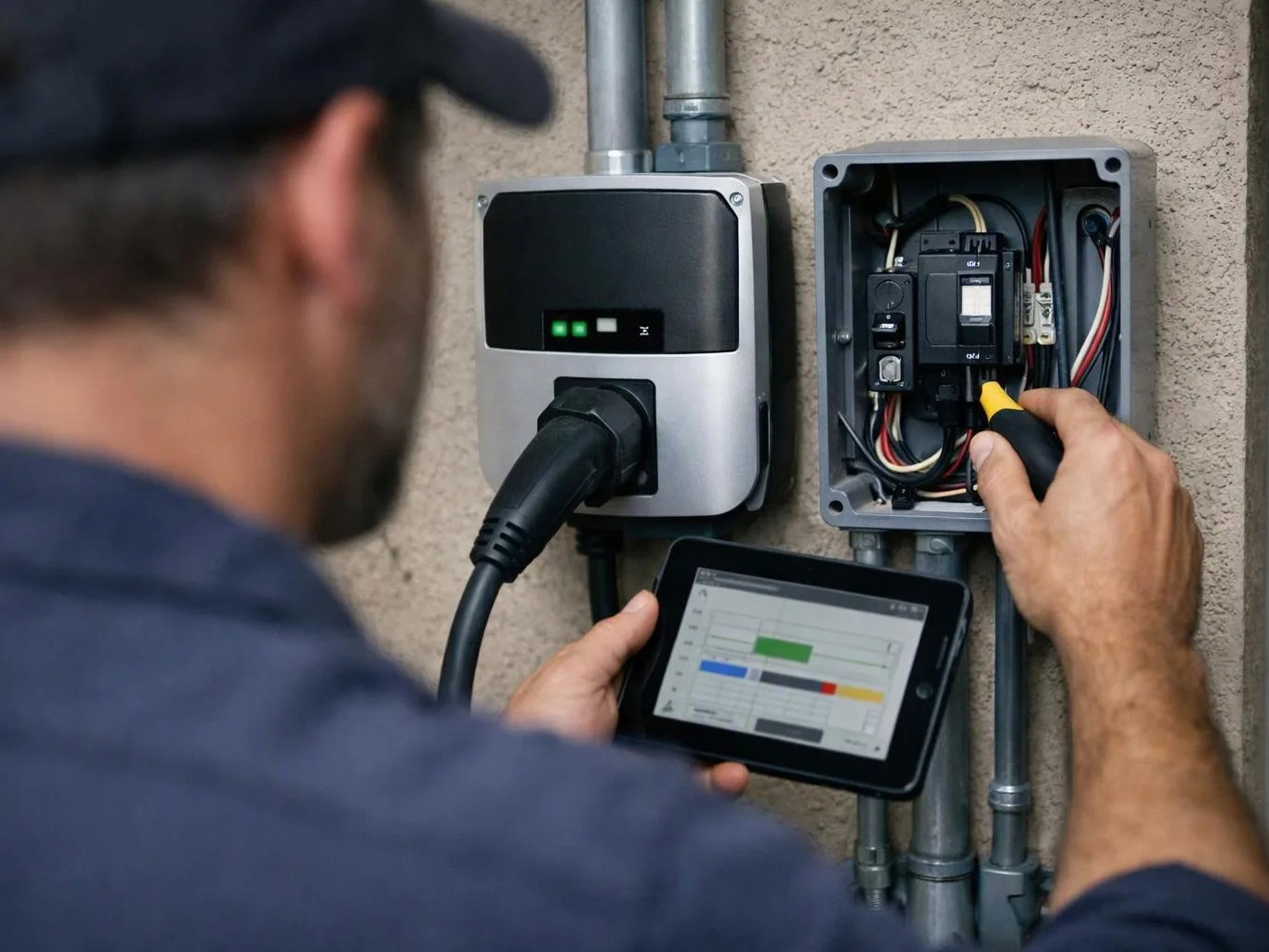
A technician inspects an open electrical box beside a wall-mounted charging unit while holding a tablet

ZIP Codes We Serve in Newport Beach, California

926589265992660926619266292663

Bidirectional EV Charging System Installation in Other Areas

(949) 850-2844